

Walmart's Guidance Boost and Stock Reaction
Saturday, November 21, 2026
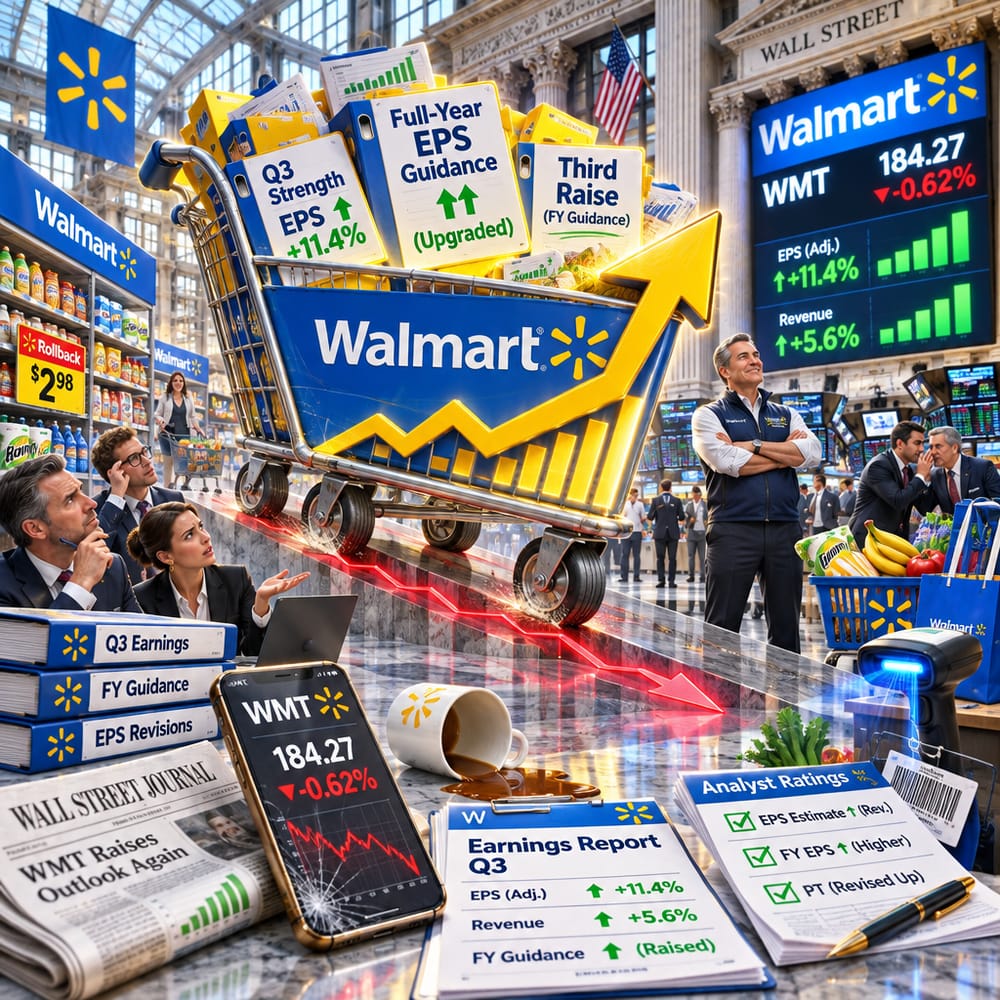
WALMART'S GUIDANCE GLOW: WHY A SUNNY FORECAST DIDN'T RAISE ITS STOCK PRICE
It's not every day you hear a company like Walmart—America's retail behemoth—announcing its triumph with a third bump in its full-year earnings forecast. Yet, while the boardroom popped champagne, the stock market tossed a lukewarm response. Yes, Walmart's stock dipped. If you're scratching your head, you're not alone. Welcome to the rollercoaster world of retail investing.
Let’s dive into the nitty-gritty. After Walmart reported a blockbuster quarter, it boldly upped its earnings per share (EPS) guidance. This move had all the markings of a market darling moment, except, it seems, the market didn't RSVP. The stock slipped, baffling many an investor sipping their morning coffee and scrolling through market updates.
So, what gives? Why didn’t Walmart's upbeat forecast send its stock soaring? The answer lies in a cocktail of market psychology, broader retail trends, and a pinch of investor skepticism.
First off, positive guidance from Walmart isn't just a happy headline; it signals its consumers are still opening their wallets, despite the economic uncertainties swirling around. With inflation creeping into everyday life, one might expect Walmart, as a king of value shopping, to be singing soprano on Wall Street. But here’s the plot twist—Walmart’s rosy guidance had already been baked into expectations. Investors, ever the forward-looking bunch, had anticipated the news. The EPS hike was good, but not the kind of surprise that sends everyone into a buying frenzy.
This stock dip could also be a signal of investor rotation. As inflation jitters inflate and the tech sector looks like it's riding a rollercoaster about to plunge, investors might be eyeing safer pastures. Enter the world of defensive stocks—those companies that peddle goods we need, not just want. People still need groceries, and perhaps another pack of socks or two, recession or not. But here's the kicker: knowing Walmart is a sturdy ship doesn't mean investors want to pay a premium for it when there might be bargains elsewhere.
And while Walmart's strong performance does hint at a resilient consumer base—folks are still buying—it also reflects broader shifts. Retailers that offer value are basking in the glow of consumer thriftiness. Walmart’s robust numbers reveal that although the aisles are full, the overall retail landscape is a mixed bag. Retail winners are those who managed to navigate high inflation with strategic pricing and essentials-first stocking.
Now, onto consumer spending. If Walmart's packing heat, it suggests that while the purse strings might be tighter than a drum, they're not snapped. Shoppers are still spending, albeit more thoughtfully. Walmart's resilience indicates that consumers are prioritizing essentials, pivoting from big splurges to pragmatic purchases. This trend is music to Walmart's ears but a cacophony for luxury and non-essential retailers.
Finally, is there a sector shift toward defensive stocks? The answer is a resounding maybe. Investors, like squirrels hoarding acorns for a long winter, are considering reallocating to less volatile sectors. With tech stocks looking more like a soap opera than a steady drama, defensive stocks are alluring for their promise of stability in an unpredictable market. Yet, even within this sanctuary sector, not every stock gets a free pass to skyrocket.
So, the moral of this retail tale: even the best news can result in a stock market shrug. Investors are not just looking at the headlines but peering through the financial binoculars to suss out future trends. Walmart’s sunny outlook underlines a sturdy consumer base, yes, but also points to a shifting investor landscape where expectations are high and patience is thin.
In essence, while Walmart might be playing its best game, the market is ever the fickle audience. And just like in sports, even the winning team sometimes finds itself up against a crowd that isn’t easily impressed. Welcome to investing, where the rules are few, and the surprises are many.
This article is for informational purposes only and is not investment advice. Always do your own research or consult a licensed financial professional before making investment decisions.
© Copyright 2024. All Rights Reserved.
© Copyright 2024. All Rights Reserved.