

Walmart's Earnings Miss and Lowered Guidance
Thursday, August 20, 2026
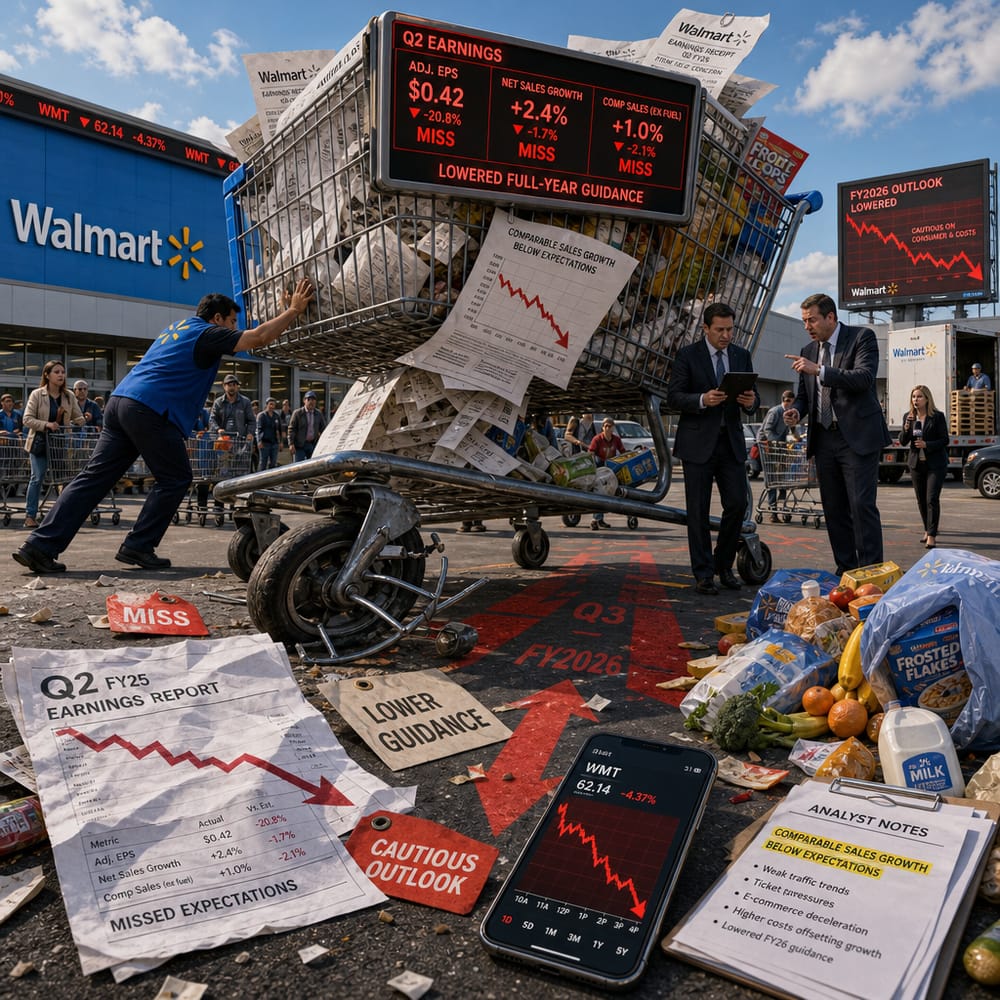
WALMART FLUNKS EARNINGS TEST: WHAT HAPPENED AND WHAT’S NEXT?
Word on Wall Street is that even the mighty Walmart can stumble. Picture the retail giant like a seasoned marathon runner tripping on a pebble — awkward, rare, and a bit bewildering. But that's exactly what Walmart did, tripping over its second-quarter earnings report and leaving investors scratching their heads. The retail behemoth reported a rare earnings miss and lowered its guidance for the rest of the fiscal year. Let's dive into what happened, why it matters, and what it might mean for you, the everyday investor.
WALMART’S UNEXPECTED STUMBLE
Walmart reported that U.S. comparable sales, which track sales at stores open for at least a year, increased by 2.6% in the second quarter. Sounds decent, right? Well, not quite. This was Walmart’s slowest pace in comparable sales growth in six years and shy of Wall Street’s 3.5% expectation. The culprit? Middle America tightening its purse strings. Shoppers seem to be in a savings mood, cutting back on non-essential spending. It’s as though everyone collectively decided that decluttering doesn’t just apply to spring cleaning.
Another headache for Walmart was in its health and wellness segment, which faced a 0.8% pullback due to price caps on certain drugs. This legislation-driven snag added a significant hiccup to their earnings call, as it took a chunk out of what’s usually a reliable revenue stream. If you thought Walmart was just about groceries and gadgets, think again. Its health segment is no small potatoes, and this setback certainly left a bruise.
IMPACT ON WALMART STOCK
So, what does this mean for Walmart's stock? As soon as the lackluster news hit the airwaves, shares tumbled almost 6% in premarket trading. Investors are usually a forgiving bunch, but when one of the most reliable players in the market stumbles, it’s hard not to panic just a little. Wall Street thrives on predictability, and when giants like Walmart show weakness, it stirs the pot of investor anxieties.
Looking ahead, Walmart has issued a cautious outlook for Q3 and fiscal 2026, signaling that it expects a bumpy road ahead. For investors, this means a potential rollercoaster ride of stock volatility. It’s an unsettling proposition for a company known for its stability. The key takeaway here is that while this may signal short-term unrest, Walmart's long-term resilience shouldn't be discounted. This retail Goliath still has strong e-commerce growth, clocking in at a 23% global increase. If they can navigate the rocky landscape, their stock might just bounce back — but patience will be the virtue of the day.
RIPPLES IN THE RETAIL SECTOR
Walmart’s stumble isn’t just a solitary slip on the sidewalk; it's a tremor echoing through the entire retail sector. When the king of retail trips up, everyone below feels the shudder. Consumer behavior seems to be shifting, with many choosing to save rather than spend — a red flag for the broader retail industry.
For sector peers, there’s a lesson to be learned from Walmart’s playbook. Pricing strategies, inventory management, and customer engagement will be crucial elements to focus on. Retailers will need to navigate a delicate dance to keep shoppers opening their wallets, especially with looming tariffs and the potential for increased costs.
More broadly, this signals a potential tightening in consumer spending habits. If the retail giant with its extensive reach and variety is feeling the pinch, it's time for others to brace themselves. This is a wake-up call for retailers to reevaluate their approach, whether that means doubling down on e-commerce or pivoting toward more sustainable offerings.
BOTTOM LINE FOR INVESTORS
So, what’s an investor to do with this fresh batch of information? It's a mixed bag of caution and opportunity. While Walmart’s near-term prospects seem clouded, the company’s ability to adapt and innovate should not be underestimated. Keep an eye on how Walmart adjusts its strategies, particularly in e-commerce and pricing. It might just turn the tables and convert these challenges into opportunities.
In the broader market, monitor consumer trends closely. As consumers become more frugal, it could mean a shift away from discretionary spending to essentials — a trend that other retailers might need to adapt to.
In the world of investing, one unchanging truth is that every stumble presents an opportunity. So, while Walmart may be down, it’s far from out. Keep your eyes peeled and your investment goals clear, because even when giants stumble, they eventually find their footing.
This article is for informational purposes only and is not investment advice. Always do your own research or consult a licensed financial professional before making investment decisions.
© Copyright 2024. All Rights Reserved.
© Copyright 2024. All Rights Reserved.