

Walmart's Earnings Miss and Guidance Cut Shock Investors
Thursday, August 20, 2026
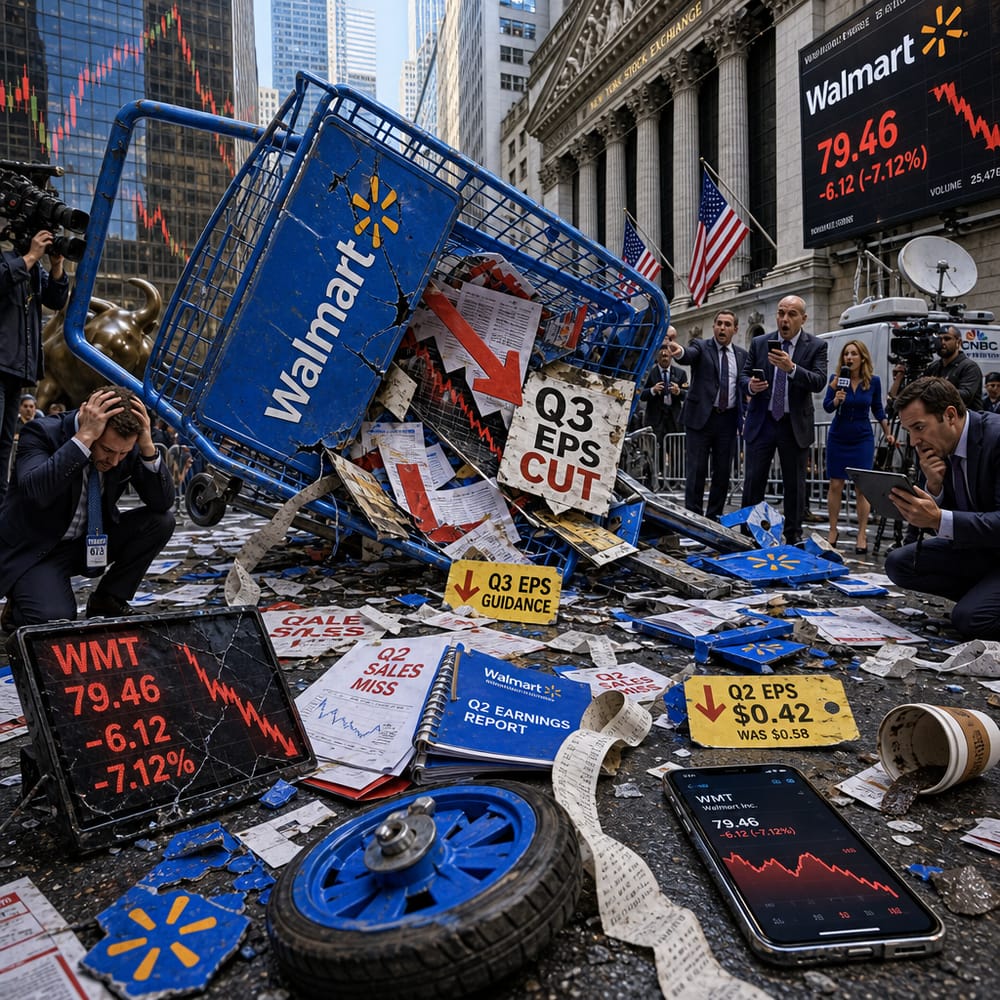
WALMART'S EARNINGS MISS AND GUIDANCE CUT SHOCK INVESTORS
Brace yourselves, folks, because the retail behemoth just dropped a bomb. Walmart, the retail stalwart that many of us rely on for everything from groceries to garden gnomes, has hit a pothole in its profit pathway. The recent Q2 earnings report wasn't just a minor speed bump; it was a full-on face plant, revealing a significant sales miss and lower-than-expected Q3 earnings per share (EPS) guidance. And just like that, investors went into panic mode, hitting the sell button and causing Walmart's stock to nosedive.
Let's get into the nitty-gritty. What on earth happened to make Walmart, a titan in the retail sector, miss its sales mark? Picture this: inflation has been hovering around like an uninvited guest at a wedding, and consumers are pinching pennies harder than a grandma at a garage sale. Higher prices for essentials like food and fuel have meant less disposable dough for discretionary items—the fun stuff Walmart likes to sell. Combined with supply chain snarls, it’s no wonder their numbers took a hit.
And it's not just Walmart feeling the heat. When the biggest fish in the retail pond stumbles, the ripples inevitably reach other retailers. Think of them like the retail equivalent of dominoes; once the first one falls, others like Target and Costco might start feeling the tremors. If consumer spending continues to contract, we could see a domino effect rip through the retail sector, impacting stocks across the board.
Analysts, those bespectacled oracles who gaze deeply into their crystal balls, aren’t exactly doing cartwheels over Walmart’s future, either. With the company's cautious Q3 EPS guidance, many analysts are revising their forecasts, and not in a good way. Some are even predicting that unless Walmart can tighten its belt and find ways to lure back budget-conscious shoppers, its future earnings might not just miss expectations—they could redefine them in a less-than-pleasant way.
But hang on a second. Before you start stuffing cash into your mattress, let's consider the broader implications. Walmart is more than just a retail giant; it's a barometer for the economy. If Walmart is struggling, it might be a sign that consumer confidence is slipping. Remember, consumer spending is a massive chunk of the U.S. economy, and when it falters, other sectors could start feeling queasy too.
The stock market took a nosedive following Walmart's earnings report, with the Dow losing 637 points—ouch! But this isn’t just about one company's stock price taking a fall. Higher bond yields have been adding pressure as well, with investors fretting over inflation and government debt. When the yields on 10-year and 30-year Treasury bonds creep up, it can make stocks look like less of a bargain. And if Walmart's woes are any indication, this isn't just a temporary storm—retail might be in for a rough ride.
While Wall Street navigates these choppy waters, what's a retail investor to do? First, don't panic. Remember that volatility is the market's middle name. Diversifying your portfolio could be your best friend in times like these. If Walmart's slump is making you sweat, consider looking at other sectors that might be more insulated from consumer spending shifts, or at least keep a weather eye on the horizon for any signs of the retail rebound.
In the end, while Walmart's earnings miss is a head-scratcher, it also serves as a wake-up call. It's a reminder that even the mightiest can stumble and that consumer habits are always shifting. As investors, staying informed and nimble is key. Keep your ear to the ground, and maybe your finger on the buy button—because who knows when the tides might turn?
This article is for informational purposes only and is not investment advice. Always do your own research or consult a licensed financial professional before making investment decisions.
© Copyright 2024. All Rights Reserved.
© Copyright 2024. All Rights Reserved.