

Walmart's Earnings Disappointment Drags Dow Down
Sunday, August 23, 2026
WALMART'S EARNINGS DISAPPOINTMENT DRAGS DOW DOWN
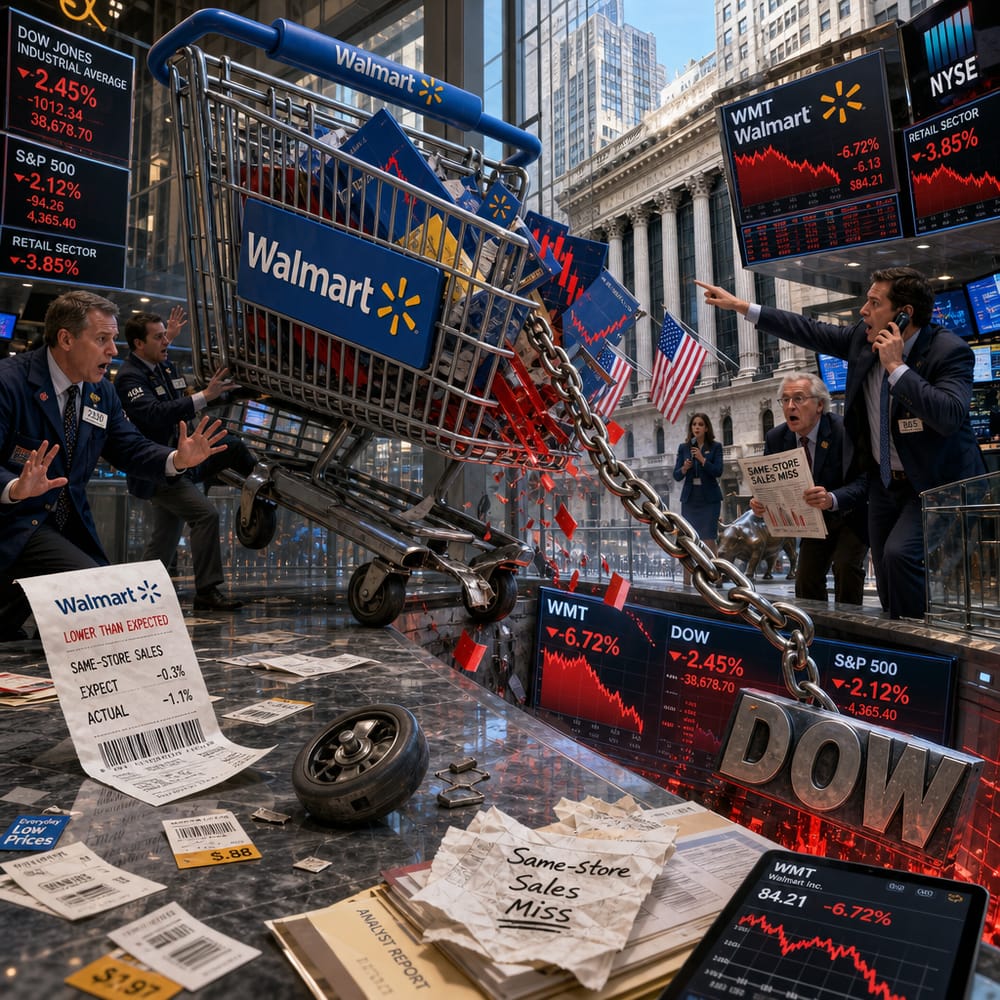
You could almost hear the collective gasp of the Dow Jones as Walmart’s latest earnings report hit the streets. Like a row of precariously stacked dominoes, the world's largest retailer stumbled, and the broader market indices took a tumble with it. Walmart isn't just any retail giant; it’s the canary in the coal mine for consumer spending. So when Walmart catches a cold, the market gets feverish.
First, let’s untangle what went wrong. Despite a $2.9 billion windfall from a tariff refund, Walmart reported that its U.S. same-store sales growth crawled up by just 2.6% over the quarter. To put that into context, it’s akin to a sprinter who, after a promising start, decides to take a leisurely stroll. Compare that figure to the 4.6% growth from the same quarter last year, and you've got a pretty clear picture of why investors started breaking a sweat.
The villain of the piece? Rising gas prices. As fuel costs nibbled away at wallets across America, discretionary spending took a hit. This isn’t just a statistic; it’s a window into the average American's wallet. Less money spent at the pump means more for other essentials, and unfortunately for Walmart, those aren't flying off the shelves.
The market wasn’t about to let this pass unnoticed. Walmart shares nosedived over 9% in early trading on Thursday. And as Walmart faltered, the Dow Jones Industrial Average and S&P 500 felt the tremors, with both indices taking a noticeable dip. This isn't just a Walmart issue; it’s a yardstick for the retail sector’s broader health, and the market’s reaction signals concern that consumers might be tightening their belts.
So, what does this mean for retail moving forward? Well, if Walmart’s sluggish growth is any indication, retailers are gearing up for a bumpy ride. With consumer spending making up a significant chunk of the U.S. economy, any sign of hesitation here has repercussions far beyond store aisles. The sector will likely witness a shake-up as companies scramble to adjust prices, stock levels, and strategies to keep customers coming through the doors.
Looking forward, the question on everyone’s mind is whether this slowdown is a temporary hiccup or a sign of more profound economic unease. Are consumers getting cagey, or is this merely a blip on the radar? Analysts will be watching the upcoming holiday season, often a make-or-break period for retailers, with hawk-like attention. If consumers pull back then, you can bet it will raise more than just a few eyebrows.
Meanwhile, Walmart plans to counter this soft sales growth by cutting prices, buoyed by that hefty tariff refund. The hope? To lure customers back in and reignite the spending flame. But with gas prices still high and economic uncertainty looming, only time will tell if this strategy will bear fruit.
In the retail world, it’s adapt or perish. As Walmart recalibrates its approach, the broader market will be watching closely, trying to decipher whether this downturn is an isolated incident or part of a more troubling trend. For now, the message is clear: if Walmart’s latest report didn’t have the markets on high alert, it certainly does now.
This article is for informational purposes only and is not investment advice. Always do your own research or consult a licensed financial professional before making investment decisions.
© Copyright 2024. All Rights Reserved.
© Copyright 2024. All Rights Reserved.