

Walmart Earnings Miss Triggers Sharp Pre-Market Drop
Friday, August 21, 2026
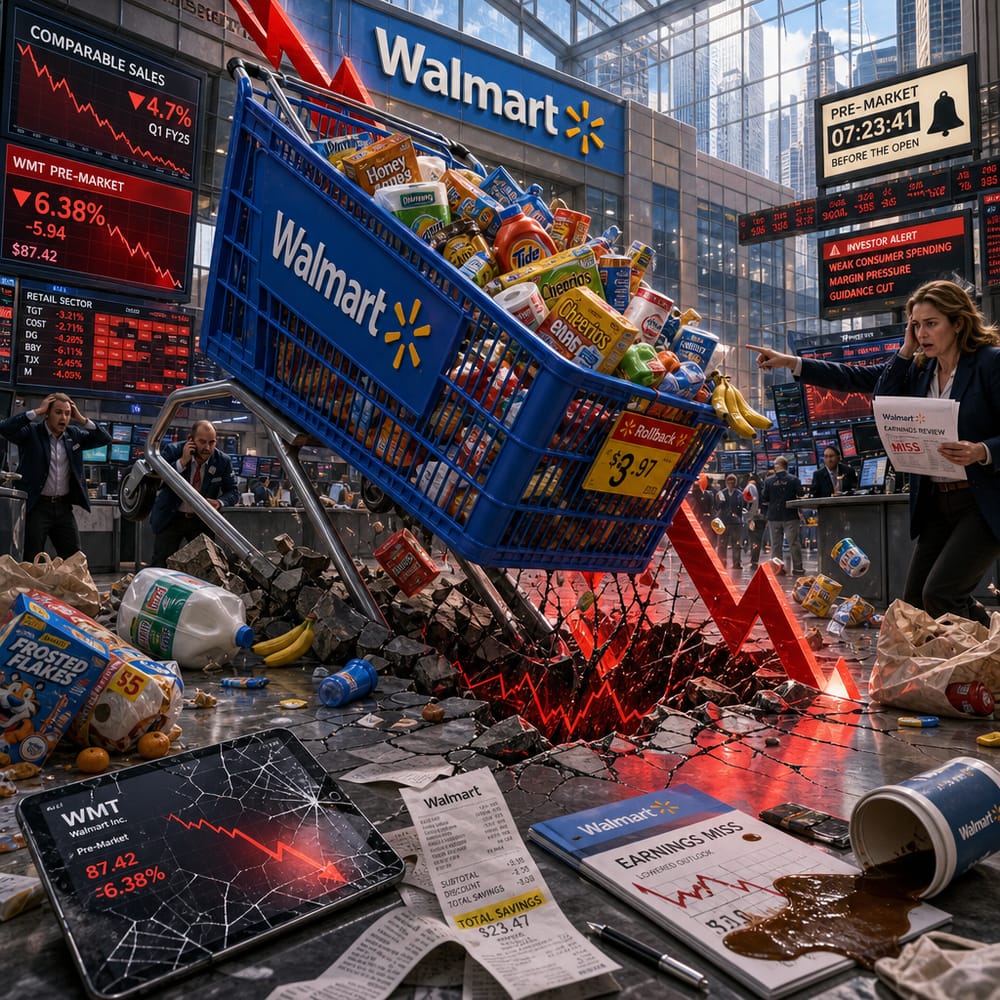
Walmart Earnings Miss Puts The Spotlight On Consumer Spending Woes
Hold onto your shopping carts, folks! Walmart just threw a wrench into market expectations, and the stock market is feeling the tremors. The retail behemoth, often seen as a barometer of consumer health in the U.S., reported earnings that fell short of the mark. The news sent shares tumbling over 9% in pre-market trading and has left investors and economists alike asking: Is the American consumer finally running out of steam?
For a company that has long been a bastion of retail success, Walmart missing the mark on comparable sales growth feels like seeing Superman stub his toe. Sure, U.S. sales excluding fuel rose by 2.6% in the last quarter, but that’s a significant slowdown compared to the 4.6% growth we saw a year ago. If you're wondering why, look no further than a perfect cocktail of rising gas prices and shifting shopping habits.
Higher fuel prices have a way of siphoning off consumer spending power like a vacuum cleaner on steroids. As gas prices tick upwards, Americans have less cash to spare on the non-essentials—the very backbone of retail shopping. We’ve all felt the pinch at the pump, but when you see it hit Walmart, you know it's serious. CFO John David Rainey pointed to this fact while explaining the slower sales growth, noting that consumers are increasingly penny-pinching.
But it’s not just about gasoline. The digital age is catching up with brick-and-mortar giants like Walmart. More consumers are pivoting to online shopping, which, while still profitable, doesn’t have the same immediate impact on in-store sales figures. This isn’t just a trend—it’s a shift that’s here to stay. In fact, Walmart’s online spending did contribute positively to its bottom line, just not enough to close the gap left by physical store sales.
Let’s not forget the wildcard factor: health and wellness trends. Lower drug pricing for popular weight loss medications has also taken a bite out of Walmart's usual pharmacy revenue. Add these factors together, and it’s no wonder Walmart missed expectations.
So why should you care? Because Walmart is more than just a place to score great deals on bulk toilet paper. It’s an economic bellwether, a retail Rosetta stone that helps decode the intricacies of consumer spending behavior. When Walmart feels the pinch, it often signals broader economic trends. If higher gas prices and a shift to online shopping are hitting Walmart hard, what does that say about small businesses and other retail sectors?
This earnings miss raises a pressing question: Are we witnessing the start of a more significant slowdown in consumer spending? As borrowing costs rise, thanks to the Federal Reserve’s efforts to tackle inflation, consumers may find their wallets even tighter. And if that’s the case, we could see a ripple effect throughout the economy.
With Walmart’s stumble, investors are left in a precarious position. What will happen if consumer spending doesn’t rebound quickly? Should we brace for a retail storm, or is this just a drizzle in an otherwise sunny outlook? Only time will tell, but it might be wise for investors to keep a closer eye on consumer behavior, particularly as the all-important holiday shopping season approaches.
In the meantime, Walmart plans to keep prices competitive, aided by a hefty $2.9 billion tariff refund. But whether that will be enough to lure customers back to the aisles—or at least, their online shopping carts—remains to be seen.
In the world of high stakes retail, one thing remains clear: the future is as unpredictable as an unscanned barcode at checkout. But for now, Walmart’s earnings miss serves as a wake-up call to anyone banking solely on the relentless spending power of the American consumer. Time to buckle up—this retail rollercoaster might just be getting started.
This article is for informational purposes only and is not investment advice. Always do your own research or consult a licensed financial professional before making investment decisions.
© Copyright 2024. All Rights Reserved.
© Copyright 2024. All Rights Reserved.