

Walmart Earnings Miss Adds Pressure
Thursday, August 20, 2026
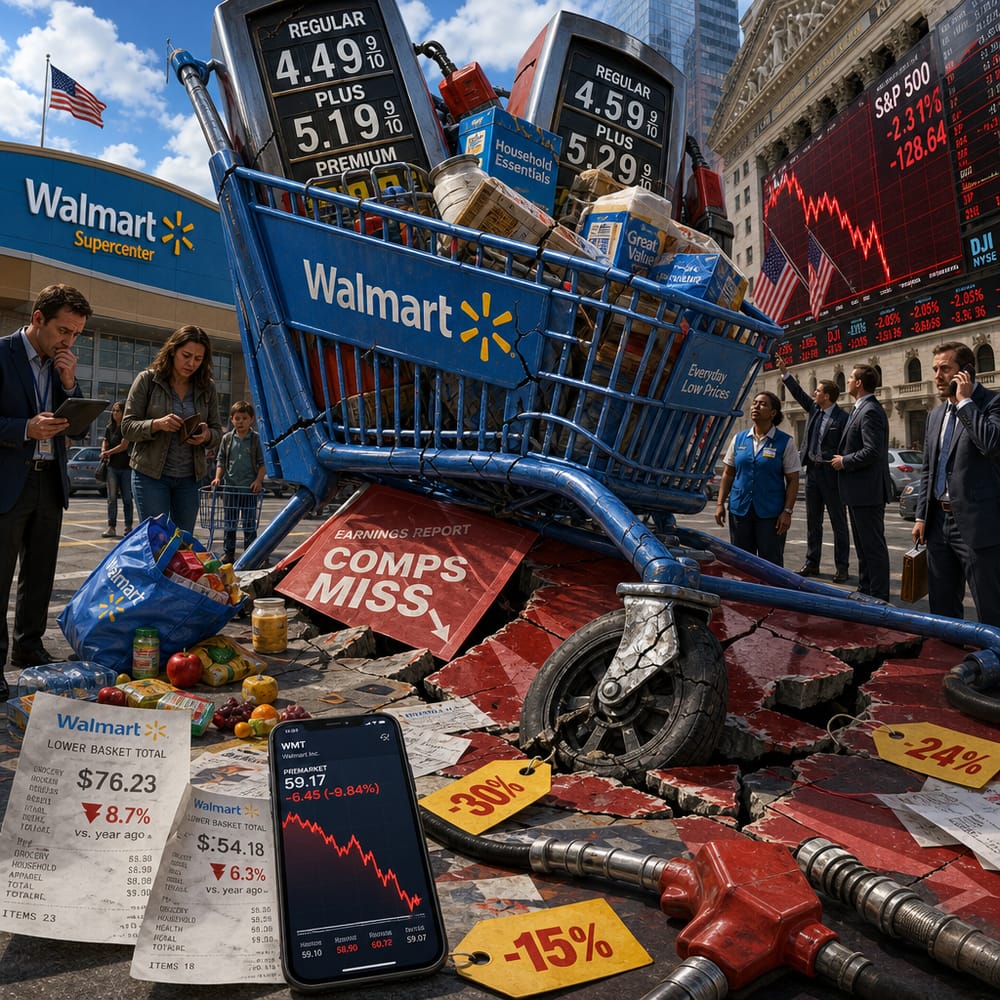
Walmart’s Latest Blues: Are Retailers in for a Storm?
If there’s one thing we can always count on, it’s that when Walmart sneezes, the retail world catches a cold. This week, Walmart not only sneezed but also did a little dance of despair with its latest earnings miss. If you're sipping that overpriced latte right now, brace yourself as we dive into what the company’s recent flub reveals about the economic health of everyday Americans.
Walmart’s shares plummeted by a significant 9% as news broke of its underwhelming performance in the past quarter. The company blamed high gas prices for the decline in comparable sales, a metric that tells us how a retailer's same-store sales have fared over a certain period. Translation? Consumers are holding onto their dollars tighter than ever, likely driving past Walmart in search of cheaper gas rather than strolling its sprawling aisles.
So, what does this all mean for you, the retail enthusiast who’s only mildly obsessed with their stock portfolio? Well, for starters, it signals a harrowing dip in consumer spending. High gas prices are digging into discretionary funds — those precious extra dollars usually spent on non-essentials like that trendy air fryer or the latest video game console. With less disposable cash, consumers are hitting the brakes, pumping only necessities into their shopping carts.
Why should you care? Because when consumer spending takes a nosedive, it ripples through the entire economy. Retailers, especially big-box giants like Walmart, serve as a barometer for economic health. Their performance gives us a sneak peek into the financial pulse of Main Street. Right now, that pulse is looking a bit weak.
This setback for Walmart casts a shadow over the broader retail sector. With its stock taking a hit, the S&P 500 wasn’t spared either, losing 0.7%. It’s not just about one company falling short of expectations; it's the domino effect on others reliant on the same fragile consumer confidence. Retailers across the board are now under pressure to rethink strategies, cut costs, or brace themselves for a slowdown in sales.
While Walmart traditionally thrives on attracting budget-conscious shoppers, even its typically irresistible deals might not be enough to lure in wallets squeezed by elevated fuel prices. The impact could be vast, from sluggish sales of school supplies to curtailed holiday shopping splurges as we edge closer to the end of the year. Yet, this isn’t just Walmart's problem. It’s a retail sector issue, where competitors like Target, Costco, and even Amazon will have to navigate similar choppy waters.
In higher-level discussions, this earnings miss is rattling nerves far beyond Bentonville. Investors are on edge, questioning if this is merely a blip or the start of a more challenging period for consumer-centric stocks. Will other retail giants report similar frustrations? Or could Walmart’s misstep be an isolated incident, a standalone stumble in an otherwise resilient sector?
But hey, while we ponder the fates of our beloved retail stocks, there’s a silver lining. This could be a golden opportunity for companies to innovate. Perhaps it's time for Walmart to double down on its e-commerce game or spruce up in-store experiences to regain consumer affection. After all, necessity is the mother of invention, and in retail, the need to adapt quickly can be a game-changer.
For now, retail investors, it's time to play it smart. Keep a watchful eye on consumer sentiment indicators and retail sales figures. Gas prices may be up, but so could your stocks, should you choose wisely where to hedge your bets. Let this be your cue to dive deeper into earnings calls and forecast meetings, reading between the lines for the next big opportunity.
In this scenario, patience isn't just a virtue; it's a strategy. Recognize the shifts, stay informed, and trust that the retail sector, like a determined underdog in a boxing movie montage, always finds a way to rise again.
This article is for informational purposes only and is not investment advice. Always do your own research or consult a licensed financial professional before making investment decisions.
© Copyright 2024. All Rights Reserved.
© Copyright 2024. All Rights Reserved.