

Wall Street Zen's Mid/Small Cap Rating Adjustments
Sunday, August 30, 2026
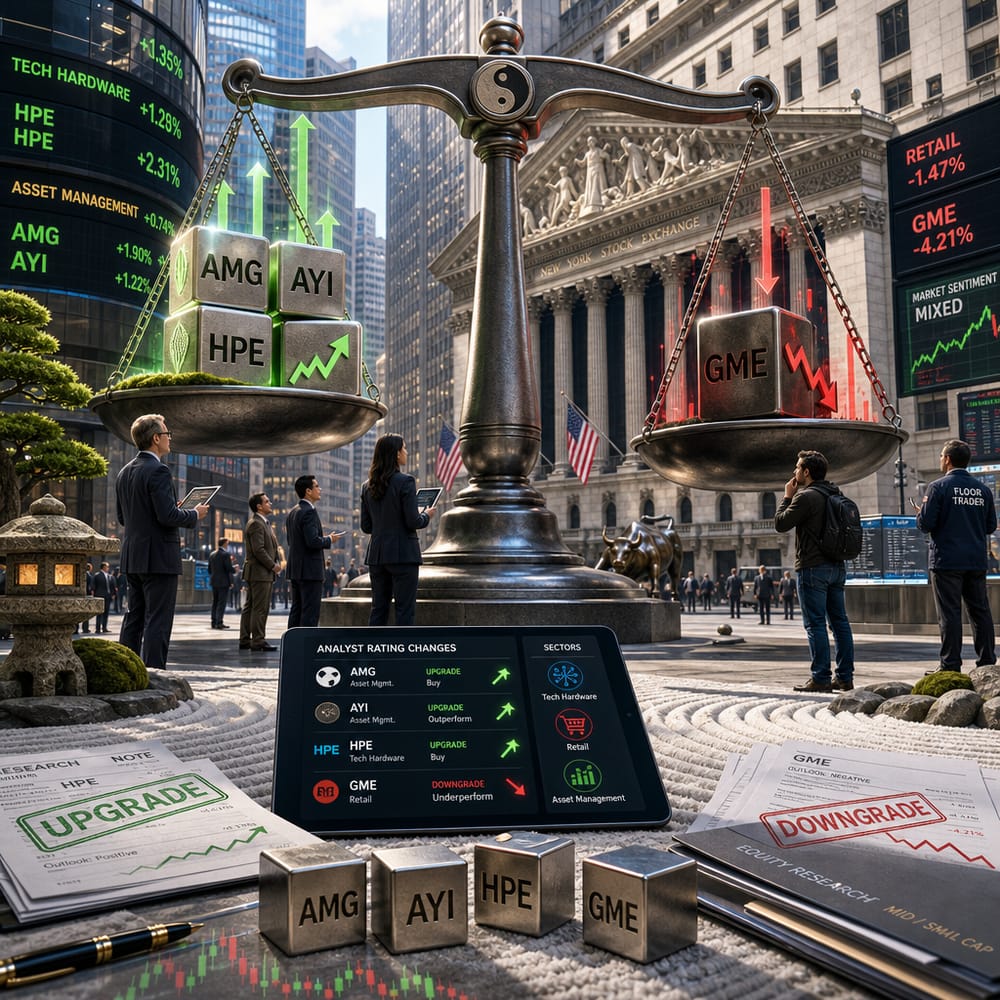
WALL STREET ZEN'S MID/SMALL CAP RATING ADJUSTMENTS
Hold onto your coffee cups, investors, because Wall Street Zen has just shuffled the deck on mid and small-cap stocks. This isn’t some secret handshake club move; it's a clear signal of shifting tides in market dynamics. Tech hardware and retail sectors are making waves, but not necessarily the good kind. Let's dive into what these rating changes mean and why you should care.
WHY THE SHAKE-UP?
Wall Street Zen, the oracle for many investors, has tweaked its crystal ball for certain stocks, hinting at emerging market trends. But why the sudden ratings dance? Well, it’s all about keeping a keen eye on the financial quakes and tremors that ripple through industries.
First off, tech hardware. With companies like Hewlett Packard Enterprise (HPE) undergoing scrutiny, it seems the hardware sector isn’t the golden goose it once was. Perhaps, the global chip shortage finally got on everyone's nerves or the whisperings of AI taking over has folks spooked. Whatever the reason, HPE’s recent downgrade suggests challenges ahead, possibly in the form of a slowdown in hardware spending or fierce competition from more agile players.
Then, there’s retail, a sector always teetering on the edge of innovation and irrelevance. GameStop grabbed headlines as the poster child of meme stock mania but its recent downgrade suggests that buzz can only carry a stock so far. Reality checks are in order, especially as consumer habits and economic conditions continue to evolve.
WHAT DOES THIS MEAN FOR STOCK PERFORMANCE?
These adjustments are more than just analyst whims; they’re a road map for potential stock performance. For Affiliated Managers Group and Acuity Inc, the upgrades might bring a fresh breeze into their sails, hinting at robust management strategies or promising earnings reports that have caught analysts’ eyes.
But for those on the downgrade list, like HPE and GameStop, it’s a wake-up call. Investors might start second-guessing their portfolios, which could lead to a decrease in share price as sentiment sours. That could mean more volatility and less of that sweet, sweet upward momentum investors crave.
SECTOR TRENDS AND INVESTOR SENTIMENT
So, what’s the big picture here? These rating changes aren't just arbitrary judgments; they’re tea leaves hinting at broader sector trends. Here's the skinny: Tech hardware is under pressure, potentially reflecting a shift towards software solutions and cloud-based infrastructure. Meanwhile, retail seems to be in a constant identity crisis, battling between brick-and-mortar nostalgia and the relentless march of online shopping.
For the savvy investor, these rating changes are a cue to reconsider sector holdings. Is it time to pivot towards industries better aligned with current economic trends, like renewable energy or cybersecurity? Or perhaps to double down on those stocks that have dodged the downgrade bullet?
BOTTOM LINE
Wall Street Zen’s rating shuffle is a reminder that nothing stays static in investing. It’s the financial world’s version of musical chairs, but with a heftier price tag. Pay attention to these signals – they can illuminate market sentiment and forecast potential pitfalls or opportunities.
Whether you’re holding, buying, or selling, keep your strategy sharp and your portfolio ready to adapt. After all, the market waits for no investor, and as these rating changes show, agility is often the name of the game.
This article is for informational purposes only and is not investment advice. Always do your own research or consult a licensed financial professional before making investment decisions.
© Copyright 2024. All Rights Reserved.
© Copyright 2024. All Rights Reserved.