

Wall Street Tepid on Iran Deal Progress; S&P Futures Flat Ahead of CPI Data
Tuesday, August 11, 2026
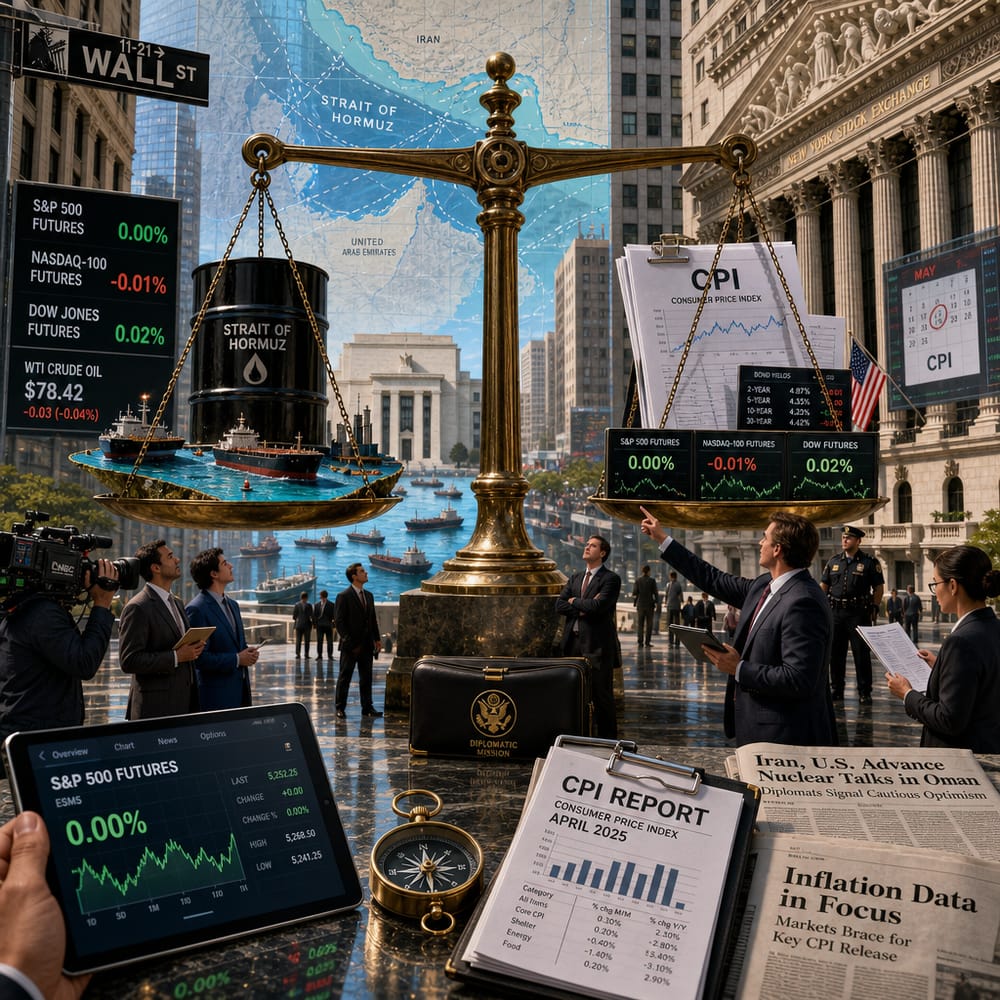
Forget Netflix and chill — today we’re all about Strait of Hormuz and thrill. Wall Street’s got its collective eye glued to the Middle East, where a diplomatic drama is unfurling faster than a TikTok trend. We're talking about the potential reopening of the Strait of Hormuz, a vital artery for the world's oil supply. This could be the plot twist that sends markets on a rollercoaster ride, and you won’t want to look away.
Right now, the S&P 500 futures are about as flat as a soda that’s been left open overnight. Investors are doing what investors do best: weighing, pondering, and sipping double espressos as they try to predict the implications of U.S.-Iran diplomacy. Will they find a way to play nice, or will this be another episode of 'As the Geopolitical World Turns'?
For those of you who might not be caught up, the Strait of Hormuz is a crucial corridor where about a fifth of the world’s oil supply sails through. If diplomacy opens this maritime valve, oil prices could take a dip faster than a rapper’s fly kicks in a sneaker deal. But with Iran holding out until the U.S. makes some concessions, it's a game of geopolitical poker with high stakes and plenty of bluffing.
Meanwhile, investors are also eyeing a different kind of high stakes with the consumer price index (CPI) data just around the corner. That's the key metric for inflation. Rising oil prices have the potential to pour gasoline on the inflation fire, unless, of course, the Strait of Hormuz opens up and brings some welcome relief to oil markets. Lower oil prices could ease inflation expectations; that’s potentially good news for equities, but no one’s counting their chickens just yet.
While Wall Street might be sweating bullets over the Middle East's diplomatic dance, it’s not the only show in town. Over in the tech arena, Nvidia's CEO, Jensen Huang, has been busy charming the suits off Wall Street's big guns, planning a $500 billion investment in AI factories. It seems like everyone from Goldman Sachs to BlackRock is buying into Huang’s vision faster than a flash sale on Black Friday. But what does this tell us? In a world where tech dreams live and die by the flick of an investor's pen, AI is still the belle of the ball.
But back to our main thriller: the Strait of Hormuz and your portfolio. The potential reopening could mean cheaper oil, which translates into lower costs for companies across the board. Think airlines, shipping companies, and pretty much anyone with a gas-burning fleet. Lower costs could help boost profits and placate inflation fears, potentially putting investors in a sunnier mood.
However, let’s not get too carried away in the oil-induced optimism. Geopolitical tensions don’t resolve overnight. Even if the Strait reopens, the ripple effects could take time to flow through the economy. Plus, let’s not forget that while the U.S. may be cozying up to Iran in one corner, there are still plenty of international flashpoints to keep traders on edge.
Now, while you're digesting all this, have a look at the Treasury yields, which are sneaking upwards alongside oil prices. It's like a financial version of "Follow the Leader." Higher yields can be a good thing if you're a fan of safe-haven investments, but they also hint that investors are jittery about inflation or economic growth getting a boost from cheaper oil.
And let's not sidestep the elephant in the room: the mighty U.S. dollar. It's inching higher, which might sound like a good thing, but can make American goods pricier abroad, potentially cooling export demand.
So, what’s an investor to do? Keep a watchful eye on those CPI numbers, and maybe keep a stash of popcorn handy for the U.S.-Iran negotiations. This geopolitical soap opera is far from over, and while the market's current state might seem mundane, the next twist could be just around the corner. Just like in the best TV shows, you never know when the next cliffhanger will hit.
But for now, sit tight and enjoy the show — because if there’s one thing the markets never are, it’s boring.
This article is for informational purposes only and is not investment advice. Always do your own research or consult a licensed financial professional before making investment decisions.
© Copyright 2024. All Rights Reserved.
© Copyright 2024. All Rights Reserved.