

Wall Street's Thanksgiving-Eve Rollercoaster: Sharp Intraday Swings Leave Investors on Edge
Thursday, November 26, 2026
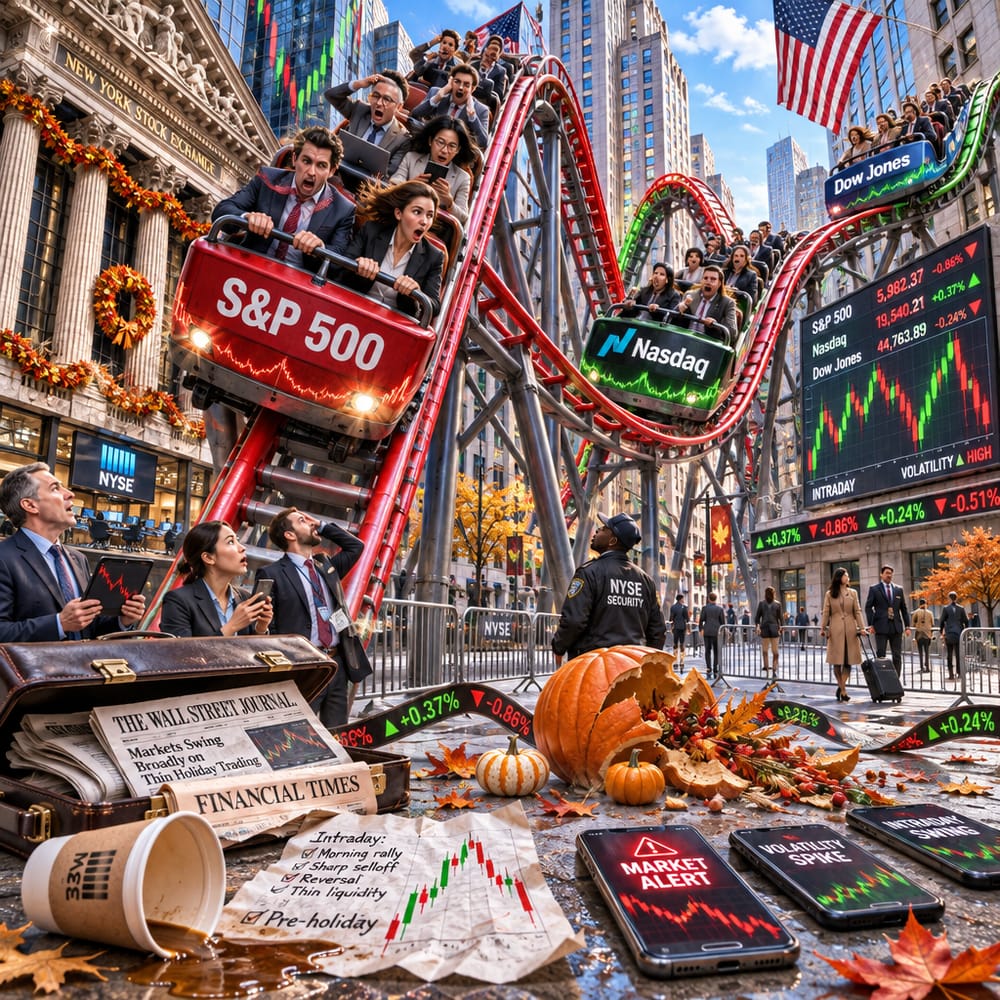
WALL STREET'S THANKSGIVING-EVE ROLLERCOASTER: SHARP INTRADAY SWINGS LEAVE INVESTORS ON EDGE
If you thought turkey with all the trimmings was the highlight of Thanksgiving, think again. Wall Street served up a feast of its own on November 25 with a rollercoaster ride through the stock markets that left investors clutching their portfolios for dear life. Trading on the day before Thanksgiving felt less like your typical calm holiday wind-down and more like a white-knuckled thrill ride, as the S&P 500 and Nasdaq swung wildly, reminding everyone that volatility doesn't take holidays.
So what exactly caused these dramatic intraday swings? Blame it on a cocktail of thin liquidity and investors trying to get a jump on holiday shopping. With many traders already starting their Thanksgiving breaks, the usual volume of trades was light—think empty grocery aisles after a Black Friday sale. In such conditions, even small trades can cause outsized ripples, sending prices on a wild trip up and down the charts.
And let’s not forget about the ever-lurking specter of economic data releases that can throw the markets into chaos. The recent upward revision of the U.S. GDP to a robust 4.3% for the third quarter lit a fire under traders’ seats. Combine that with President Trump’s social media theatrics labeling it a "RECORD SETTING ERROR," and you've got a recipe for market mayhem. These factors, simmering beneath a pot already on the boil, served as the perfect ingredients for a volatile Thanksgiving-Eve stew.
Holiday periods have a knack for throwing the markets a curveball. When liquidity dries up like grandma’s turkey, volatility tends to spike. Why? Because fewer players in the game mean each move carries more weight. Imagine a basketball game where only a handful of players show up—it becomes a whole lot easier, and riskier, to change the score with a single shot. Similarly, in the stock market, low liquidity can magnify price movements, making it a nerve-wracking experience for investors.
Retail investors looking to navigate these choppy waters should strap in and hold on tight. While the allure of quick gains during volatile periods can be tempting, caution is key. Consider dialing down on trading or adjusting stops—those handy automatic sell orders that can help lock in profits or limit losses—to better manage the risk. Remember, just because the markets are open doesn’t mean you have to play every hand; sometimes sitting out is the smartest move.
Traders should also have a weather eye out for economic data that might drop like a surprise snowstorm, catching everyone off guard. Keeping an eye on the broader economic landscape can provide crucial insights into potential market swings. And while headlines might scream about the latest drama—whether it's Trump's GDP tweetstorm or a sudden geopolitical event—sticking to your investment strategy and long-term goals is crucial to maintaining your sanity and your balance sheet.
The wild swings on November 25 serve as a timely reminder: in the stock market, as in life, timing is everything. So as we march toward the end of the year, keep your strategies flexible, your coffee strong, and your eyes on the prize. With holiday trading set to continue offering its own version of market fireworks, retail investors who approach it with a level head and a keen sense of timing can not only survive but thrive.
The holiday season is a time for reflection, and that includes taking stock of your investments as well. Whether you’re reviewing your portfolio by the fire or sneaking a glance at the market between turkey servings, remember that the best strategy is often the one that aligns with your long-term goals. After all, in the world of investing, patience isn’t just a virtue—it’s a strategy.
This article is for informational purposes only and is not investment advice. Always do your own research or consult a licensed financial professional before making investment decisions.
© Copyright 2024. All Rights Reserved.
© Copyright 2024. All Rights Reserved.