

Wall Street's Optimism Amid AI Selloff
Thursday, November 12, 2026
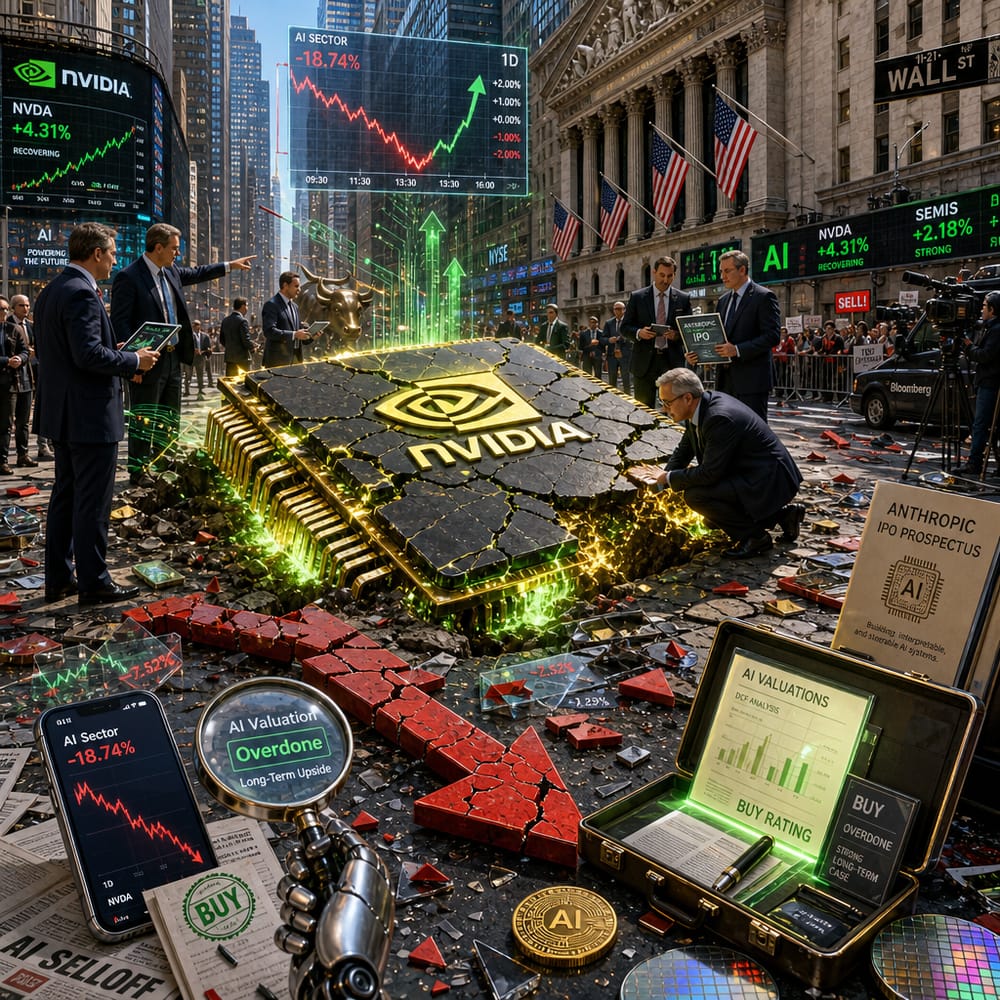
WALL STREET'S OPTIMISM AMID AI SELLOFF
If you’re a fan of roller coasters, you might have enjoyed the recent ride AI stocks took investors on. But for those who prefer their investments to be less like a Six Flags thrill ride and more like a gentle cruise down the lazy river, the past few weeks have been a stomach-churning experience. It’s been a wild selloff in the AI sector, with big names like Nvidia taking sharp dives. But here's the plot twist: some Wall Street hotshots believe this selloff is completely overblown, and they see potential gold mines hidden in the chaos.
Sure, the headlines have been screaming about Nvidia's CEO Jensen Huang stepping down amidst a storm of controversy — the kind that comes with alleged affairs involving international intrigue and stock slides that could make you spill your morning coffee. And yes, Nvidia shares took a nosedive, prompting a collective gasp from investors. But here's the thing: Wall Street analysts are brushing off the panic like dandruff on a dark sweater. They say this selloff is overdone, and they're not just whistling Dixie.
WHY THE SELLING MAY BE OVERDONE
First, let's talk fundamentals. Nvidia isn't some flash-in-the-pan tech company run out of a parent's garage. It’s a cornerstone of AI development, with chips that power everything from deep learning models to autonomous vehicles. The sudden leadership shake-up is a spicy headline, sure, but it doesn't erase the company's dominance in the AI hardware segment. If anything, it might just be a temporary blip on the radar.
Then there's the fact that AI isn't going anywhere. The demand for AI technologies is forecasted to skyrocket. We’re talking about machines that can diagnose diseases better than your doctor, cars that drive themselves while you sip your latte, and everything in between. So, while the market has a temporary freakout, savvy investors are seeing opportunity written all over it.
HOW TO CAPITALIZE ON THE CHAOS
Now, if you're wondering, "How can I jump on this bandwagon and not just hitch a ride on a runaway train?" there are a few strategies to consider. The watchword here is "long-term." You might see some short-term shakiness, but hold your nerve, and you could be laughing all the way to the bank.
One approach is to look into diversified AI funds. These are like the all-you-can-eat buffets of the investment world, spreading risk across various AI players so you're not betting the farm on one horse — especially one that just lost its jockey. Alternatively, consider buying on the dips. If Nvidia’s recent plunge leaves you feeling skittish, keep an eye out for other tech stocks that might be unfairly tarred with the same brush during this selloff.
THE IPO ANGLE
Meanwhile, there's a new player getting ready to strut onto the AI stage: Anthropic. Their IPO is rumored to be around the corner, and it’s causing a buzz. Anthropic is all about safety and reliability in AI — think of them as the seatbelt in your AI-driven car. An IPO in this jittery market might look risky, but it could also signal new strength and innovation in the AI sector. For those with the appetite for a bit more risk, jumping in early on Anthropic could be a way to ride the wave of investor interest in AI safety.
The crux of Wall Street's optimism lies in the bigger picture — the fat lady hasn't sung yet for AI. While Nvidia’s leadership hiccup is the latest headline-grabber, it doesn’t detract from the sector's massive, almost inevitable, growth trajectory.
In the end, those who keep their wits about them might just come out on top. The market’s current AI drama may be enough to make anyone a bit queasy, but remember: roller coasters typically end where they start. And sometimes, those dips are just there to give you a better view on the way back up.
This article is for informational purposes only and is not investment advice. Always do your own research or consult a licensed financial professional before making investment decisions.
© Copyright 2024. All Rights Reserved.
© Copyright 2024. All Rights Reserved.