

Wall Street Recovers After Midweek Bond-Yield Pressure
Monday, August 24, 2026
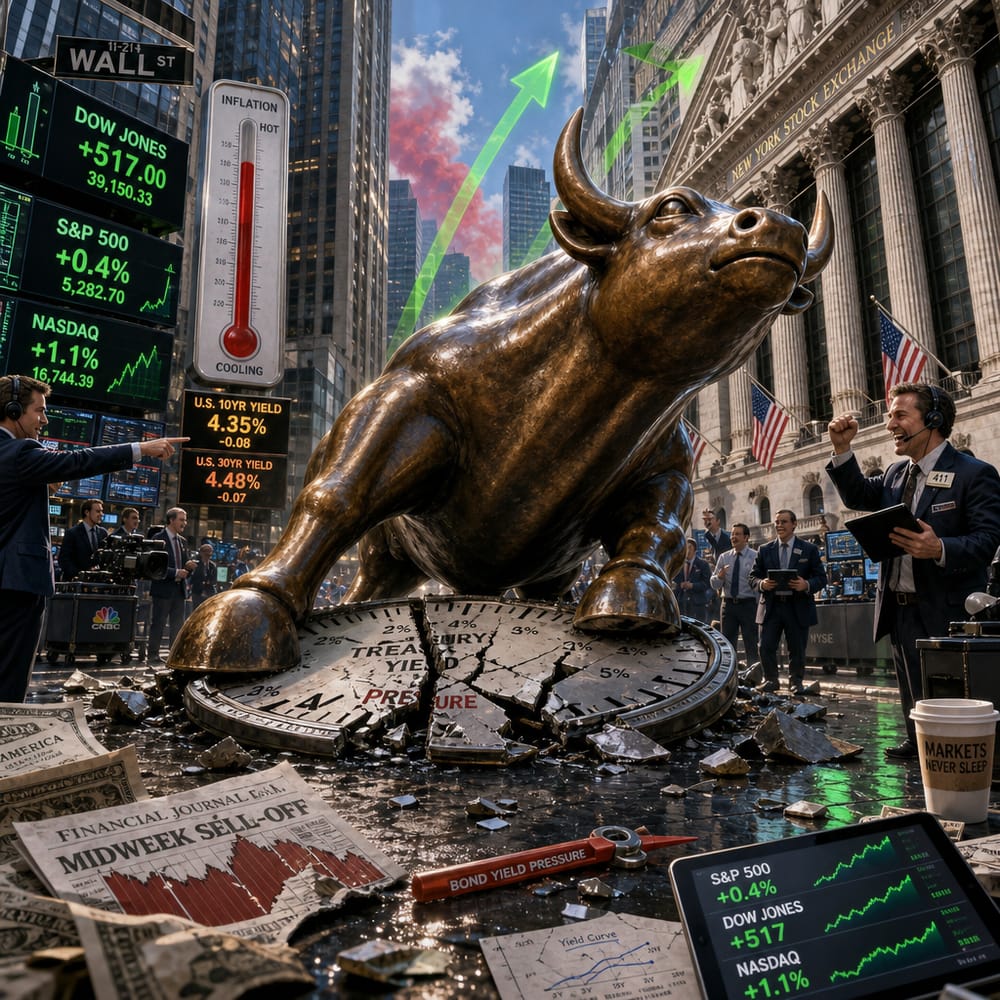
WALL STREET RECOVERS AFTER MIDWEEK BOND-YIELD PRESSURE
Wall Street is acting like it just got a double shot of espresso. After a midweek slump that had investors nervously eying their portfolios, U.S. stock markets rebounded on Friday with the S&P 500 gaining 0.4% and the Dow Jones Industrial Average jumping 517 points. What’s behind this rollercoaster? Let’s dive into the chaos and calm of the financial jungle.
BOUNCING BACK FROM THE BRINK
Picture this: it's the middle of the week, and Wall Street’s mood is as dark as a Monday morning without coffee. Why? Blame it on the bond market. Treasuries, particularly these 10-year notes everyone seems obsessed with, hit the highest yield levels in two decades. Rising yields usually make investors think twice about risky assets like stocks, because bonds start looking extra appealing, like a cozy blanket on a cold day.
The bond yield spike was enough to cause a nose dive, dragging down the likes of the S&P 500 and the tech-heavy Nasdaq, which was already sweating over Nvidia earnings and geopolitical jitters involving Iran. But just as traders were clutching their pearls, news dropped about possible government bond buybacks, sending yields down and letting the stock market catch its breath. It's like the Treasury Department played a financial fairy godmother, waving a wand and calming the chaos.
WHAT REALLY WENT DOWN
So, what made bond yields spike in the first place? It’s like a bad plot twist in a soap opera—expectations that the Federal Reserve will keep interest rates higher for longer due to sticky inflation. Rising rates can tighten wallets and discourage spending, which isn’t exactly a recipe for economic cheer.
And then there’s the “Treasury twist.” Treasury Secretary Scott Bessent tried to massage the yield curve by buying back long-term debt financed with shorter-term debt. This was meant to put a lid on soaring long-term yields, but the effects were as short-lived as a New Year’s resolution. Yields dipped momentarily before bounding back up, leaving traders with whiplash.
While all eyes were on bond yields, geopolitical tensions added salt to the wound, with Iran and potential new sanctions casting a gloomy shadow over market optimism. Not to mention the looming threat of a trade war with Canada, as President Trump announced jaw-dropping tariffs planned for January.
THE BULLS ARE BACK
Despite the midweek drama, Friday's bounce was a sigh of relief, proving once again that market sentiment can turn on a dime—or a basis point. With the S&P 500 climbing and the Dow Jones bucking up, investors seemed to regain their risk appetite. The bond market's pressure eased a bit, and the stock market’s resilience shone, like Rocky Balboa getting up after a knockout punch.
But, just because we got a little respite doesn't mean we're in the clear. The market's mood swings are likely to continue as investors navigate the ongoing economic headwinds. Inflation worries aren't going anywhere fast, and neither is the Fed’s hawkish stance. Plus, geopolitical tensions could stir the pot at any moment, keeping traders on their toes.
WHAT DOES THIS MEAN FOR YOU?
For retail investors sipping their morning coffee, the recent market movements are a reminder of why diversifying your portfolio is key—less stress, more sleep. Keep an eye on those bonds; as yields rise, they could become a more attractive part of your investment pie, like adding a bit of kale to your smoothie.
And while equities rebounded, keeping tabs on economic indicators and central bank chatter is crucial. The Fed's every word can send markets into a tizzy, and being informed could be your best defense against market volatility.
As Wall Street bounces back from its midweek woes, it's a testament to the market’s resilience and the ever-changing tides of investor sentiment. So, as you scroll through financial news during your morning commute, remember: in the stock market, like in life, what goes down must eventually come back up—or at least we hope so.
This article is for informational purposes only and is not investment advice. Always do your own research or consult a licensed financial professional before making investment decisions.
© Copyright 2024. All Rights Reserved.
© Copyright 2024. All Rights Reserved.