

Volatility Watch—VIX Pops as Tech and AI Uncertainty Drive Market Fluctuations
Sunday, November 15, 2026
VOLATILITY WATCH—VIX POPS AS TECH AND AI UNCERTAINTY DRIVE MARKET FLUCTUATIONS
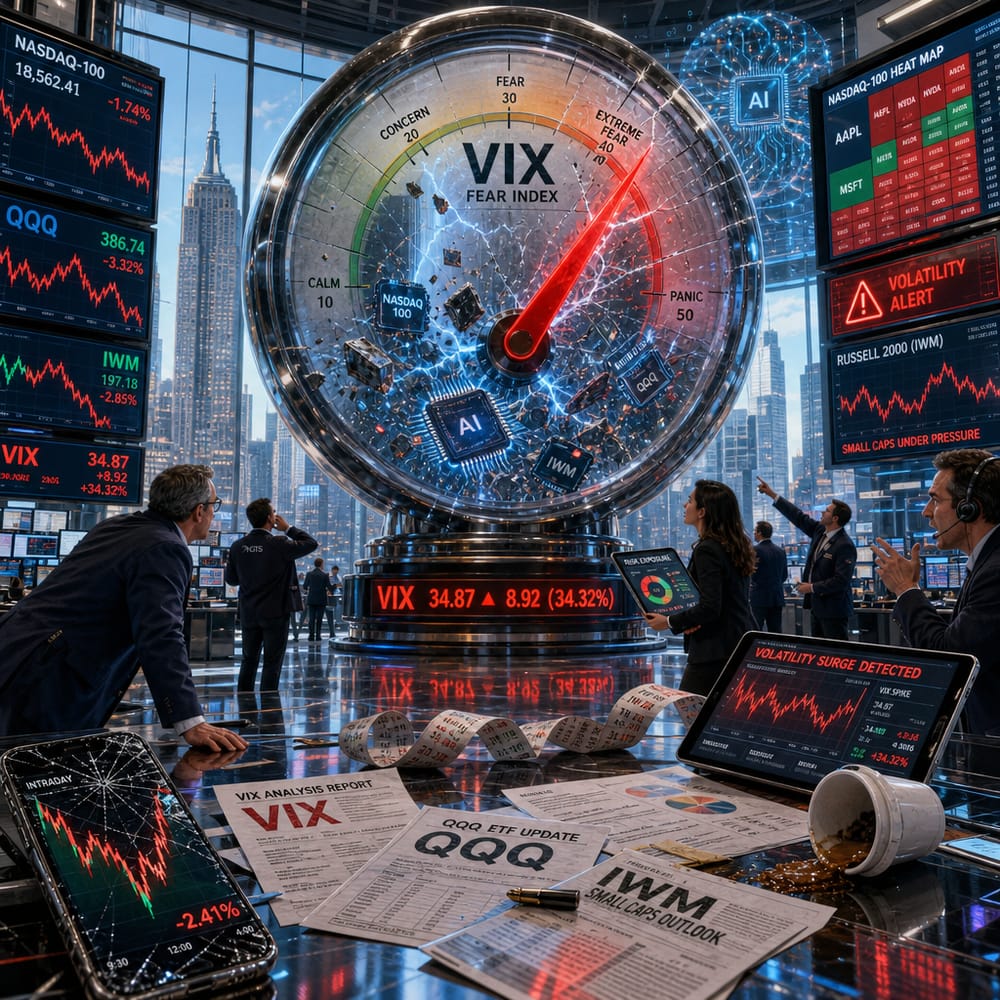
Picture this: Wall Street is once again doing its best impression of a baroque soap opera, rife with plot twists, suspense, and just a pinch of scandal. The star of today's drama? The VIX, that bellwether of market jitters, which recently shot up like a champagne cork at a wedding. If your portfolio has been giving you rollercoaster vibes lately, here's why: a storm of uncertainty is brewing, fueled by the tech sector and its disruptive child, artificial intelligence.
So, what's causing all this market brouhaha? Well, gather 'round. First, there's the high-stakes tech turf war. Take Jensen Huang's recent departure from Nvidia—let's just say it was less of a mic drop and more of a scandalous curtain fall, spotlighting not just personal drama but also tech espionage swirling around U.S. chips and China. When a company as pivotal as Nvidia hits the scandal skids, the ripples spread across the entire tech pond, shaking investor confidence like a Polaroid picture.
Then there's AI—a source of innovation and, it seems, indigestion. While AI applications are reshaping industries on the daily, its rapid integration is raising eyebrows and concerns about everything from ethical use to market disruption. The world where students are allegedly outgunning college admissions offices with AI-assisted essays is the same one where investors are questioning the economic implications of an AI-automated future. This uncertainty propels volatility as investors grapple with the long-term impacts of these technological shifts.
As if navigating the tech tempest weren't enough, there's a macroeconomic subplot. The U.S. economy, not unlike a drama queen, is dealing with a fiscal hangover. National debt levels are teetering on the edge of "sky-high," with whispers of inevitable tax hikes and fiscal tightening echoing across boardrooms. Factor in geopolitical tensions and evolving trade policies, and the market's mood swings start to make more sense.
But wait, what exactly is the VIX, and why does this matter? Known as the "fear gauge," the VIX measures market volatility based on the S&P 500's stock options. A rising VIX suggests investors are betting on bigger swings in market prices, indicating uncertainty and fear. It's like the market's way of saying, "Buckle up, things might get bumpy."
With the VIX popping, investors might be tempted to grab their panic hats and run for the hills. But hold your horses! While volatility can seem as appealing as a root canal, it's not all bad news. For savvy investors, it's a signal to revisit and potentially recalibrate their strategies.
Here’s a pro tip: during volatile times, it's wise to diversify. Check out instruments like the iShares Russell 2000 ETF, which can provide exposure to smaller companies that might weather the storm differently than blue-chip giants. Similarly, the Nasdaq-100 ETF offers a taste of tech's hottest names, but with enough diversity to help cushion against individual shockwaves.
Moreover, some investors play the volatility game itself, using options to hedge against market swings. This kind of strategy is not for the faint-hearted or inexperienced, but for those well-versed in market undertones, it can add a layer of protection against the unexpected.
In sum, while the VIX is flashing caution, it doesn't spell doom. It's more of a wake-up call to rethink, readjust, and maybe even take advantage of the heightened activity. As we weather the current storm of tech-driven uncertainty, remember: every market rollercoaster eventually levels out, and opportunities abound for those watching closely.
So, instead of letting the market's mood swings mess with your zen, consider the bigger picture. Volatility isn't just a villain—it can be a valuable ally, offering insights and opportunities for those who know where to look. Stay nimble, stay informed, and remember—this too shall pass, hopefully leaving our portfolios in better shape than our nerves.
This article is for informational purposes only and is not investment advice. Always do your own research or consult a licensed financial professional before making investment decisions.
© Copyright 2024. All Rights Reserved.
© Copyright 2024. All Rights Reserved.