

Volatility Surge: VIX, Breadth, and Technical Breadth Collapse
Sunday, November 22, 2026
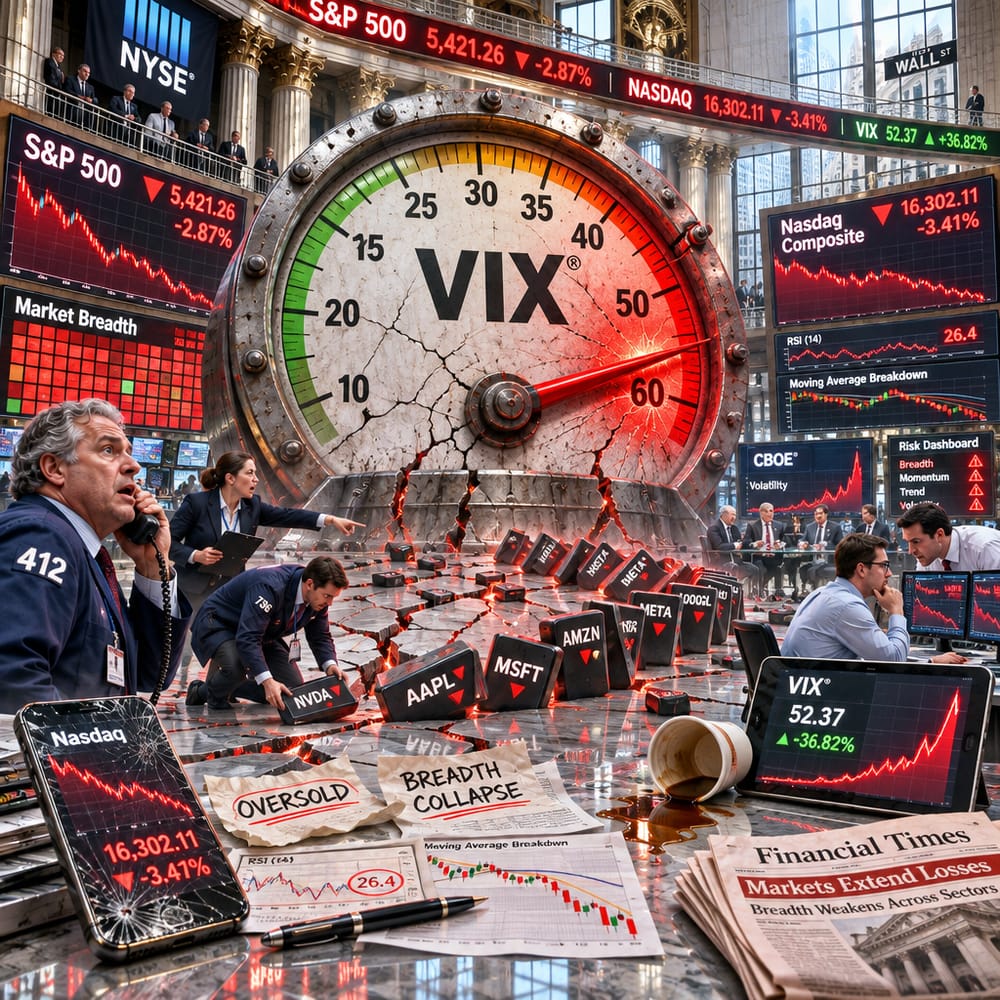
THE VIX IS BACK: WHY INVESTORS SHOULD BRACE FOR A WILD RIDE
Fasten your seatbelts, folks. The stock market's most notorious adrenaline junkie, the CBOE Volatility Index, better known as the VIX, just hit the gas pedal, and it’s got everyone talking. For those unfamiliar, the VIX is Wall Street's "fear gauge," measuring expected volatility in the S&P 500 over the next 30 days. When it spikes, it usually means investors are more jittery than a cat in a room full of rocking chairs.
So, what's got the VIX all riled up? Well, it's a cocktail of factors — a potent mix of economic anxieties, geopolitical tensions, and, let's face it, a good dollop of plain old investor panic. With the Dow, S&P 500, and Nasdaq all descending into correction territory, it feels less like a market dip and more like a full-blown nosedive.
But don't go stuffing your savings under the mattress just yet. Let's break down the chaos and figure out if there's a method to this market madness — and how everyday investors can navigate the stormy seas ahead.
WHAT’S BEHIND THIS VOLATILITY SURGE?
Call it a perfect storm of events. The first suspect on the list? The ongoing drama in the world of AI stocks. The initial buzz of the AI boom had everyone high-fiving over potential gains, but now the reality check has arrived. With AI stocks taking a dive, it's like the market remembered it can’t just keep climbing forever without a breather.
Add to this the less-than-stellar macroeconomic signals. Inflation might be cooling, but not fast enough to ease worries about interest rate hikes. And then there's the global scene — a turbulent mix of trade tensions and political uncertainties that contribute to the uneasy global market vibe.
But perhaps the biggest driver is good old-fashioned human emotion. As Viktor Shvets from Macquarie Capital aptly put it, today's investor freak-out feels more like an emotional roller coaster than a fundamental market collapse. It’s as if the market’s been watching too many horror movies and decided to ghost itself for dramatic effect.
HOW CAN INVESTORS PROTECT THEMSELVES?
In times like these, savvy investors don their financial seatbelts and keep their heads cool. Here are a few strategies to consider when the market plays hard to get:
1. Diversify, Diversify, Diversify: Think of your portfolio as a stew, not a single-ingredient soup. Spread your investments across different sectors and asset classes to soften the blow if one area takes a hit.
2. Don't Try to Time the Market: Even the pros can’t consistently predict market highs and lows. Trying to time your buys and sells can lead to more stress and potential losses. Instead, consider dollar-cost averaging — investing a fixed amount at regular intervals, regardless of market ups and downs.
3. Look for Bargains: Market corrections can unearth gems at a discount. Keep an eye out for high-quality companies with strong fundamentals that might be temporarily undervalued.
4. Stay Padded with Cash: In volatile times, liquidity is king. Having some cash on hand gives you the flexibility to pounce on opportunities or weather further dips without panic.
WHAT CAN HISTORY TELL US?
The market's current roller coaster may feel uniquely intense, but we've been here before. Remember the dot-com bust? The 2008 financial crisis? Each time, investors initially panicked, yet the market eventually rebounded. These historical precedents remind us that volatility is part and parcel of market dynamics.
Investors would do well to heed the lessons of those past downturns: stay informed, stay calm, and think long-term. The market has a knack for recovery, often when least expected.
THE BOTTOM LINE
Yes, the market's recent volatility is a bit like watching a suspenseful thriller — your heart races, and you might even scream a little. But remember, the key is not to let fear dictate your investment decisions. By staying diversified, avoiding impulsive reactions, and keeping an eye on the long game, you can not only survive the market's wild ride but come out stronger on the other side.
So, take a deep breath and remember this isn't the end of the financial world — just a particularly bumpy chapter in the market's never-ending story.
This article is for informational purposes only and is not investment advice. Always do your own research or consult a licensed financial professional before making investment decisions.
© Copyright 2024. All Rights Reserved.
© Copyright 2024. All Rights Reserved.