

Volatility Surge and Risk Sentiment Metrics Signal Heightened Fear
Friday, November 20, 2026
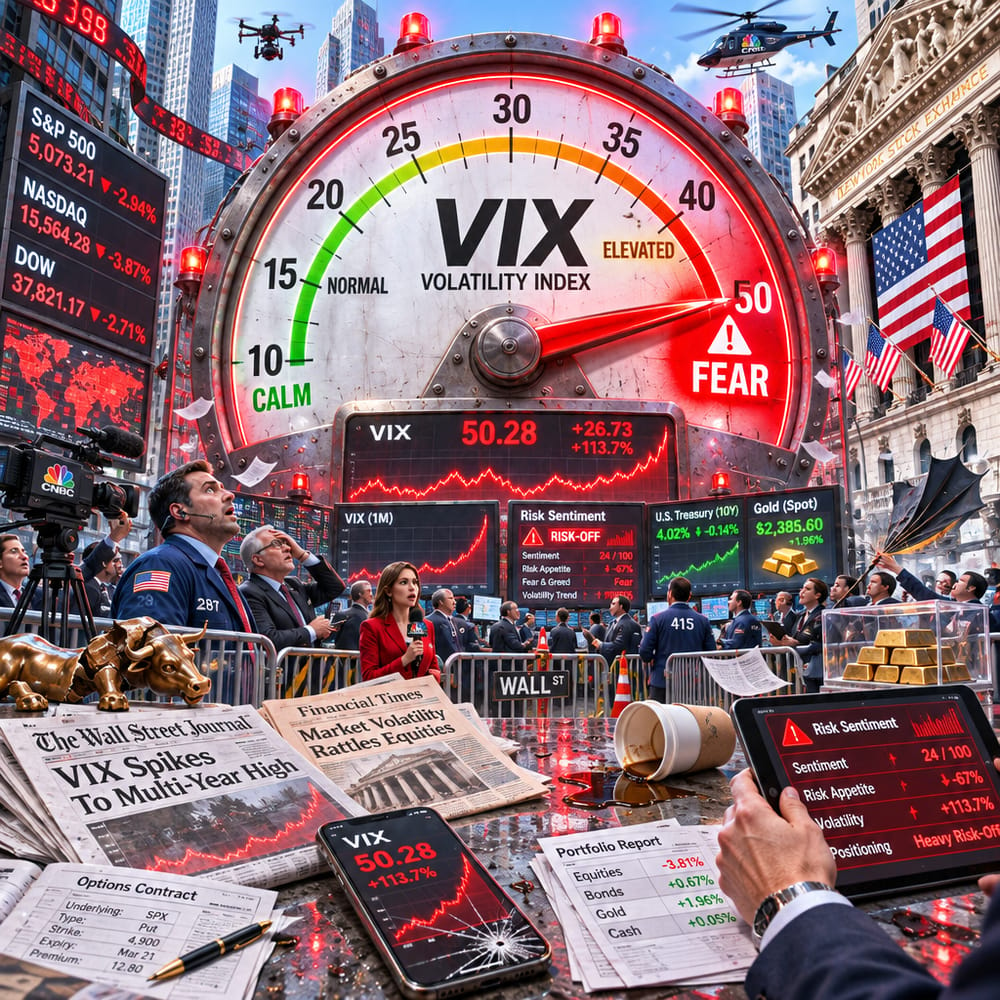
SURF'S UP ON THE VOLATILITY WAVE: WHY YOU SHOULD CARE ABOUT THE VIX SPIKE
Hold on to your portfolios, folks! The financial seas are getting choppy, and everyone's favorite fear gauge, the Cboe Volatility Index (VIX), is making waves. Imagine the VIX as the stock market's stress ball. It's been squeezed so hard lately, it's threatening to pop. What's causing all this drama, and why should you care? Let's dive in.
THE FEAR FACTOR
So, why is the VIX, affectionately known as the "fear index," throwing a hissy fit? Picture this: a perfect storm of recent events has investors more jittery than a cat in a roomful of rocking chairs. First, there's the AI gold rush that turned into a stampede away from tech stocks, highlighted by Anthropic's wild IPO ride and subsequent AI sell-off. The tech-heavy Nasdaq is feeling the burn, dropping like a lead balloon and wiping out its yearly gains.
Add to that a good ol' dose of political uncertainty, courtesy of some classic Trump saber-rattling about data centers and taxes. Sprinkle in a dash of interest rate anxiety—thanks to the Fed's hawkish stance—and you've got a recipe for market volatility that's spicier than a jalapeño.
WHAT DOES IT ALL MEAN?
When the VIX spikes, it's like a neon sign flashing "Danger Ahead" for the stock market. It's telling us that investors are scared, and scared investors can make for a rollercoaster ride in equity markets. Higher volatility means wilder swings, and while some traders thrive on the thrill, it can make long-term investors' stomachs churn.
The fear isn't just about immediate market tumbles; it's about what could come next. High volatility can lead to tighter credit conditions, as banks get skittish about lending. This, in turn, can impact business investments and consumer spending, potentially slowing economic growth. With liquidity drying up, it's like someone pulling the plug in the financial bathtub—suddenly, there's a lot less water to go around.
THE PSYCHOLOGY OF PANIC
Investor behavior is a curious thing. When the going gets tough, the tough... well, they often panic. And panic can be contagious. When volatility spikes, it tends to drive a stampede toward "safe haven" assets like bonds, gold, or even stashing cash under the mattress. This flight to safety can exacerbate market instability as selling begets more selling, leading to a downward spiral.
But here's where it gets interesting. Not everyone is buying a ticket on the fear train. Opportunistic investors might see the chaos as a chance to snag bargains in a sell-off. It's the classic "buy low, sell high" mentality, though easier said than done when nerves are frayed.
LOOKING AHEAD
So, what are the tea leaves saying about future market trends? Well, buckle up, because the ride is expected to stay bumpy. The tech sector, especially those AI darlings, might continue to feel the heat as the initial hype cools. However, not all tech is doomed; bright spots like Alphabet's resilience hint that there may be gems among the rubble.
Elsewhere, global economic factors, such as the ongoing Middle East tensions and evolving geopolitical risks, will likely keep markets on edge. Add in the uncertainty surrounding U.S. economic policies, like Trump's data center drama, and we've got plenty to keep investors on their toes.
As for the VIX? It's a fickle beast, but savvy investors know to keep an eye on it as a barometer of market sentiment. The key is not to let fear dictate your strategy. Staying informed and resisting the urge to react impulsively can protect your portfolio from whipsawing in the wind.
THE BOTTOM LINE
Fear may be in the driver's seat right now, but seasoned investors know it's just one leg of the journey. Whether you're riding out the storm or seeking market missteps to capitalize on, understanding the forces at play can make all the difference. So, keep your wits about you, stay nimble, and remember: in the world of investing, knowledge is your best life vest.
This article is for informational purposes only and is not investment advice. Always do your own research or consult a licensed financial professional before making investment decisions.
© Copyright 2024. All Rights Reserved.
© Copyright 2024. All Rights Reserved.