

Volatility Spikes: VIX Jumps 14%—Is Fear Back?
Tuesday, July 14, 2026
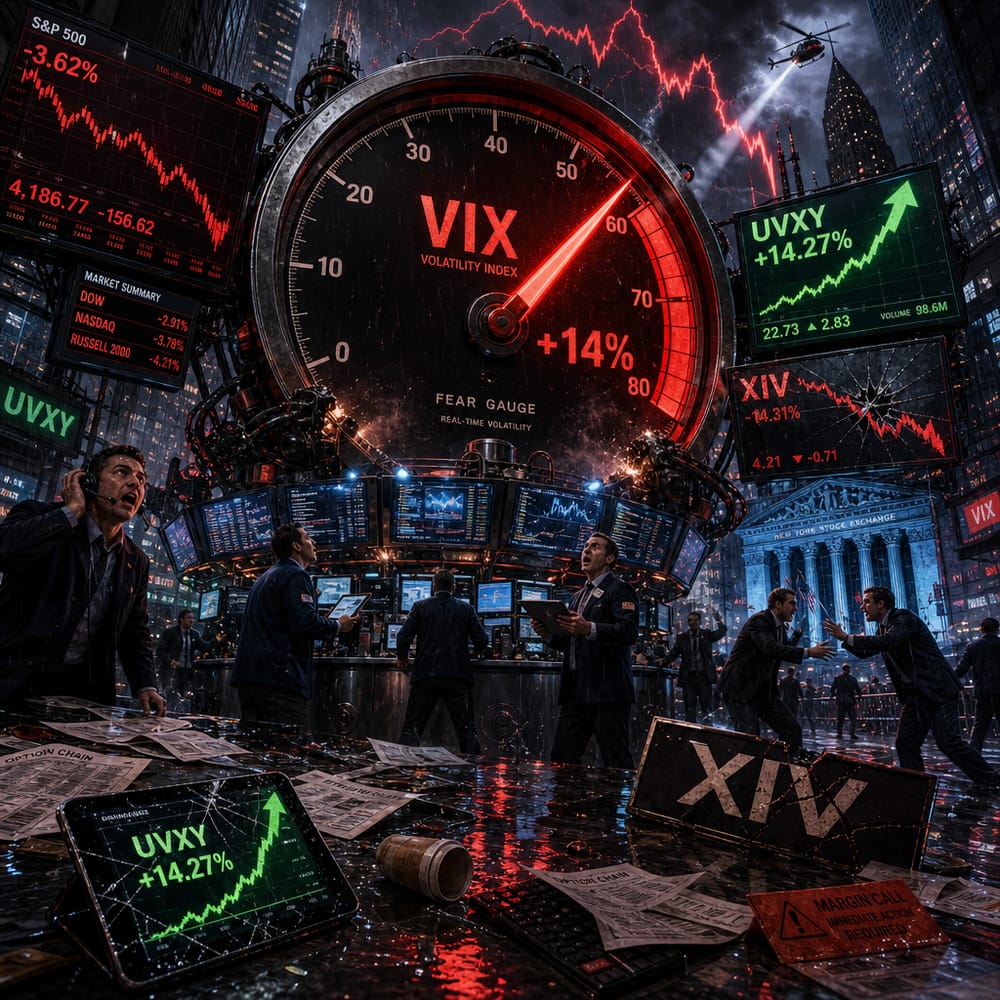
FEAR GAUGE FLASHES: VIX JUMPS 14%—WHAT DOES IT MEAN FOR YOU?
Forget your morning coffee—nothing jolts Wall Street awake quite like a sudden spike in the VIX. The so-called "Fear Index," officially known as the CBOE Volatility Index, just shot up 14.2%, and that's got everyone wondering if the sky is about to fall. But let's cut through the chaos and figure out what this really means for you and your portfolio.
WHAT IS THE VIX, ANYWAY?
Before we dive into the implications, here's a quick and dirty on the VIX. It's basically Wall Street's version of a mood ring, measuring the market's expectations for volatility over the next 30 days. When the VIX goes up, it usually means investors are getting nervous. But why the recent spike? Oh, just a cocktail of geopolitical tension, a looming Fed meeting, and everyone's favorite—earnings season.
OPTION PREMIUMS: ARE YOU PAYING TOO MUCH?
When the VIX climbs, so do option premiums. Why? Because options are basically insurance policies on stock prices, and just like hurricane insurance in Florida, premiums soar when things get dicey. But here's the million-dollar question: Do those higher premiums reflect real risk, or are you just paying for panic? The truth is, in a jittery market, premiums often overshoot the actual risk. Translation: Sellers are pocketing more, and buyers might get a raw deal.
PLAYING THE VOLATILITY GAME: LONG VS. SHORT
Now, onto the fun stuff. How do you trade this volatility? For the daredevils among us, betting on volatility means going long on the VIX. That's where the XIV and UVXY ETFs come in. The XIV aims to profit when volatility decreases, while the UVXY is designed to benefit from a volatility spike. But remember, these aren't stocks you hold and forget. They're more like hot potatoes you'll want to pass before they burn your hands.
MEAN REVERSION: TIMING THE VIX
So when might the VIX simmer down, and what could trigger its reversion back to calmer waters? Historically, the VIX creeps back down once uncertainty clears. Maybe it's a Fed announcement setting traders' minds at ease, or perhaps it's geopolitical tensions cooling off. Timing this is tricky, but those with a knack for reading market moods can potentially cash in as the VIX mean reverts.
FEAR, LOATHING, AND OPPORTUNITY
As much as volatility can feel like a rollercoaster, it's also an opportunity—if you play it right. For those with nerves of steel, now might be the time to nab some bargains while others panic-sell. But if you're more of a nightlight-keeping-you-safe-from-monsters type, it might be wise to sit tight and watch the spectacle unfold.
In the end, the VIX is just a number. It reflects a jittery market, sure, but it's important to remember that volatility isn't inherently bad. It's a natural part of investing, and if you navigate it wisely, it can be an ally, not an enemy. So, buckle up, stay informed, and maybe even enjoy the ride. After all, what fun is a straight line when you've got the thrill of the market's ups and downs?
That's it for this market rollercoaster update. Keep your eyes peeled for the next big move, and remember: in the world of investing, fortune favors the bold.
This article is for informational purposes only and is not investment advice. Always do your own research or consult a licensed financial professional before making investment decisions.
© Copyright 2024. All Rights Reserved.
© Copyright 2024. All Rights Reserved.