

Volatility Spikes as Market Sentiment Turns Cautious
Wednesday, November 18, 2026
VOLATILITY SPIKES AS MARKET SENTIMENT TURNS CAUTIOUS
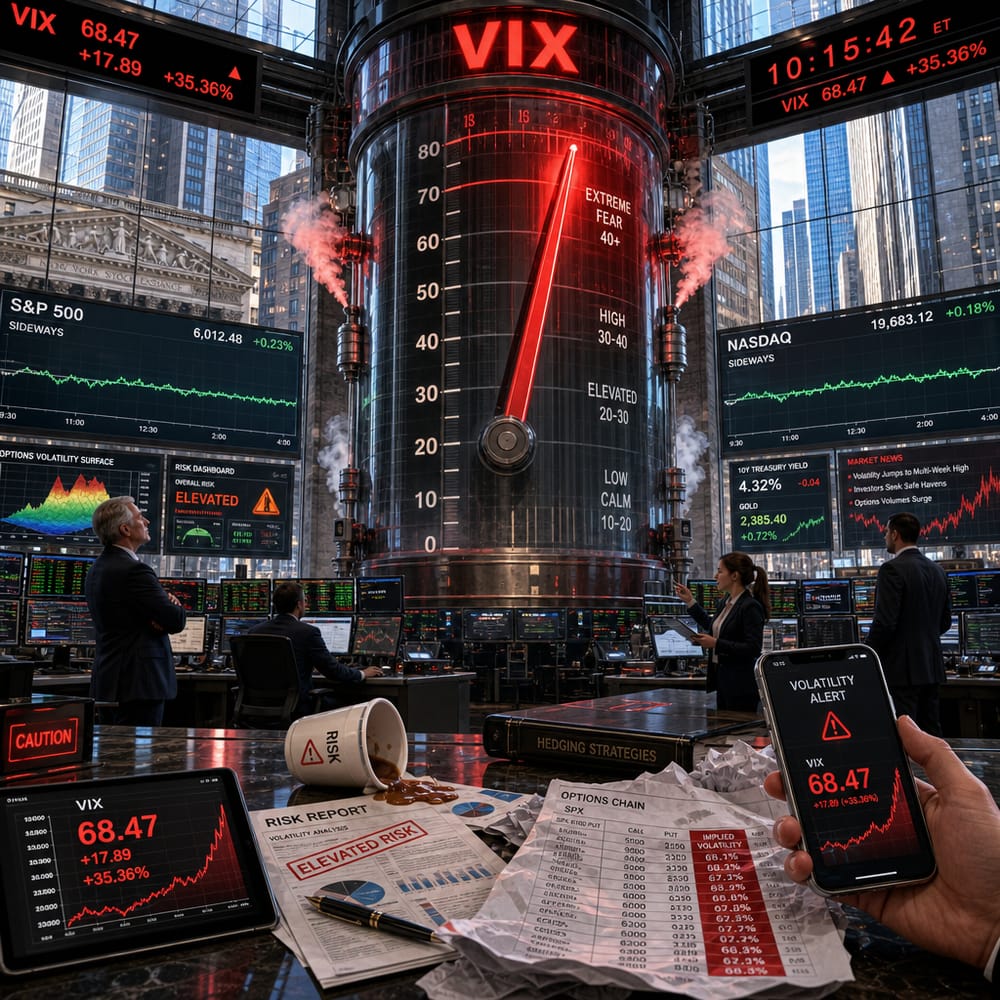
Ever feel like the stock market's a wild roller coaster ride? Strap in, because the VIX—often dubbed the "fear gauge"—has been doing its best impersonation of a bungee jump, bouncing to new heights and sending shivers through Wall Street. But what’s really going on under the hood, and why does it matter to you, the everyday investor?
First, a quick primer for the uninitiated: the VIX is essentially the market’s mood ring. Officially, it measures stock market volatility based on S&P 500 options prices. When it spikes, as it has recently, it means investors are anticipating rockier seas ahead. And no, this isn’t just another blip on the radar—this is the highest level we've seen since that unfortunate tango with a global pandemic.
So why the sudden spike? Well, a confluence of global events and domestic jitters are throwing the market out of whack. For starters, there’s the geopolitical page-turner happening in China where Trump, Xi, and Putin are having some high-stakes tête-à-têtes. Any time these three powerhouses get together, the markets tend to hold their breath, waiting to see if they’ll play nice or trigger the next trade war.
Then there's the Fed. Good ol’ Federal Reserve Governor Christopher Waller dropped the bombshell that a hefty half-point rate hike might be just what the doctor ordered to tame inflation. "You might need to, like, shock people," he told CNBC. Thanks for the heads up, Chris—because nothing says "financial stability" like a jolt to the system. Investors are jittery, fearing aggressive rate hikes could slam the brakes on economic growth.
And let's not forget about earnings season, which is as unpredictable as a cat on caffeine. Nvidia, for instance, is basking in the glow of an earnings beat that has its stock ticking upward. But that’s more the exception than the rule these days. Other sectors are feeling the pinch from rising costs and shifting consumer habits.
So, how does this current bout of volatility stack up against the historical backdrop? Picture it like this: if the VIX were a weather report, we’re standing in a swirling gale rather than enjoying a gentle breeze. Historically speaking, it’s not quite 2008 financial crisis territory, but it’s far from the calm that investors had hoped for as we edge into the year-end.
Now, let’s talk implications. When volatility spikes, it's like a signal flare for investors to rethink their strategies. Higher volatility can lead to increased market uncertainty, which often translates into more conservative asset allocations. Think less YOLO investing in meme stocks and more cautious plays—or at least, that's the sensible advice.
In the near term, the market's direction is anyone's guess, but there are a few scenarios to ponder. If the Fed goes ahead with the predicted rate hikes, bond yields could rise, making safe-haven assets more attractive—a move that might siphon some cash away from equities. Alternatively, if global talks ease trade tensions, we might see a rally, as investors open the risk taps again.
For retail investors, the key takeaway is this: keep your wits about you. With the VIX climbing, it may be tempting to ditch stocks for safer waters. But remember, volatility can also signal opportunity for those willing to ride out the storm. Just make sure your portfolio is well-balanced and you're not overexposed to any single asset. And above all, don’t let the market’s mood swings dictate your financial future. After all, even a roller coaster has its ups.
This article is for informational purposes only and is not investment advice. Always do your own research or consult a licensed financial professional before making investment decisions.
© Copyright 2024. All Rights Reserved.
© Copyright 2024. All Rights Reserved.