

Volatility Spike and Fear Gathering: VIX and Sentiment Indicators Surge
Sunday, November 22, 2026
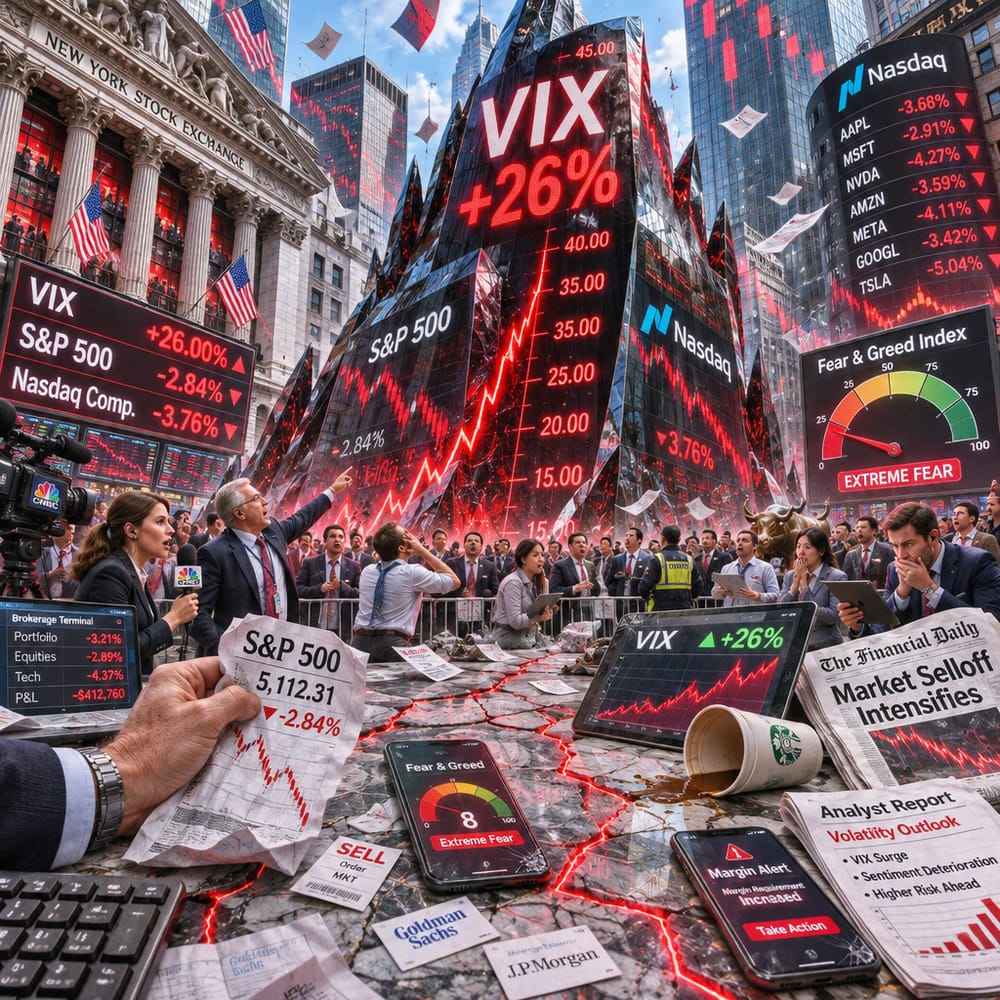
THE FEAR FACTOR: WHY THE VIX IS WAVING A RED FLAG
In the financial world, when the VIX speaks, investors tend to listen. And right now, it's all but screaming. Known as the "fear gauge," the VIX has skyrocketed over 26% recently, sounding the alarm on heightened market volatility and investor anxiety. So, what’s got the VIX in a twist, and how should you, the savvy retail investor, react?
THE PLAYERS BEHIND THE DRAMA
Picture this: the stock market as a high-stakes theater production, with every actor scrambling backstage amid a sudden plot twist. That's volatility for you, and the primary drivers behind this latest spike are aplenty. First up, the tech sector is throwing a bit of a tantrum. A recent AI selloff is ripping through the market like a toddler through a Lego tower — chaotic and with far-reaching consequences. This turbulence is reminiscent of the dot-com bubble burst, casting a shadow over investor sentiment.
Meanwhile, geopolitical tensions are adding to the spectacle. The recent powwow between Trump and Xi Jinping ended with more drama than a soap opera, leaving markets jittery about future trade and tech cooperation. And let's not forget South Korea's step-in with phased measures to stabilize their own volatile markets. It seems the world's economic powerhouses are playing a financial tug-of-war, and the markets are feeling the strain.
INVESTOR STRATEGIES: TO PANIC OR NOT TO PANIC?
With the VIX waving its hands in the air, investors are caught in a classic fight-or-flight scenario. Many are fleeing to the comfort of bonds, those trusty financial blankets, seeking solace in low-risk, steady returns. Others are hedging their bets with options strategies — buying puts like they're going out of style to guard against potential losses.
However, history teaches us that volatility isn't just a harbinger of doom; it's an opportunity for those with a keen eye and a sturdy constitution. Past spikes, like the ones seen during the financial crisis of 2008 or the pandemic-fueled rollercoaster of 2020, have shown that markets are resilient. They stumble, they wobble, but they also recover, offering bargains for the daring.
SO, WHAT SHOULD YOU DO?
First off: don't panic. Markets, much like life, are unpredictable, and volatility is a natural part of the cycle. If you're a long-term investor, keep your eyes on the horizon. Diversification remains your best friend — think of it as having a well-balanced meal, with a mix of equities, bonds, and maybe a sprinkle of commodities for that extra spice.
For the more adventurous, a market downturn could be a treasure trove of cheap stocks, ripe for the picking. Companies with strong fundamentals and growth potential often get caught in the turbulence, offering a golden opportunity to buy low.
However, as you navigate these choppy waters, keep an eye on sentiment indicators. They're like the mood ring of the market — a useful gauge of when fear might be turning into greed or when the storm clouds are parting.
A STITCH IN TIME: LEARN FROM THE PAST
History might not repeat itself, but it sure does rhyme. During previous volatility spikes, those who stayed the course often came out ahead. Take the S&P 500 and Nasdaq Composite, for instance. Despite the bumps, they've shown impressive resilience and growth over time.
Investors who panicked during past crises often found themselves selling at the bottom and missing out on the subsequent rebounds. In contrast, those who held their ground, or even doubled down when prices were low, reaped the rewards when markets bounced back.
In the end, the VIX is a reminder: markets are as much about sentiment as they are about numbers on a screen. While fear can be a powerful motivator, so too can patience and a well-thought-out strategy. So, next time the market throws a tantrum, take a deep breath, consult your financial plan, and remember that in the world of investing, fortunes often favor the bold and the informed.
This article is for informational purposes only and is not investment advice. Always do your own research or consult a licensed financial professional before making investment decisions.
© Copyright 2024. All Rights Reserved.
© Copyright 2024. All Rights Reserved.