

Volatility Index Declines as Investor Confidence Grows
Thursday, August 13, 2026
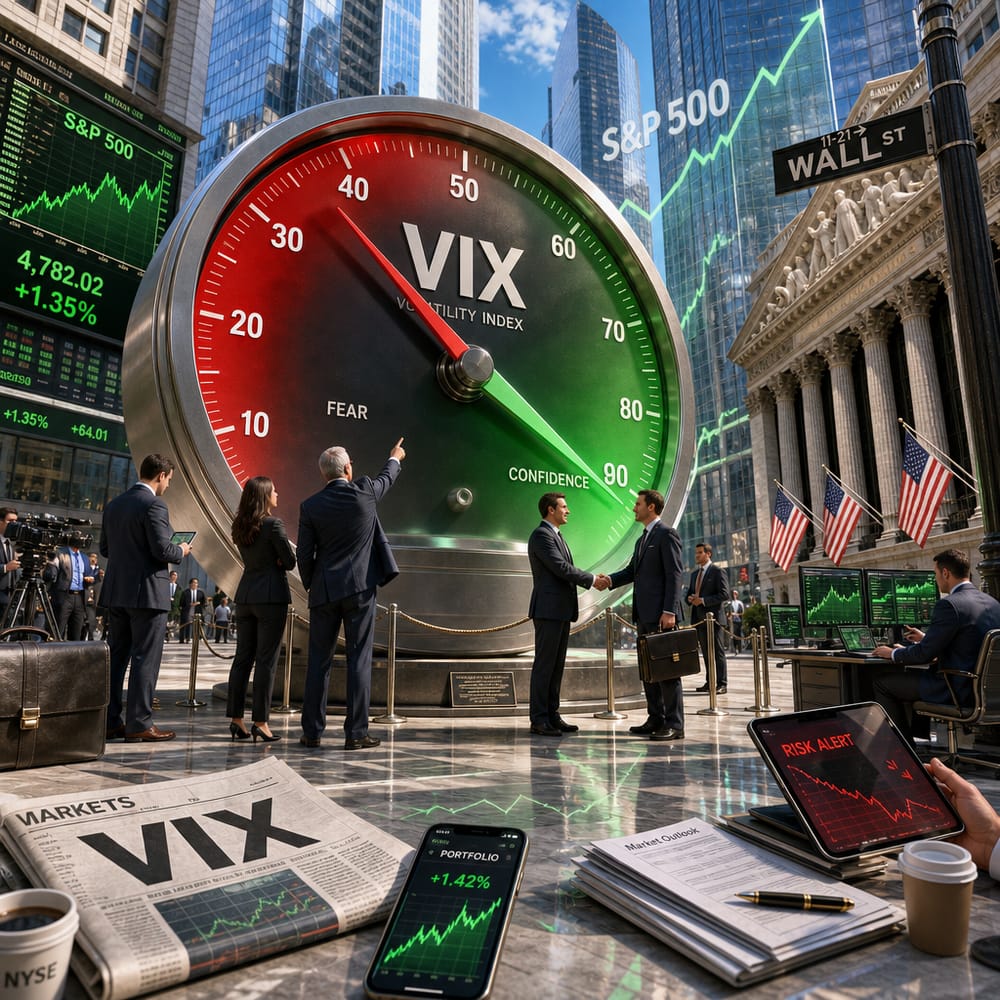
Let's dive into the VIX, folks—no, not a new tech gadget from that mysterious company down the block, but the market's very own fear meter. If you haven't heard, the VIX has taken a bit of a vacation lately, lounging around at lower levels and telling us that investors are sipping their morning brews with a little more zen.
So, what on earth is this VIX thing? Officially, it stands for the Chicago Board Options Exchange Volatility Index. But for us lay folk, it's like the stock market's mood ring, reflecting the collective anxiety lurking in the wings. A high VIX means investors are biting their nails, anticipating turbulent times. A low VIX? It's more like, "Hey, everything's chill."
This week, the VIX is catching some rays, dropping to levels that indicate investors are feeling more confident in the market's stability. With fewer market jitters, there's a palpable sense of calm that's helping to prop up stock prices, especially in the S&P 500, the heavyweight champ of the stock market world.
Now, let's talk about why our market's fear gauge is calming down. It's not just because everyone's meditating more. A couple of big reasons are at play. First up, inflation data has cooled off. With numbers showing inflation isn't skyrocketing, investors are breathing easier, thinking maybe, just maybe, the Federal Reserve won't crank up interest rates again soon. Keeping rates steady could mean more predictable returns for equities, giving the stock market a much-needed peace of mind.
But that’s not all that's buoying our spirits. Companies within the S&P 500 are flaunting record-high profit margins, soaking up every dollar like a sponge. With businesses rolling in profits, stocks are getting an extra spring in their step. It’s like finding out your favorite band is launching a comeback tour—good vibes all around.
So what does a serene VIX mean for investors like us? In short, reduced market volatility can shift how we approach investing. Traditionally skittish investors might feel emboldened to dip their toes into riskier waters. When people aren't expecting the market equivalent of a rollercoaster, they're more likely to invest in equities, potentially boosting stock prices even further.
With lower volatility, strategies might lean towards the long game. The kind of stocks you'd take home to meet your parents—they’re stable, reliable, and not likely to pull any wild surprises. On the flip side, traders who thrive on market swings might find themselves in a bit of a snooze-fest, as less turbulence offers fewer opportunities to ride the highs and lows.
But remember, the market, much like your unpredictable roommate, can switch its demeanor in a heartbeat. We might be in a lull, but external factors—geopolitical tensions, unexpected economic data, or even corporate financial surprises—can stir the pot, cranking that VIX right back up.
Consider the broader market environment. The ongoing AI boom, despite questions around its ROI, continues to sprinkle magic dust on tech stocks, propelling them forward. Meanwhile, traditional sectors are also showing resilience, with real estate and infrastructure showing promise, according to Mizuho's recent picks.
Ultimately, while a low VIX suggests confidence, it doesn't spell out a foolproof path. It's a signal, not a guarantee. So, whether you're a cautious tortoise or a bullish hare, staying informed and agile is key. Keep an eye on the VIX, but remember to look beyond it. After all, the market is a living, breathing beast with a personality all its own—one that’s worth understanding if you're going to ride alongside it.
This article is for informational purposes only and is not investment advice. Always do your own research or consult a licensed financial professional before making investment decisions.
© Copyright 2024. All Rights Reserved.
© Copyright 2024. All Rights Reserved.