

Volatility in Mega-Cap Stocks: Apple, Amazon, Nvidia
Saturday, August 22, 2026
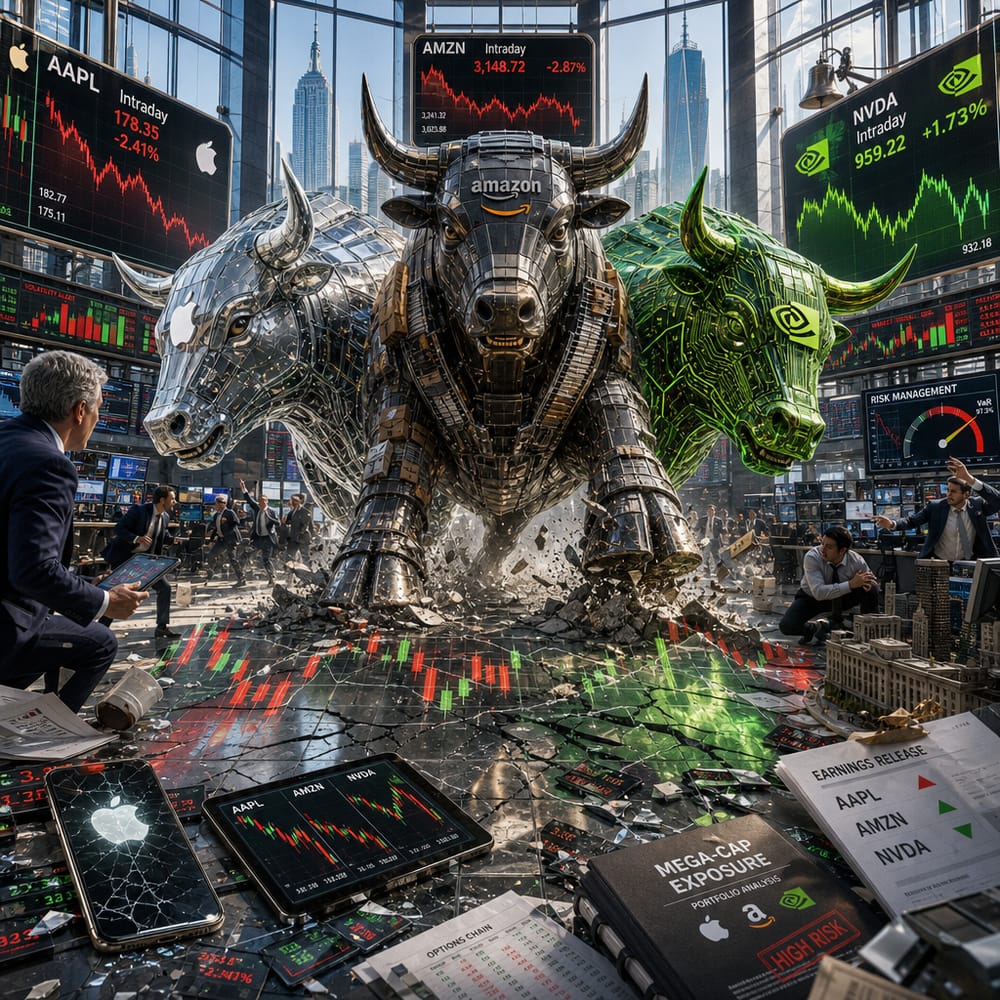
MEGA-CAP MAYHEM: APPLE, AMAZON, AND NVIDIA'S WILD RIDE THROUGH VOLATILITY
If stock markets were the Wild West, mega-cap stocks like Apple, Amazon, and Nvidia would be the notorious gunslingers drawing all the attention—not to mention all the drama. Recently, these tech titans have been throwing investors for a loop with more twists and turns than a summer blockbuster.
So, what’s been shaking up these giants? And how should retail investors like us keep a steady hand on the reins? Let’s dive in.
THE BIG SWINGERS
Lately, owning shares in Apple, Amazon, or Nvidia has been like riding a rollercoaster blindfolded. One minute you're cruising with gains, the next you’re plunging down faster than you can say “stock split.” Intraday swings have been enough to make even seasoned investors clutch their pearls. But what's triggering this market mayhem?
First off, let’s talk earnings. Nvidia recently reported some eye-popping results that have both excited and worried investors. The company's role in AI technology is indisputable, and that’s been great for business... until expectations become too high to meet. It's the classic case of "buy the rumor, sell the news" gone wild. Investors gobbled up Nvidia shares in anticipation of blowout earnings, only to start selling off once reality set in—a classic recipe for volatility.
Now, add a sprinkle of geopolitical tension. With the U.S.-Canada trade talks collapsing faster than a cheap tent, tariffs are flying around like confetti at a parade. And while this might seem as distant from your Apple stock as the moon, trade tensions have a way of unsettling markets across the board. When tariffs ramp up, the ripple effects can shake investor confidence and escalate market jitters.
TECHNOLOGY TITANS AND INDEX TREMORS
Here’s why you should care about these wild swings: Mega-cap stocks aren’t just any stocks. They’re the heavyweight champions in the ring, and when they move, they can shake the entire market. Apple, Amazon, and Nvidia hold significant weight in major indices like the S&P 500 and Nasdaq. So, when they swing dramatically, they drag the indices—and often, our portfolios—along for the ride.
For retail investors, these swings can feel like trying to predict the weather in the middle of a hurricane. But fear not; there are ways to anchor your investments amid the chaos.
STEADYING THE SHIP
First, don’t panic. It’s easy to feel like jumping ship when stocks start to tumble, but knee-jerk reactions can be costly. Take a cue from investing legend Warren Buffet: "Be fearful when others are greedy and greedy when others are fearful." Patience is a virtue in investing.
Diversification is your friend. Sure, mega-caps are tempting, but putting all your eggs in one basket is like betting your savings on a single roll of the dice. Balancing your portfolio with a mix of tech stocks, value stocks, and some good old-fashioned bonds can help buffer against the wild swings of a single stock or sector.
You might want to consider stop-loss orders. This little trick allows you to set a specific price limit on a stock, giving you a safety net to minimize losses. Think of it as an insurance policy against your stock going on a nosedive.
Last but not least, stay informed but don’t let the news cycle dictate your strategy. Yes, Nvidia’s latest chip might be the toast of the tech world today, but tomorrow’s headlines could sing a different tune. Keep a level head and focus on long-term goals rather than short-term noise.
THE FINAL WORD
At the end of the day, investing in mega-cap stocks like Apple, Amazon, and Nvidia is akin to a high-stakes poker game. The rewards can be substantial, but so are the risks. Understand what you're getting into, manage your risk wisely, and most importantly, don't forget to breathe. After all, the market may be a rollercoaster, but you're in it for the long haul, not just the adrenaline rush.
This article is for informational purposes only and is not investment advice. Always do your own research or consult a licensed financial professional before making investment decisions.
© Copyright 2024. All Rights Reserved.
© Copyright 2024. All Rights Reserved.