

Volatility in Focus: Markets React to Economic Data
Sunday, August 16, 2026
VOLATILITY IN FOCUS: MARKETS REACT TO ECONOMIC DATA
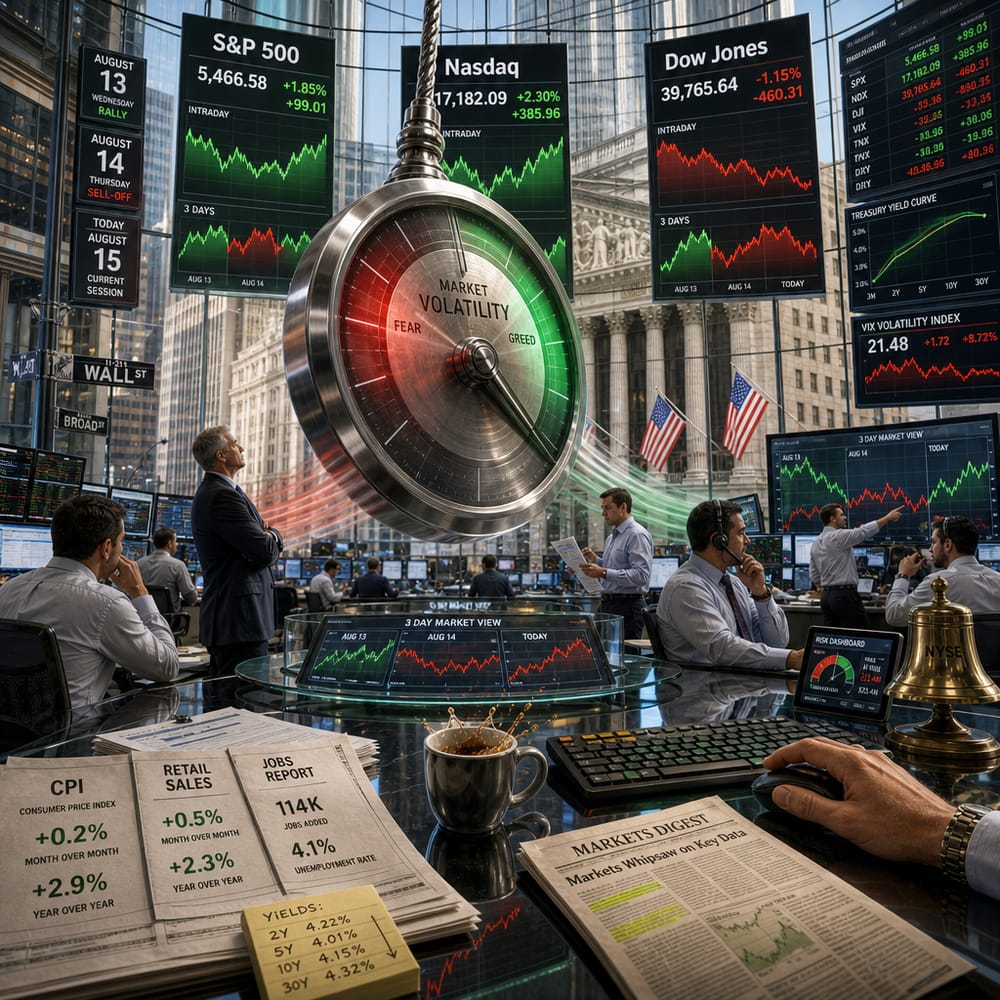
In the dizzying dance of Wall Street, three days can feel like an eternity. And last week, these three days were a wild ride on the stock market roller coaster that left investors clutching their metaphorical stomachs. Buckle up as we dive into the whirlwind of market volatility that made gains on August 13th just a fleeting memory by the 14th.
Economic data can be the puppet master of stock markets, pulling strings that send indices soaring or tumbling. And recently, it’s been one heck of a show. On August 13th, markets were comfortably lounging in the green zone, reveling in gains as optimism spread its wings. The S&P 500, Nasdaq, and Dow Jones all enjoyed a brief holiday in positive territory, fueled by whispers of economic resilience.
But as any seasoned investor will tell you, the stock market is about as stable as a teenager's mood swings. Cue August 14th, when reality hit like a cold shower. Economic data didn’t just knock; it kicked the door down, sending markets into a tizzy. The culprit? A mixed bag of economic indicators that left investors scratching their heads harder than a cat with fleas.
Let’s unravel this tangled mess. The economic data that played spoilsport included a cocktail of retail sales reports, consumer sentiment, and the ever-popular inflation figures. Retail sales had shown better-than-expected numbers, fueling hopes that the consumer spending engine was still chugging along. But wait! Before the confetti could even hit the floor, the Consumer Price Index (CPI) decided to crash the party with less-than-favorable inflation stats.
Inflation is like that one party guest who turns up uninvited and brings a damp towel to the festivities. As soon as it was clear that cost pressures were still simmering, investors quickly switched from party hats to panic helmets. Fears of interest rate hikes crept back in, sending stock indices into a spiral faster than you can say "Federal Reserve."
The implication of such yo-yo market behavior is a bit like trying to catch fish with your bare hands. It keeps investors on their toes, demanding agility and a steady nerve. In this high-stakes game, strategies must evolve as fast as the numbers on the stock ticker.
So, what’s the playbook for investors navigating these choppy waters? Well, balancing short-term data against the broader economic backdrop is a tightrope walk. Think of it as a delicate tango between looking at today’s headlines and keeping an eye on the horizon. Investors are now left pondering whether these fluctuations are mere ripples on the surface or the harbingers of a deeper economic shift.
The broader economic trends at play are like a sprawling novel with multiple plot twists. Central banks, including our dear Federal Reserve, are on the edge of their seats, ready to adjust interest rates like a DJ spinning tracks at a club. And while some analysts preach patience, others are loudly advocating for swift action to tame inflation.
As we gaze into the crystal ball of market futures, it's clear that the road ahead is anything but straightforward. With global events and economic policies shaping currents, the markets are likely to remain a hotbed of volatility. Investors need to be nimble, perhaps adopting a diversified portfolio akin to a well-mixed cocktail—part safety, part risk.
In the end, this latest bout of volatility underscores a key lesson for retail investors: Strap in and prepare for turbulence. Economic data can and will toy with your portfolio like a cat with a brand-new toy. But remember, it’s all part of the grand theater of markets. So, keep your wits about you, your strategies sharp, and your eyes peeled for the next act in this never-ending Wall Street drama.
This article is for informational purposes only and is not investment advice. Always do your own research or consult a licensed financial professional before making investment decisions.
© Copyright 2024. All Rights Reserved.
© Copyright 2024. All Rights Reserved.