

Volatility Eases Slightly Despite Market Jitters: VIX Droops as Broader Sentiment Remains Muted
Saturday, August 29, 2026
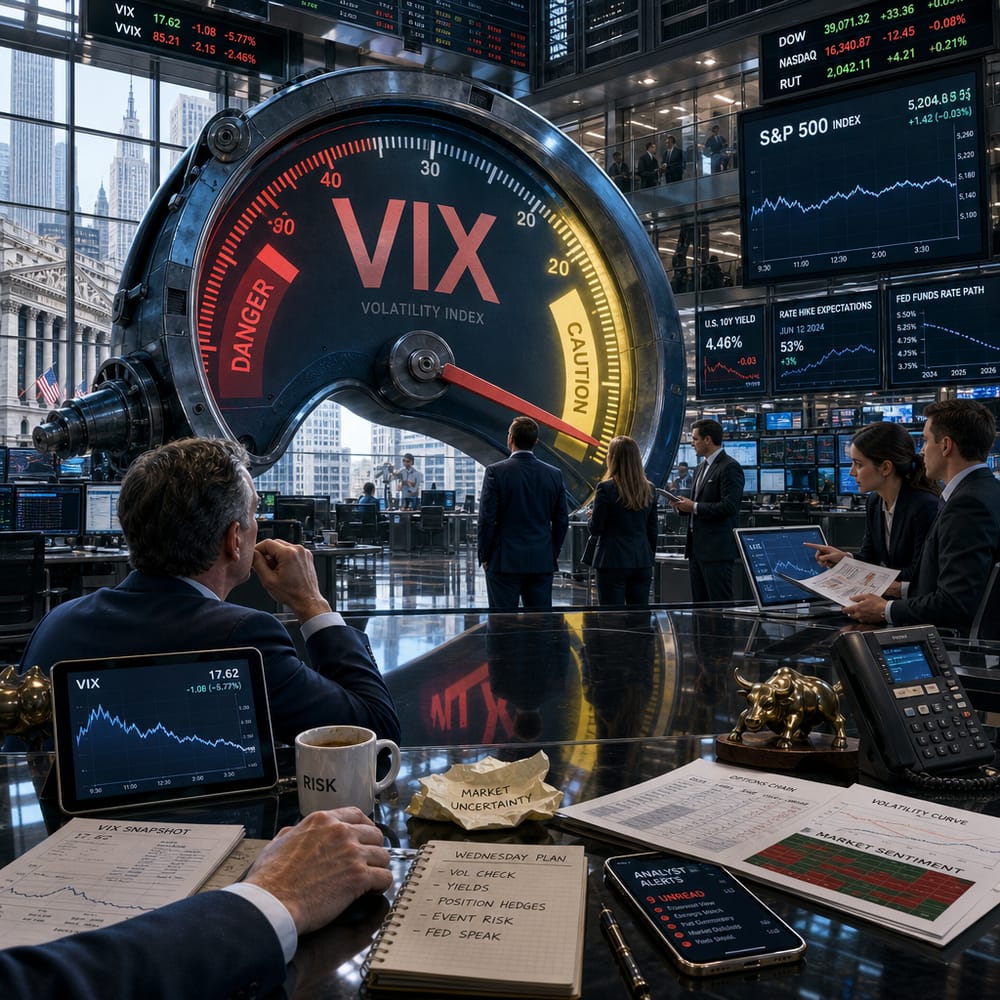
THE VIX TRICK: WHY VOLATILITY IS TAKING A CHILL PILL
Buckle up, investors, because we're diving into the roller coaster that's currently taking a pause: market volatility. With the financial world spinning stories faster than a headline-grabbing celebrity, you might wonder why the Volatility Index—lovingly dubbed the VIX—has decided to take a breather. Despite market jitters and whispers of interest rate hikes, the VIX has taken a slight dip. While the broader market sentiment feels like it’s teetering on the edge of a cliff, the VIX is lounging on a hammock, sipping a piña colada.
WHY IS VOLATILITY SO CHILL?
To the untrained eye, it might seem contradictory. The stock market has all the makings of a daytime soap opera: unemployment rates, rate hikes, and the apparent AI takeover. Yet, here we are with the VIX, a key measure of market volatility derived from S&P 500 options, sitting pretty as if it’s on a beach vacation.
So, why the disconnect? One word: expectation. The market has been bracing for impact since the Fed hinted at rate hikes, but the actual economic data hasn’t thrown any massive surprises our way—yet. Think of it like awaiting a storm that never quite arrives. Investors have had time to adjust, digest the news, and hedge their bets accordingly. Plus, the end of an unusual earnings season has laid bare the cards of many a bigwig corporate, with most managing to hit respectable notes. It’s like the tension before the big reveal at a magic show, except the magician’s assistant is whispering the trick to the audience.
INVESTOR SENTIMENT: KEEP CALM OR FREAK OUT?
Even with the VIX on its sedate path, is the market’s calm demeanor a reason to breathe easy? Not necessarily. While it might suggest investors are seeing storm clouds as far-off dots, it could also mean everyone’s just too calm. Complacency, after all, is a notorious troublemaker in the annals of market history.
Consider this: the VIX—as a proxy for market fear—doesn’t predict direction. It measures expectations. People might simply be feeling like they have a handle on things, or maybe they’re just twiddling their thumbs waiting for the next big thing to panic about.
HOW TO READ THE VIX TEA LEAVES
For the retail investor, interpreting the VIX amid such a backdrop requires a bit of nuance. First, don’t throw it in as the sole ingredient of your investment stew. It’s a piece of a much larger puzzle. A low VIX might not always spell smooth sailing; it could mean the market is ripe for a surprise. Conversely, a high VIX could present opportunities hidden within the bedlam.
When the broader sentiment is muted but stable, it might be an opportunity to review your portfolio. Are you prepared for potential market dips—or upside? Are your holdings diversified enough to weather a sudden storm, should it arise? After all, the VIX might be snoozing, but the markets love waking up in a foul mood when you least expect it.
LOOKING AHEAD
While the VIX enjoys its siesta, it’s crucial to keep an eye on the economic narrative shaping up. Rate hikes are not off the table just yet. Watch out for central bank meetings, unemployment figures, and sector-specific developments that could jolt the index awake. The lesson here is not about trying to outsmart the VIX but understanding its mood swings within the larger market symphony.
In the grand scheme of things, a tranquil VIX doesn’t mean you should stash away your game plan and hit the snooze button. It's a call to stay informed, stay alert, and maybe even indulge in a little healthy skepticism about the calm before... well, you know how the rest goes.
So, while the VIX is on a hammock, maybe it’s your cue to be the diligent lifeguard, ready to spring into action at the first sign of a ripple. After all, in the ever-entertaining, unpredictable world of finance, you never know when the next plot twist might make the waves crash.
This article is for informational purposes only and is not investment advice. Always do your own research or consult a licensed financial professional before making investment decisions.
© Copyright 2024. All Rights Reserved.
© Copyright 2024. All Rights Reserved.