

Volatility and Sentiment: VIX and Risk Appetite Ahead of Key Economic Data
Thursday, August 20, 2026
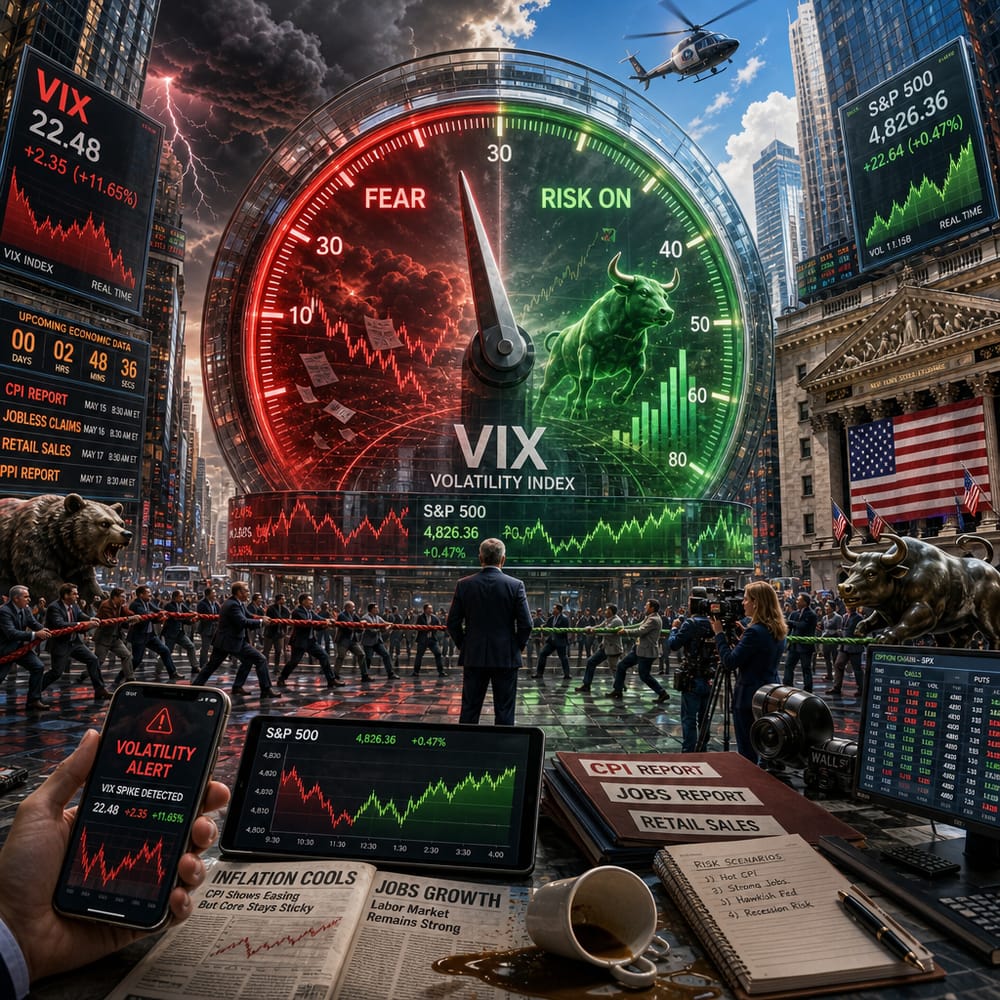
HOW THE VIX IS REVEALING AN INVESTOR TUG-OF-WAR AMID UPCOMING ECONOMIC DATA
If you're feeling a little seasick from all the market ups and downs lately, you're not alone. Investors everywhere are clutching their metaphorical Dramamine as they ride the economic waves, eyes glued to the almighty VIX.
The VIX, short for the Chicago Board Options Exchange's Volatility Index, isn't just an intimidating acronym. Known as the market's "fear gauge," it essentially measures how jittery investors are feeling about the future. When the VIX spikes, it's a bit like the market's version of a collective scream into the void.
As of late, the VIX has been strutting its stuff with more flair than a reality TV star, indicating that investors are on edge as we approach some crucial economic data releases. But what exactly is causing this market heartburn, and why should the average Joe care?
Let's break it down. The VIX is a reflection of the anticipated volatility in the S&P 500—a collection of 500 of America's largest and most influential companies. Think of it as the business world's favorite beauty pageant, where the stakes are sky-high, and the competition is fierce.
When investors start fretting about inflation, interest rates, or the latest not-so-great earnings report, they flock to buy options that shield their portfolios from disaster. This hedge-your-bets behavior sends the VIX climbing, signaling high anxiety levels in the market.
Currently, the VIX is purring at a higher pitch than usual, hinting at some serious market jitters. With crucial economic data on the horizon, like employment figures and the Federal Reserve's next moves, investors are scrambling to position themselves just right. It's like they're all doing the economic limbo, trying to gauge just how low—or high—this whole thing will go.
There's also the little matter of global events that are keeping everyone on their toes. With geopolitical tensions, climate concerns, and tech giants like Alibaba making waves, it feels like every day could be the day that tips the scales.
But what are investors actually doing in response to this volatility? Many are hedging their bets, rebalancing portfolios, and keeping a close watch on bond yields. The recent actions by U.S. Treasury Secretary Scott Bessent to double down on bond buybacks are a testament to this careful maneuvering. By lowering yields, there's a hope of injecting some calm into the stormy seas ahead.
So, why does all this matter to you? Because the VIX's current behavior is more than just a market mood ring; it's a glimpse into what's coming. If the VIX is climbing, expect more bumpy rides in your investment journey, especially as we brace for new data that could sway market sentiment dramatically.
In the grand circus of investing, the VIX is like that eccentric fortune teller trying to predict the market's next big move. And right now, it's hinting at uncertainty ahead. But don’t panic just yet—savvy investors can use this as an opportunity for strategic plays.
Keep an eye on those looming economic reports. Whether they indicate inflation easing, employment rising, or any number of unexpected twists, these updates will fuel the next round of market maneuvering. And remember, volatility isn't always a villain. For the bold, it can be a chance to dive in and seize opportunities others might overlook.
In the end, while the VIX may signal a tug-of-war in risk sentiment, it's also a reminder that change is constant. So, strap in, stay informed, and keep your strategy sharp. After all, investing isn't about avoiding the waves—it's about learning to surf them with style.
This article is for informational purposes only and is not investment advice. Always do your own research or consult a licensed financial professional before making investment decisions.
© Copyright 2024. All Rights Reserved.
© Copyright 2024. All Rights Reserved.