

VIX Flashpoint: Positioning for a Volatility Regime Shift
Tuesday, July 14, 2026
WHEN THE VIX GROWLS: WHAT A SURGE IN VOLATILITY SPELLS FOR YOUR PORTFOLIO
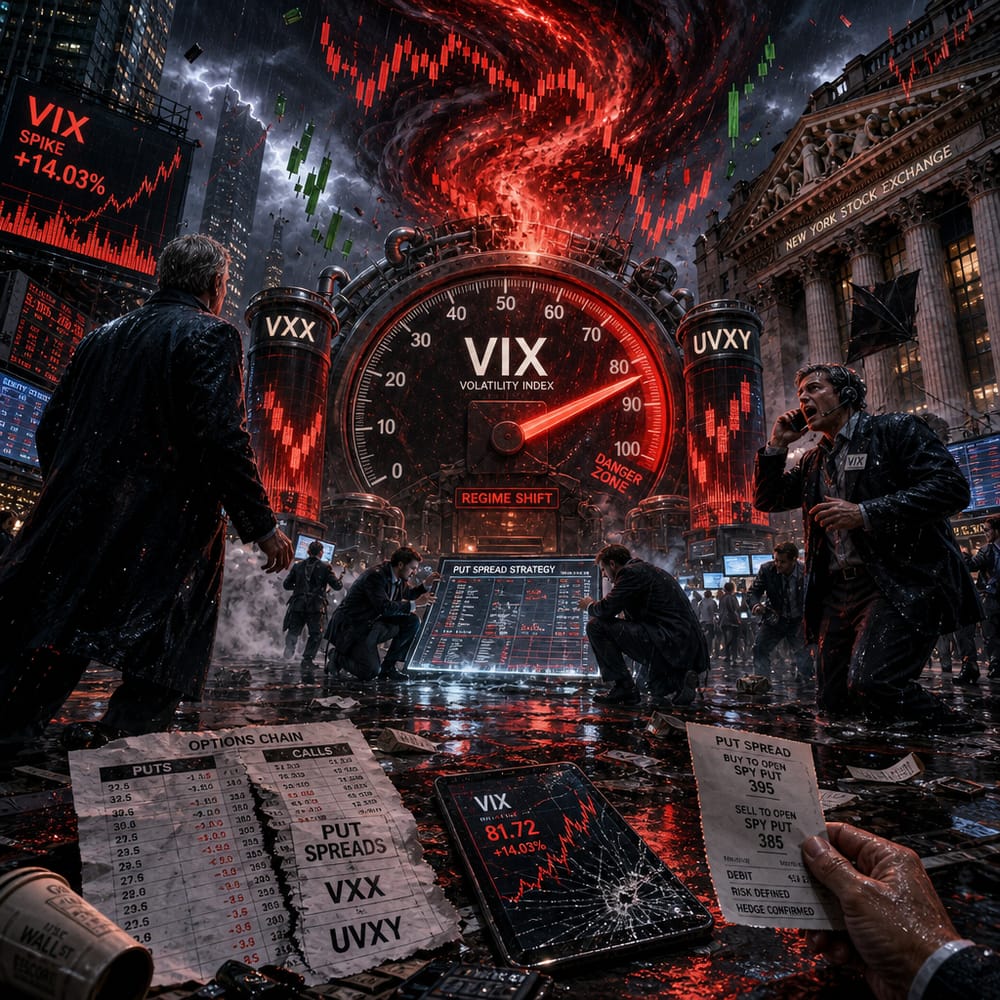
The market might be that one dinner guest who can't decide if they want the chicken or the steak, but one thing’s for sure: the VIX just served up a spicy appetizer — a 14% jump that’s turning heads. For the uninitiated, the VIX, or Volatility Index, is Wall Street's fear gauge, a sort of mood ring for market anxiety. And right now, it’s blipping bright.
So what’s rocking the boat? Is volatility here to stay, or is this just a passing storm? With geopolitical tensions rising, earnings reports incoming, and oil prices playing a fast game of seesaw, investors are bracing for action. The market landscape is shifting, and VIX is the canary in this volatile coal mine.
WHY VOLATILITY MATTERS
First question on everyone's mind: Is this an actual shift toward elevated volatility, or just a short-lived scare? The VIX’s spike suggests market jitters, stemming from a cocktail of political drama and economic uncertainty. President Trump’s saber-rattling over the Strait of Hormuz has oil futures doing cartwheels — West Texas Intermediate and Brent crude are sashaying past $80 and $86 a barrel, respectively. And as always, what affects oil often spills over to stocks faster than you can say "stranded tanker."
Elsewhere, traders are on edge with big banks like JPMorgan and Goldman Sachs ready to spill their financial guts. Add the upcoming inflation data to the mix, and you’ve got a perfect storm of elements poised to whip the market into a frenzy.
HEDGING YOUR BETS
So, what’s a savvy investor to do when volatility takes center stage? Enter: hedging tactics. This is your toolkit against the unexpected. Options like VXX and UVXY — exchange-traded products designed to track volatility — could be your ticket. They’re essentially bets that volatility will continue its Broadway performance. Just remember, they’re not for the faint of heart and best used for short-term plays.
For those with a slightly lower risk tolerance, consider put spreads. This involves buying a put option and selling another at a lower strike price. It’s like buying insurance on your insurance. Sure, it costs a bit up front, but it caps potential losses while letting you sleep at night when the market’s howling.
THE FUTURE OF FUTURES
If you’re feeling particularly brave, futures contracts are on the table. They’re agreements to buy or sell an asset at a set price on a future date, and they’re often used to speculate on volatility. Metrics such as contango and backwardation — which sound like ballet moves but, trust me, are not — can give insight into the market’s volatility expectations. In simple terms, contango means futures prices are higher than the expected future spot price, while backwardation is the opposite.
Currently, futures markets suggest that traders aren’t expecting this volatility to vanish overnight. But with Wall Street’s rollercoaster, even the pros are buckling up for a bumpy ride.
WHAT IT ALL MEANS
This sudden spike in the VIX could signal an impending market change. Historical patterns show that heightened market volatility often precedes corrections or significant market moves. The question is, which way will the wind blow?
In the current climate, with geopolitical tensions and economic data on the horizon, it might be wise to prepare for more market mood swings. Investors keen to capitalize on volatility could find opportunities now that weren’t as visible during calmer times.
Ultimately, whether you’re a thrill-seeker who thrives on market chaos or a cautious investor just trying to keep your portfolio afloat, understanding the dynamics of volatility is crucial. The market’s pulse is quickening, and it pays to stay sharp and strategic.
So, dear reader, as the VIX growls and the market teeters, make sure your investment strategy isn’t just reacting but anticipating what comes next. In times like these, fortune doesn’t simply favor the brave; it favors the informed. Keep watching, keep learning, and as always, invest wisely.
This article is for informational purposes only and is not investment advice. Always do your own research or consult a licensed financial professional before making investment decisions.
© Copyright 2024. All Rights Reserved.
© Copyright 2024. All Rights Reserved.