

VIX at Year-Low Lulls Traders
Monday, August 17, 2026
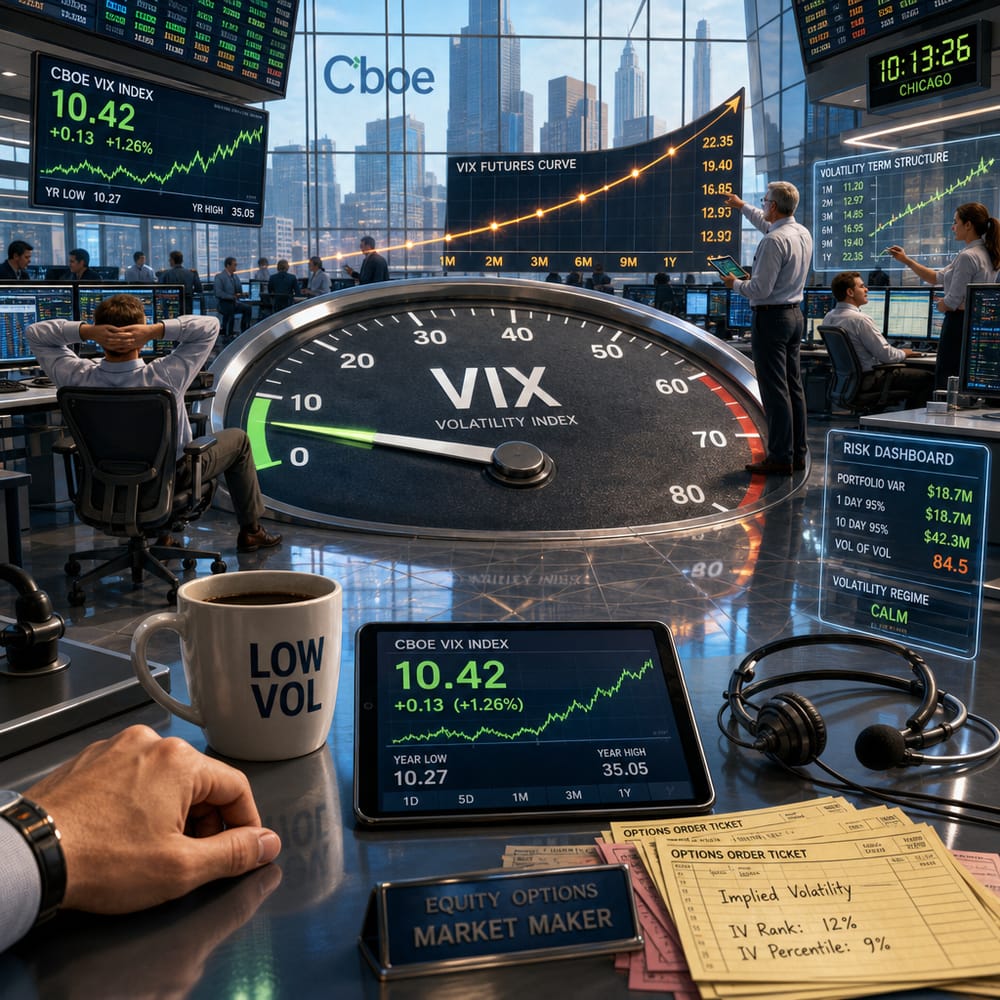
WHAT'S UP WITH THE VIX? WHEN CALM MASKS THE STORM
Picture this: it's a serene day at the beach, the sun is shining, and the waves are gently lapping at your feet. But in the distance, dark clouds gather on the horizon. That's the stock market right now, with the VIX — Wall Street's "fear gauge" — hanging out at its lowest level of the year. But just like those approaching storm clouds, signs of turbulence aren't far off.
For those unfamiliar, the VIX, or the Chicago Board Options Exchange Volatility Index, is the financial world's barometer for fear. It measures how much traders expect the S&P 500 to swing over the next 30 days, based on options prices. In other words, it's the market's pulse on expected volatility. Lower VIX? Traders are chill, maybe a little too chill. But when the index spikes, that's a neon sign flashing "Buckle up!"
Right now, the VIX is lounging around 14.2, a level that signals a beach day rather than a hurricane watch. But don't let the seemingly calm waters fool you. The futures market is sending out some serious warning flares. Traders are betting that this tranquility isn't going to last, with future contracts suggesting they expect the VIX to pick up speed and take a turn for the wild.
What's at play here? Why the split personality between current calm and future chaos? Well, several factors are stirring the pot. Markets have enjoyed a pretty smooth ride so far this year, with the S&P 500 up about 16%. But step outside the stock market's bubble, and the world is more stormy seas than smooth sailing. Geopolitical tensions, like the ongoing U.S.-Iran tensions and Trump's fiery rhetoric, loom large. And let's not forget economic uncertainties, like those pesky inflation numbers that just won't quit.
When the VIX drops like this, it often means investors are feeling complacent. But those VIX futures contracts suggest these same investors are forecasting choppier waters ahead. Think of it as planning for a beach vacation while secretly packing an umbrella and raincoat.
So, what should the everyday investor, like you and me, make of all this? First up, acknowledge that the low VIX isn't a guarantee of smooth sailing. It's more like a snapshot of today's mood rather than tomorrow's weather forecast. The futures market, on the other hand, is like that friend who always sees the silver lining — with a healthy dose of caution.
Here's how to prepare: keep your eyes peeled and your portfolio nimble. Diversification is your best lifeline. Spread your investments across different sectors and asset classes so that you're not caught off guard if a sector-specific storm hits. Think of it like packing sunscreen and a poncho. Also, consider using some hedging strategies, like options, to protect against unexpected downturns. They can act as that trusty umbrella when the rains start pouring.
Finally, don't let fear drive your decisions. The market's mood swings can be anxiety-inducing, but they’re also a natural part of the investment landscape. Stay informed, stay calm, and stay invested with a long-term strategy. Remember, every storm eventually passes.
In the grand tapestry of the market, the VIX is just one thread. It tells us about the present, gives clues about the future, but never reveals the whole picture. As investors, it's our job to weave this thread with others — geopolitical knowledge, economic trends, and yes, a dash of intuition — to navigate the market's ever-changing seas. So, grab your metaphorical surfboard, because while the waves might be calm now, the tides are always shifting.
This article is for informational purposes only and is not investment advice. Always do your own research or consult a licensed financial professional before making investment decisions.
© Copyright 2024. All Rights Reserved.
© Copyright 2024. All Rights Reserved.