

VanEck Semiconductor ETF's Six-Day Decline: AI Bubble Concerns
Wednesday, October 14, 2026
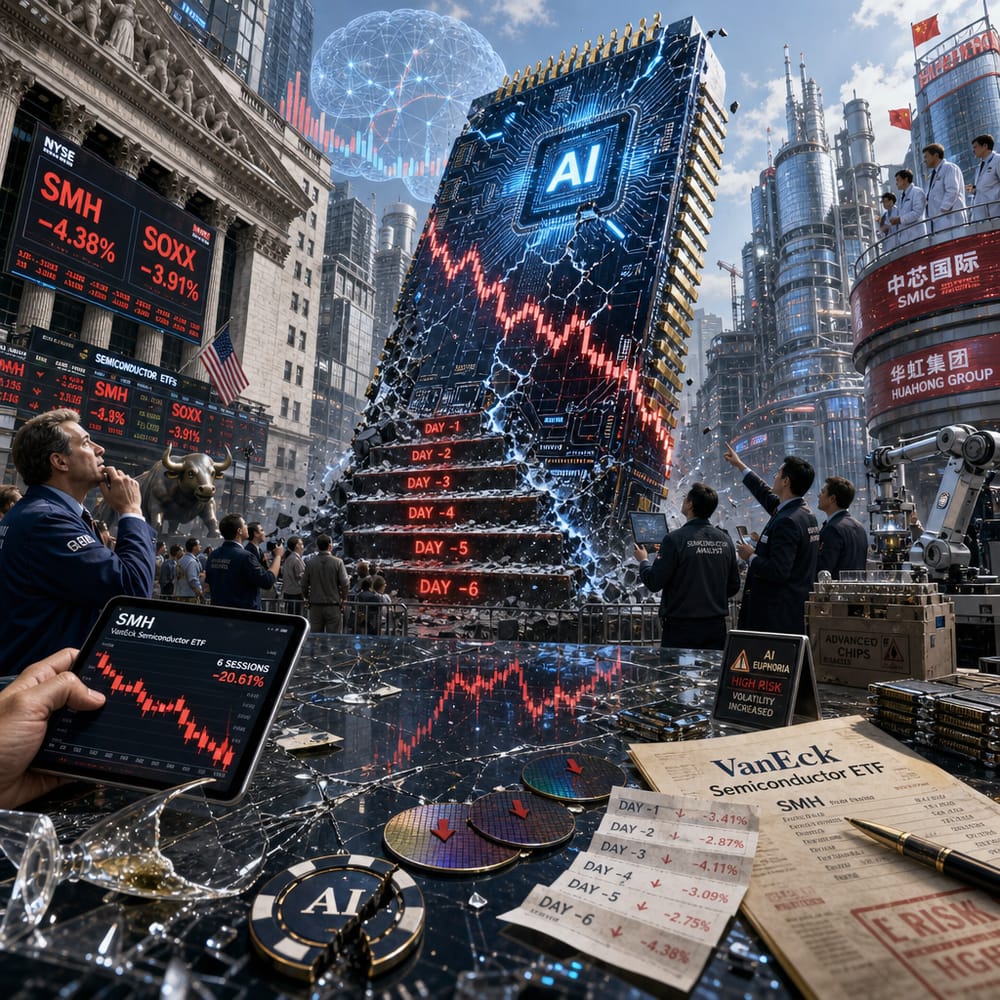
IS THE CHIP PARTY OVER? VAN ECK SEMICONDUCTOR ETF'S SIX-DAY DESCENT
Buckle up, chip enthusiasts: it's been a rocky ride for the VanEck Semiconductor ETF (SMH), sliding downhill for six consecutive days. As the ticker trudges through this slump, investors are left wondering if this is a pit stop or the beginning of a long detour. Are we witnessing a temporary glitch, or is this the prelude to an AI bubble bust? Let’s dig in.
THE SLIPPERY SLOPE OF SEMICONDUCTORS
Let’s address the elephant in the semiconductor: AI. You’ve probably heard more about AI than your favorite band’s new album, and rightfully so. It's the tech world’s pulsating heartbeat. But as the frequency of AI mentions climbs, so do whispers of an impending "AI bubble." The idea? Companies might be going all-in on AI a bit too hard, too fast, driving up stock prices to potentially unsustainable levels.
Recent market jitters are partly pinned on these bubble whispers. Add in the heat from emerging Chinese competition, and you've got yourself a simmering pot of uncertainty. The VanEck Semiconductor ETF, a prized market for chip stocks, has taken a notable hit. Chips are the unsung heroes behind AI’s success — they’re like the guitar techs of a rock band, essential but rarely in the spotlight. So, when chip stocks dip, it’s worth paying attention.
KEY SUPPORT LEVELS - WHERE DOES SMH STAND?
Before we hit panic mode, let’s talk support levels — essentially the price points where a stock might stop falling and start rising again. It’s like a psychological sofa break in the world of stocks. For SMH, it’s hovering precariously near some crucial support zones. If SMH can rally at these levels, it might hint at a rebound on the horizon. But if it breaks through, hold on to your hats, folks: we could be in for a more turbulent ride.
THE AI STOCK SCENE
While semiconductor stocks have been taking a breather, AI-related stocks are having an identity crisis. Despite the broader market downturn, some companies are still riding the AI wave to new heights, defying gravity like tech-savvy magicians. However, others are starting to show cracks, suggesting not all that glitters is gold… or silicon.
Are AI stocks the new gold rush or fool’s gold? Recent trends suggest a mix of both. Companies that can innovate while delivering profitability are still basking in investor adoration. Meanwhile, those leaning on buzzwords more than balance sheets are stumbling.
IS THE TECH SECTOR HAVING A MOMENT?
Let’s zoom out to the broader tech sector, which has been feeling under the weather. Chip stocks aren’t the only ones catching a cold; there are whispers of a broader tech correction roiling through Wall Street. The Nasdaq, the tech-heavy index, has been feeling the weight of chip stock declines alongside other tech titans feeling the heat from high earnings expectations that are as demanding as a diva on tour.
So, what’s the deal? With high-flying expectations, even the slightest miss can send stocks tumbling. As tech giants release their quarterly report cards, anything less than stellar performance could tip the scales into correction territory.
TO BUY OR NOT TO BUY?
Now, let’s get to the million-dollar question: with SMH taking a dip, is it time to go bargain hunting, or should investors brace for more downside? Such decisions depend on your appetite for risk and your conviction in the AI and semiconductor sectors.
If you’re a fan of buying the dip and believe that AI is more than just a shiny trend, this could be your backstage pass to the semiconductor world. On the flip side, if AI’s volatility is giving you whiplash, there’s no harm in steering clear until the dust settles.
Takeaway? Don't let fear of missing out be your guide. Whether you’re all in or sitting out, staying informed is your best bet. After all, in the wild world of stocks, knowledge is more than power — it’s your survival kit.
This article is for informational purposes only and is not investment advice. Always do your own research or consult a licensed financial professional before making investment decisions.
© Copyright 2024. All Rights Reserved.
© Copyright 2024. All Rights Reserved.