

Valero Energy (VLO) Faces Downgrade Amid Market Volatility
Friday, September 25, 2026
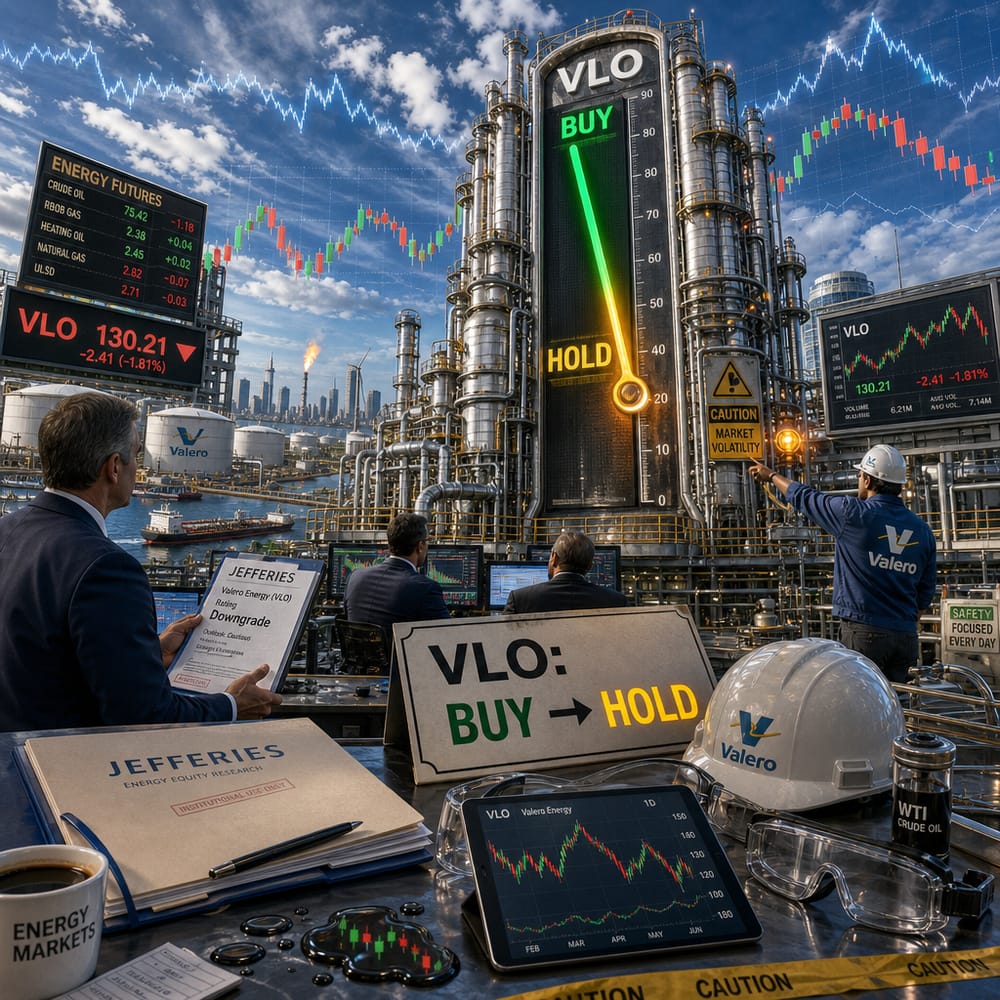
THE VALERO ENERGY SHIFT: WHAT A DOWNGRADE MEANS FOR INVESTORS
In the ever-turbulent world of energy markets, there’s a new plot twist that’s got everyone talking: Jefferies just downgraded Valero Energy from 'Buy' to 'Hold'. This isn’t just about a single stock getting a slap on the wrist; it’s about what this means for the energy sector at large.
Imagine you’re at a dinner party, and the sommelier suddenly tells you to hold off on that much-hyped wine you’ve been eyeing. It’s still good, but maybe not as great as you thought. That’s what Jefferies is implying about Valero Energy right now. So why the sudden change of heart?
SHIFTING SEASONS IN ENERGY MARKETS
The world of energy isn’t all sunshine and rainbows. It's a battleground of oil barrels, geopolitical chess, and climate change debates. Lately, market volatility has been on an adrenaline rush faster than a Wall Street trader’s caffeine intake. Treasury yields are skyrocketing, and just like your aunt’s Thanksgiving gravy, oil prices have been all over the place.
Then there’s the Middle East, which is always at the center of energy discussions. With Iran and the U.S. in talks about reopening the Strait of Hormuz and potentially shaking hands on nuclear negotiations, the supply lines that feed our gas tanks and heat our homes are up in the air. This kind of geopolitical tango directly impacts refining margins—the profit Valero makes from turning crude oil into usable products like gasoline and diesel. If the supply side starts to loosen up, those margins might not be so juicy, squeezing the juice out of Valero’s profits.
THE DOMINO EFFECT ON INVESTOR SENTIMENT
Now, onto the big question: what does this downgrade mean for retail investors eyeing Valero and its peers? Well, such downgrades can make investors as jittery as a cat near a cucumber. It signals not just concern over one company’s refining margins but raises eyebrows over the health of the entire sector.
If you’re holding onto energy stocks or ETFs (Exchange Traded Funds) that bundle up a bunch of these stocks, this is a moment to pause and reflect. Jefferies’ downgrade is like the universe whispering that maybe, just maybe, it’s time to tread with caution.
But don’t sell your energy stocks faster than you did those Beanie Babies in the '90s. Valero isn’t plummeting into the abyss; it’s more of a gentle nudge than a push off a cliff. Investors might just need to recalibrate their expectations.
WHERE DO ENERGY ETFS STAND?
Energy ETFs are like the cocktail mixers at a party—they bring a whole bunch of stuff together. When a big player like Valero gets a downgrade, it can ripple through the entire cocktail, potentially affecting your returns. But before you dump it all out, think about diversification, the adult version of the buddy system.
Valero might be doing a little shuffle, but remember, it’s still a key player in the energy sector. Plus, energy ETFs usually contain a smorgasbord of companies, so a stumble by one doesn’t mean total collapse. Keep an eye on how ETFs are weighted and the role Valero plays within them.
THE ROAD AHEAD FOR VALERO AND THE SECTOR
So, where does this leave Valero and the energy sector? Well, tread carefully but don’t retreat. As markets twist and turn, Valero’s fortunes could rebound with the right tailwinds. Look out for changes in global oil supply and demand dynamics, keep tabs on new geopolitical developments, and be mindful of regulatory shifts that could impact refining.
In short, Valero’s downgrade is a wake-up call but not a doomsday alarm. If you’re an investor, keep your wits about you, stay informed, and let the energy markets play their captivating—and occasionally nerve-wracking—game. Just like that wine at the party, Valero is still part of the menu, just maybe not the centerpiece wine it once was, at least for now.
This article is for informational purposes only and is not investment advice. Always do your own research or consult a licensed financial professional before making investment decisions.
© Copyright 2024. All Rights Reserved.
© Copyright 2024. All Rights Reserved.