

U.S. Sanctions on Russian Oil Giants Rattle China’s Energy Market
Thursday, October 23, 2025
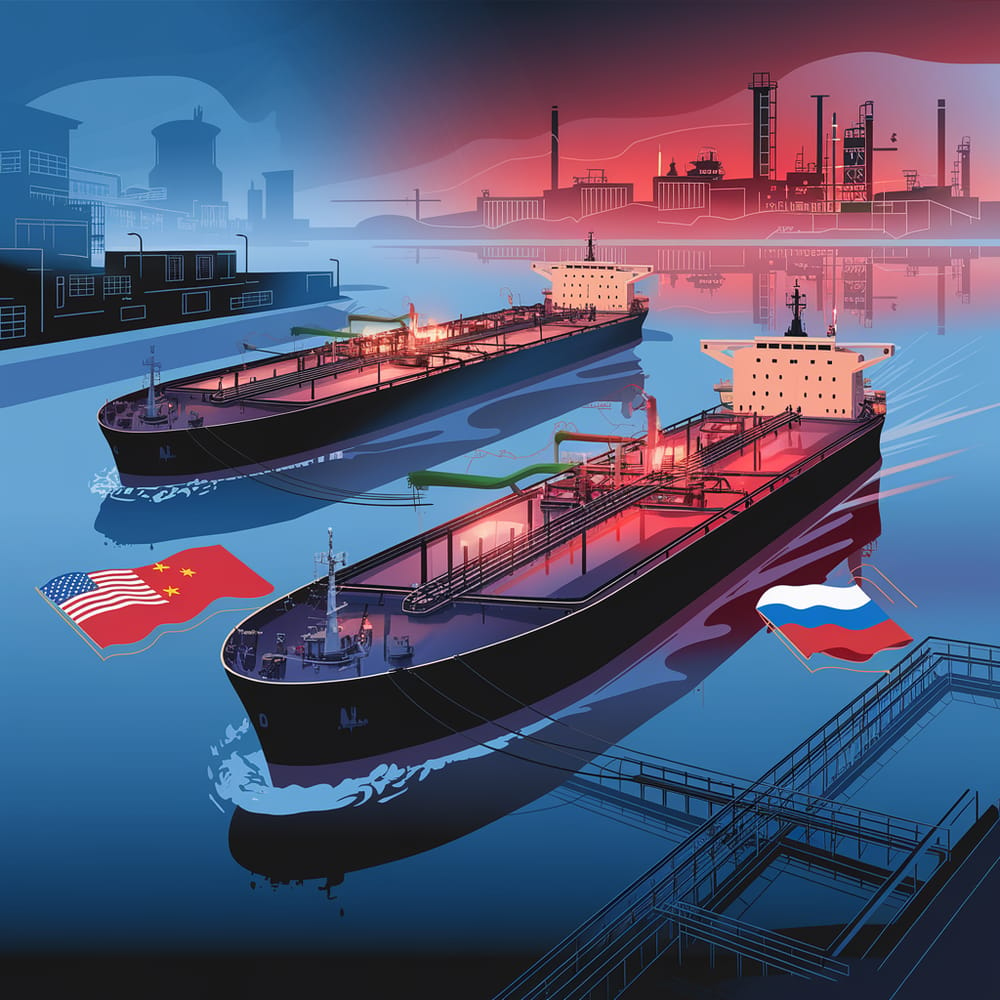
Sanctions Shake Asia’s Oil Trade
Fresh U.S. sanctions on Russia’s energy giants are rippling through Asia’s oil industry — especially in China, where refiners are scrambling to secure crude supplies while avoiding Western penalties. The move targets Rosneft and Lukoil, two of Russia’s biggest exporters, and forces all transactions involving them to be wound down by November 21.
For China, the pressure couldn’t come at a worse time. The country now sources roughly 20% of its oil imports — about 2 million barrels a day — from Russia, feeding its refineries that turn crude into essential products like diesel and plastics. Losing access to this flow would disrupt supply chains that power everything from factories to transportation.
A Tough Choice for China and India
The sanctions are also putting China and India — Moscow’s two largest energy customers — in a difficult position. Firms that continue trading with the blacklisted Russian companies risk secondary sanctions, which could cut them off from Western banks, dollar transactions, or global insurance networks. Yet walking away means forfeiting steep discounts on Russian crude that have helped keep energy prices manageable.
Traders say the risk extends beyond lost barrels. Western companies play key roles as investors, operators, and shippers in global oil projects across the Middle East and Africa. Chinese and Indian firms that violate sanctions could find themselves frozen out of these lucrative ventures altogether.
Refiners and Ports Under Pressure
The U.K. has joined the crackdown, blacklisting Rosneft, Lukoil, and China’s Shandong Yulong Petrochemical Co., one of the largest independent refiners importing Russian oil. Western suppliers have reportedly become wary of dealing with the firm, fearing indirect exposure to sanctioned trade.
In recent weeks, Washington has also expanded restrictions to include Chinese ports like Rizhao and Dongjiakou, both critical entry points for Russian and Iranian oil. That move has compounded the logistical headaches for refiners that rely heavily on Russian crude deliveries.
Pipeline Politics and Uncertain Flows
At the heart of Russia–China energy ties is a long-term supply agreement between Rosneft and China National Petroleum Corp. (CNPC). It sends about 800,000 barrels a day through pipelines into China’s northern Daqing region, fueling state-run refineries built around Russian feedstock. While it’s unclear if these government-to-government flows will be affected by the sanctions, traders say any disruption could hit China’s industrial base hard.
Rosneft and Lukoil also supply roughly one quarter of Russia’s total oil exports to China, shipping most of it through the Kozmino port to private refiners along the Shandong coast. Even a partial halt could tighten supplies and lift regional prices, adding more volatility to global energy markets already under strain.
Global Repercussions
The sanctions have sent oil prices surging, as traders brace for further supply disruptions. Analysts say the escalating pressure campaign is designed to choke off funding for Moscow’s war in Ukraine — but it’s also forcing China to rethink its dependence on Russian energy.
For Beijing, the dilemma is stark: comply with Western rules and risk energy shortfalls, or defy them and face financial isolation. Either way, the shockwaves from Washington’s latest sanctions are being felt far beyond Russia’s borders — deep into the world’s fastest-growing oil market.
© Copyright 2024. All Rights Reserved.
© Copyright 2024. All Rights Reserved.