

US Israel Strike Iran Killing Supreme Leader as Markets Brace for Shockwaves
Monday, March 02, 2026
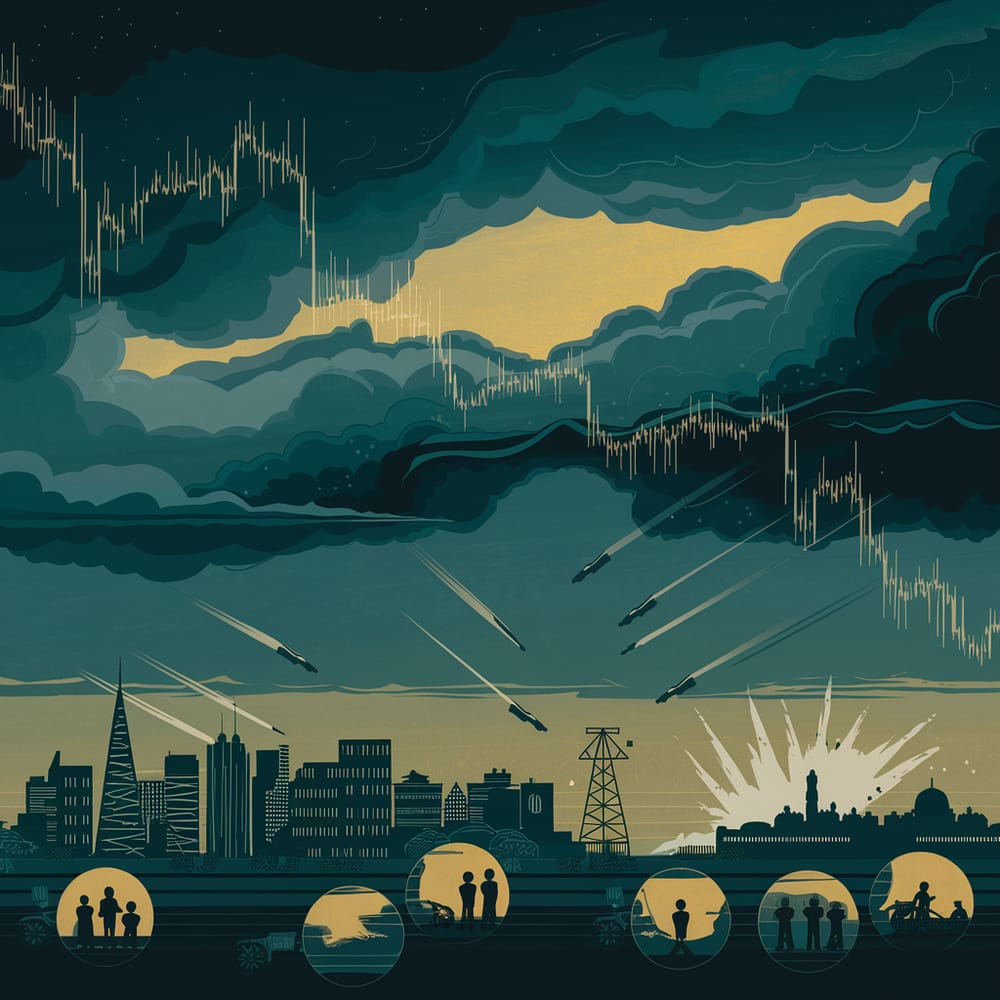
A Region Thrown Into War
The Middle East has been jolted into a dramatically wider conflict after US and Israeli forces launched sweeping strikes on Iranian targets, killing Supreme Leader Ayatollah Ali Khamenei. The escalation marks one of the most aggressive military moves in the region in decades, instantly shifting the geopolitical calculus and setting up a tense market open.
Trump Signals More to Come
President Trump framed the operation as a decisive moment, calling it a chance for the Iranian people to reclaim their country and warning that bombing would continue as long as necessary. The stated objective: eliminate what he described as a decades-long nuclear threat. The rhetoric has been forceful, with promises of sustained military pressure if Tehran does not stand down.
Iran Strikes Back Across the Region
Tehran responded with a wave of missile and drone attacks stretching beyond Israel to Gulf states that host US military bases. Explosions were reported in the United Arab Emirates, Jordan, Qatar, Bahrain, and Saudi Arabia. Air raid sirens sounded in Israel, and airports in Dubai and Abu Dhabi reported damage and injuries. Iranian officials signaled they would not hesitate to escalate further, while Washington warned of even more forceful retaliation if attacks continue.
Markets Brace for Turbulence
Investors are preparing for a classic risk-off reaction as trading resumes. Oil prices have already surged in early moves, with traders eyeing the Strait of Hormuz — a chokepoint that handles a significant share of global crude flows. Gold and the US dollar are expected to draw safe-haven demand, while equities could face sharp pressure. Airlines have canceled or rerouted thousands of flights as airspace closures ripple across the region. The next signals to watch: how oil trades, how Asian currencies respond, and whether this conflict widens or cools in the days ahead.
© Copyright 2024. All Rights Reserved.
© Copyright 2024. All Rights Reserved.