

USD Weakness Boosts Major Currencies: EUR/USD and GBP/USD Surge
Monday, August 17, 2026
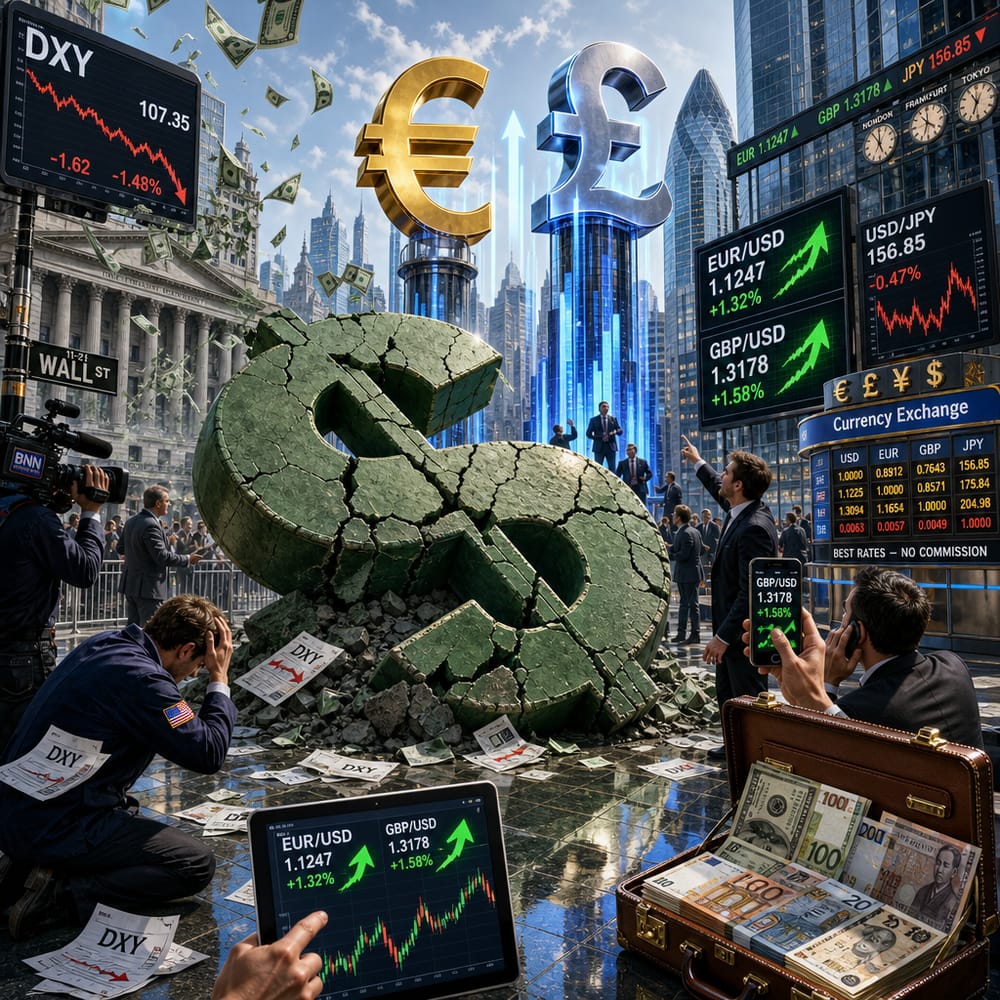
DEAR DOLLAR, WHY THE LONG FACE?
Ah, the U.S. dollar. Once the heavyweight champ of global finance, now it's more like a middleweight trying to keep its pants up. The U.S. dollar index (DXY), that trusty benchmark that pegs the buck against a basket of other currencies, has been flirting with its lowest levels since early June. And what happens when the big dog gets a little scrappy? You guessed it: Currencies like the euro and the British pound are throwing a party. EUR/USD and GBP/USD have been strutting their stuff, and everyone wants to know—what gives?
BLAME IT ON THE MARKET
Let's put it this way: If the dollar were a high school student, it would be cramming for exams in the library while its classmates are out partying. Several factors have teamed up to put pressure on the dollar. First, there's the Federal Reserve, which has hit the pause button on interest rate hikes. No more juicy returns for investors parking their money in dollars.
Add to that a bit of geopolitical spice—like the simmering tensions over in the Middle East, with Trump making bold threats and Oman stuck between a rock and a hard place. While it might not seem directly related, market instability can make investors jittery, nudging them to explore currencies that seem safer. Meanwhile, lower U.S. inflation numbers have played cupid for foreign currencies, making them more attractive by comparison.
The euro and pound, in particular, are having their moment in the sun. For the euro, some surprising economic resilience in the Eurozone is helping, even as wildfires rage and temperatures soar. For the pound, well, it’s more like a relief rally. After endless Brexit blues, any good news feels like finding a $20 in your winter coat.
WHAT DOES THIS MEAN FOR THE FOLKS BACK HOME?
Now, here's the juicy part: what goes down in Wall Street doesn’t stay in Wall Street. A weaker dollar might sound like a bummer, but it has a silver lining—at least if you're a U.S. exporter. That’s right, when the dollar takes a dip, American goods become the hot new item abroad. Suddenly, a pair of blue jeans made in the USA looks like a bargain to fashionistas in Paris or Tokyo. If U.S. companies can capitalize on this, it could mean more sales, more profits, and, fingers crossed, more American jobs.
But let's not start popping the champagne just yet. A weaker dollar won't fix everything. Companies with supply chains that stretch around the globe might feel a pinch as foreign-made components become pricier. Plus, there's the tricky dance of currency hedging—an art that even seasoned CFOs struggle to master.
GLOBAL IMPACTS: THE RIPPLE EFFECT
Now zoom out a little. What does this dollar drama mean for the rest of the world? The answer is: quite a bit. A weaker dollar can shift global trade balances, affecting everything from oil prices to emerging market bonds. If you're an investor with an eye on forex trading, these shifts are your bread and butter.
Meanwhile, countries like Japan, with its yen constantly playing against the dollar, have to recalibrate their strategies. The USD/JPY pair, for instance, has been caught in the crossfire, with the yen gaining ground as the dollar declines. Japan's export-centric economy prefers a weaker yen, and a strong one might make life a bit more complicated for them.
THE LONG GAME
So, what’s the big picture? Could we be witnessing the start of a long-term trend where the dollar takes a backseat? It’s a possibility, but predicting currency markets is like trying to predict the weather with a crystal ball—good luck with that.
However, if the dollar continues its slide, we may see more countries adjusting their monetary policies or even their alliances. Who needs a crystal ball when global finance is this much fun, right?
So, folks, keep an eye on those currency tickers and global headlines. The dollar’s latest chapter is unfolding, and it’s making waves far beyond the Forex charts. In the meantime, grab a snack, refresh your feed, and let’s see where this rollercoaster takes us next.
This article is for informational purposes only and is not investment advice. Always do your own research or consult a licensed financial professional before making investment decisions.
© Copyright 2024. All Rights Reserved.
© Copyright 2024. All Rights Reserved.