

USD Strengthens Amidst Global Economic Uncertainty
Friday, August 14, 2026
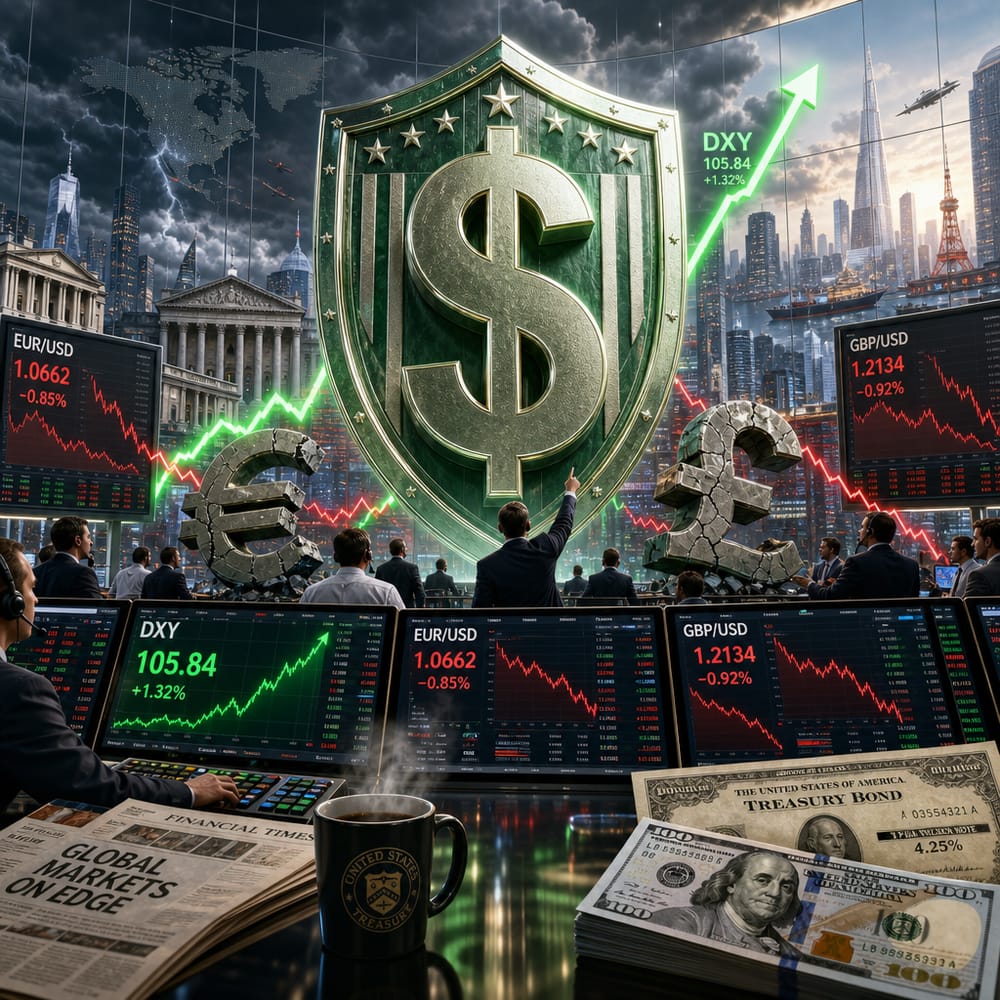
It's a bird! It's a plane! No, it’s the U.S. dollar, soaring above global economic turbulence like Clark Kent on a Red Bull bender. In a financial world with more twists and turns than a soap opera, the U.S. dollar index (DXY) is flexing some serious muscle, powering up against major currencies with a swagger reminiscent of Muhammad Ali in his prime. But why is the dollar doing its best Atlas impression, and what does that mean for mere mortals like us?
THE DOLLAR'S HIGH FLYING ACT
First, let's set the scene. The DXY is like the thermometer for the dollar’s health against a basket of foreign currencies. Recently, it’s been hitting the gym and showing off gains, leaving the euro (EUR/USD) and British pound (GBP/USD) with an inferiority complex. But what's behind this sudden burst of dollar bravado?
A major player is our not-so-boring buddy, the Federal Reserve. With interest rate decisions that could make your head spin, the Fed has been hinting at a pause in rate hikes, soothing investor nerves and making the dollar a bit of a hot commodity. With the odds of a Fed rate hike falling faster than an anvil in a cartoon, the dollar is attracting more investors seeking shelter from global economic storms.
And speaking of storms, let’s not overlook the geopolitical quagmire that’s got everyone on edge. Wars, trade tensions, and even tanker attacks in the Strait of Hormuz are keeping the world on its toes, making the dollar look like the safest port in the tempest.
THE RIPPLE EFFECT: EXPORTS, IMPORTS, AND YOUR WALLET
So, what does a pumped-up dollar mean for the rest of us who aren’t Wall Street wizards? For starters, U.S. exports could take a hit. When the dollar is strong, American goods and services get pricier on the international stage, making it tougher for U.S. companies to sell abroad. This could lead to a headache for multinationals and trade balance sheets that are already trickier than a game of three-dimensional chess.
On the flip side, our imports get cheaper, so those Italian shoes and French wines might just give your wallet a breather. But don’t pop the champagne just yet; a strong dollar can also put pressure on emerging markets, where companies that owe debts in U.S. dollars suddenly find themselves in a bind, paying more than they bargained for.
OTHER CURRENCIES FEEL THE HEAT
Meanwhile, across the pond, other major currencies are not exactly rolling out the red carpet. The euro is laboring under its own set of economic woes—high inflation and sluggish growth have left it looking like a deflated balloon. Over in the UK, the pound is fending off challenges from higher interest rates and a post-Brexit identity crisis that still has the nation scratching its head.
RISKY BUSINESS: THE DRAWBACKS OF A STRONG DOLLAR
While a strong dollar can seem like a financial superhero, it’s not without its pitfalls. For one, U.S. companies that do big business overseas might see their profits take a dive, as foreign earnings translate back into fewer greenbacks. That could mean tighter margins and potentially less money for reinvesting in growth or rewarding shareholders.
And then there’s the risk of currency wars. If the dollar stays too strong for too long, other countries might just decide to fight fire with fire, devaluing their own currencies to stay competitive. This currency battle royale might leave global markets jittery and investors reaching for the antacids.
THE BIG PICTURE
In this theatrical showcase that is the global economy, the dollar is strutting its stuff, but it’s a double-edged sword. Investors are keeping one eye on the dollar and the other on the horizon, wary of economic disruptions that could turn this strength into a weakness.
For those of us watching this drama unfold from our couches, we might not be able to control the tides of currency markets, but understanding the dance of the dollar can help us make smarter moves in our investments and day-to-day lives. Because at the end of the day, whether it’s a cup of coffee from Colombia or a tech gadget from Tokyo, the dollar's strength or weakness has a way of touching us all. So, let’s keep watching, learning, and maybe even get a little wiser along the way.
This article is for informational purposes only and is not investment advice. Always do your own research or consult a licensed financial professional before making investment decisions.
© Copyright 2024. All Rights Reserved.
© Copyright 2024. All Rights Reserved.