

USD/JPY: Still Under the Shadow of Recent US–Japan Yen Intervention
Saturday, August 29, 2026
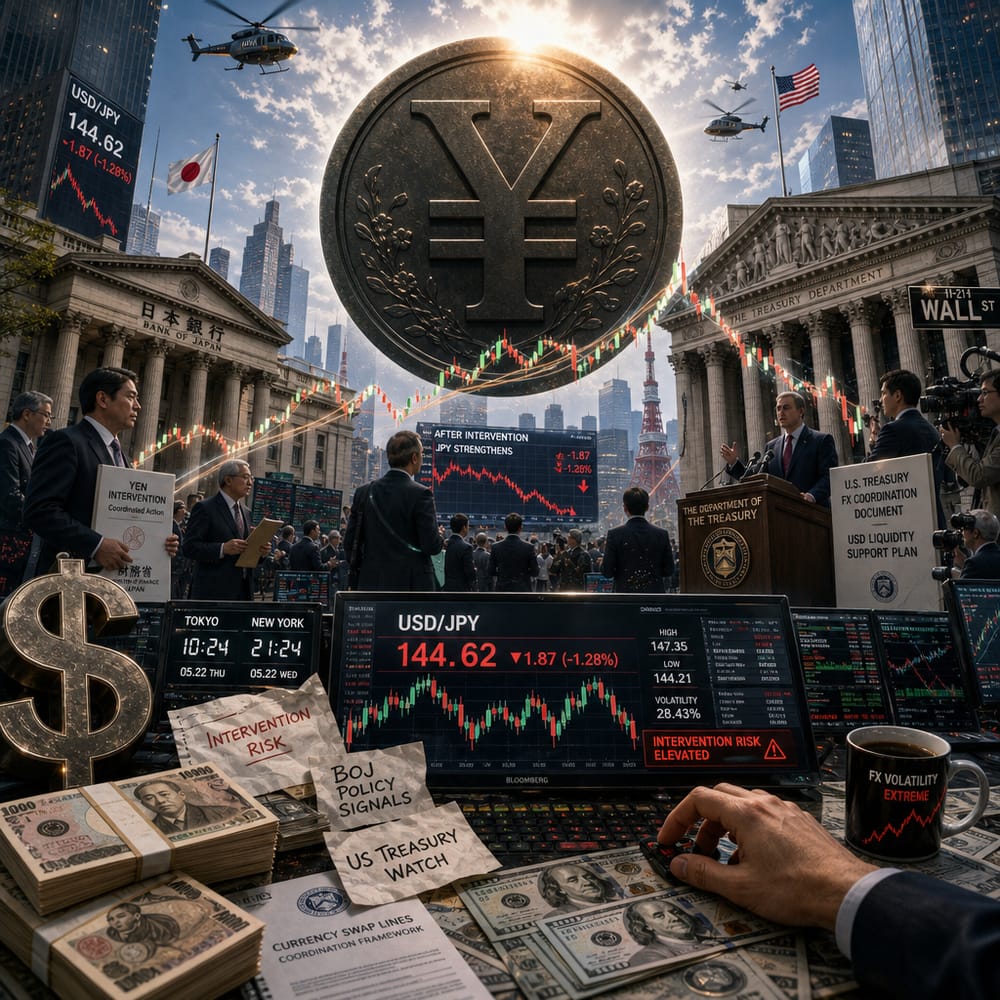
THE YEN CONUNDRUM: WHY USD/JPY IS DANCING TO TOKYO AND WASHINGTON'S TUNE
Brace yourself for a wild ride, because the USD/JPY currency pair is swinging like it's auditioning for "Dancing with the Stars." And the judges in this dance-off? The Bank of Japan (BOJ) and the US Treasury. We're talking about interventions and policy signals that are as subtle as a sledgehammer and as unpredictable as a cat on caffeine. So why does this matter to you, the intrepid retail investor? Well, it could spell volatility and opportunity in the forex market, and who doesn’t love a little drama with their trading?
THE TRIGGER - INTERVENTION DRAMA 101
First, let's set the stage: the recent yen-buying interventions were like a plot twist in a thriller, aimed at stemming the yen's slump against the US dollar. What triggered this intervention? Picture this: a weak yen making Japanese exports cheaper, sending a chill down the spine of US manufacturers crying foul over competitive disadvantages. It's not just about trade fairness, though. A weak yen also means higher import costs for Japan—an inflationary storm Tokyo would rather not weather.
So, the BOJ and the US Treasury put on their intervention hats and coordinated a yen-buying operation. The goal? To prop up the yen and bring some equilibrium back to the trading floor. But here’s the kicker: interventions can be like shouting "surprise" at a party you weren't invited to. They often jolt the market into temporary compliance but don’t always deliver lasting change.
EFFECTS OF FUTURE INTERVENTIONS - A ROLLERCOASTER RIDE
The million-dollar question—or rather, the trillion-yen question—is how future interventions might shape the USD/JPY landscape. Interventions are like that friend who always has to have the last word; they can quiet the market in the short term, but over the long haul, markets tend to do what they want.
If the BOJ and US Treasury step in again, expect a temporary rally in the yen. But watch out for volatility that might make a bungee jump look like a leisurely stroll. Retail investors should keep a keen eye on official statements; they’re your crystal ball into what comes next. Because, let's face it, missed signals in this space can cost a pretty penny.
BOJ POLICY SIGNALS - READING THE TEA LEAVES
Then there's the BOJ, which sends signals more mixed than a DJ at a techno festival. Their monetary policy decisions are like secret codes for forex traders. A loose monetary policy—think low interest rates and stimulus—tends to weaken a currency. But any hint of tightening could send the yen climbing faster than a caffeinated squirrel.
And don’t forget the BOJ’s not-so-secret weapon: yield curve control, a fancy term for setting target interest rates to control the economy. Any tweaks here are like dropping breadcrumbs for investors. A change in policy could mean the BOJ is ready to switch gears and pull the yen out of its slump, or at least try to.
SAFE-HAVEN FLOWS - THE YEN'S SECRET WEAPON
Here's where it gets even juicier: Safe-haven flows. In times of global turmoil—be it war, political unrest, or the latest scare on Wall Street—the yen becomes the refuge of choice for jittery investors. It's like the yen has a built-in security blanket, driving demand and strengthening it against other currencies. So when things get rocky, keep an eye on safe-haven flows—they’re a major player in the USD/JPY dance.
THE TAKEAWAY FOR INVESTORS
In the end, the USD/JPY pair isn’t just numbers on a screen; it's a reflection of geopolitical maneuvering, economic policy, and market psychology. For the savvy retail investor, understanding the interplay of interventions, BOJ signals, and safe-haven flows is like having a backstage pass to the forex show.
So, strap in and keep your eyes on Tokyo and Washington. Because in this high-stakes currency game, knowledge isn’t just power—it’s potential profit. Who knew playing the markets could be this entertaining?
This article is for informational purposes only and is not investment advice. Always do your own research or consult a licensed financial professional before making investment decisions.
© Copyright 2024. All Rights Reserved.
© Copyright 2024. All Rights Reserved.