

USD/JPY: Rising Intervention Risk as Yen Weakens Against Dollar
Sunday, August 16, 2026
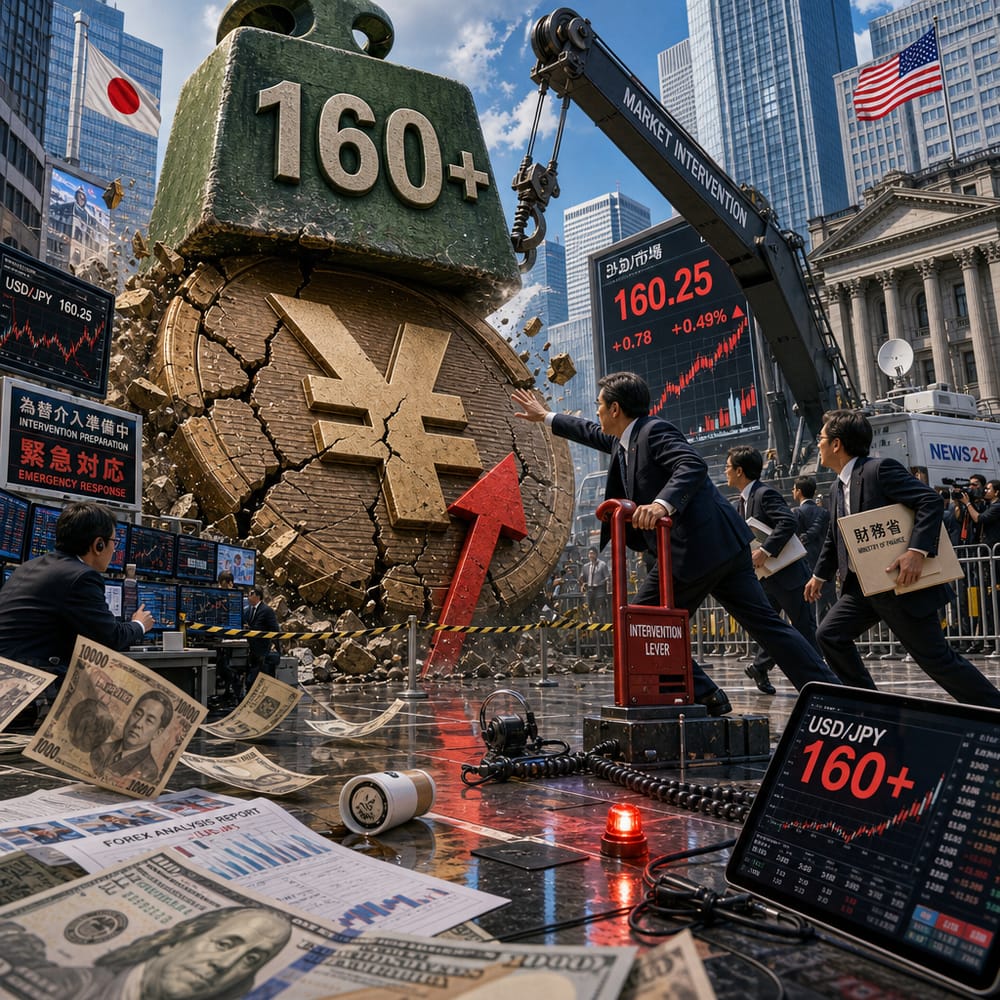
Yen Yo-Yo: The Rising Drama of USD/JPY and Japan’s Intervention Dilemma
The foreign exchange world is buzzing like a beehive that just got kicked. The USD/JPY is dancing around the 160+ level, and traders are waiting with bated breath to see if Japan's Ministry of Finance is about to swoop in for a financial intervention encore. You might be wondering why this is causing such a commotion. Well, let’s dive into the murky but fascinating waters of forex interventions and why this matters to anyone with a stake in global markets.
Picture it: Japan, the land of sushi, samurai, and, apparently, surprise forex interventions. Whenever the yen takes a nosedive against the dollar, whispers of intervention start echoing through the trading floors. Why? Because a weak yen isn't just a Japanese problem—it can ripple through global markets like a pebble tossed into a pond.
In the past, Japan has played this “intervention” card when things got too dicey. Let's rewind to 2011, when Japan was recovering from a devastating earthquake and tsunami. The yen was getting too strong, making Japanese exports pricier. Enter: the Ministry of Finance, which sold yen and bought dollars, driving the yen down like a pro surfer riding a wave. This move made headlines not just in Tokyo but in every corner of the financial world because it showed how one country's maneuvers can affect global currency markets.
Now, with the yen hovering at multi-decade lows, everyone’s asking: will Japan jump into the fray again? And if they do, will it work this time around?
Aside from yen-watchers with a penchant for nostalgia, this situation also has eyes glued on Uncle Sam. Historically, U.S. policy has been a key influence on Japan's decision to meddle in the forex arena. If the U.S. gives a nod—read as: either a diplomatic wink or a headshake—Japan might feel encouraged or dissuaded from stepping in. The two countries have a history of playing tag-team when it comes to currency stabilization, so the U.S. stance is crucial.
But why would the U.S. care about Japan's actions in the forex market? Well, dear reader, because an unrestrained yen can lead to a domino effect. A stronger dollar means U.S. goods become more expensive abroad. Cue unhappy American exporters and a potential dip in economic growth. No one likes feeling like they're paying more for the same thing, and that includes countries buying U.S. products. So, the U.S. might have a vested interest in seeing the yen not sink to new lows.
But what if Japan decides to go rogue and intervene without the U.S.’s blessing? Such a move could ruffle feathers and lead to more volatility in the forex market. Remember, currencies are like the lifeblood of global trade, and sudden shocks can have far-reaching implications, shaking everything from stock markets to grocery store prices.
To intervene or not to intervene—Japan is at a crossroads. If they step in with the hope of stopping the yen from falling like a poorly built Jenga tower, they risk clashing with the U.S. and potentially other G7 countries who might not be so thrilled. But if they don’t, the yen could plunge further, wreaking havoc on Japan’s economy and making those delicious exports even more of a delicacy.
So what's a retail investor to do while the big players are plotting their next moves? Keep an eye on the headlines and the forex tickers. The world of currency trading is fast-paced, but with risk comes opportunity. If Japan and the U.S. decide to hash it out and coordinate an intervention, it might just stabilize the situation—for now.
In the end, whether you're deep into currency trading or just keep an eye on your travel budget, the drama unfolding with the USD/JPY is a stark reminder of how interconnected our financial world truly is. So, stay sharp, stay informed, and remember: in the world of forex, nothing is as certain as uncertainty.
This article is for informational purposes only and is not investment advice. Always do your own research or consult a licensed financial professional before making investment decisions.
© Copyright 2024. All Rights Reserved.
© Copyright 2024. All Rights Reserved.