

USD/INR Edges Lower Amid Oil Pressures and RBI Support
Tuesday, August 18, 2026
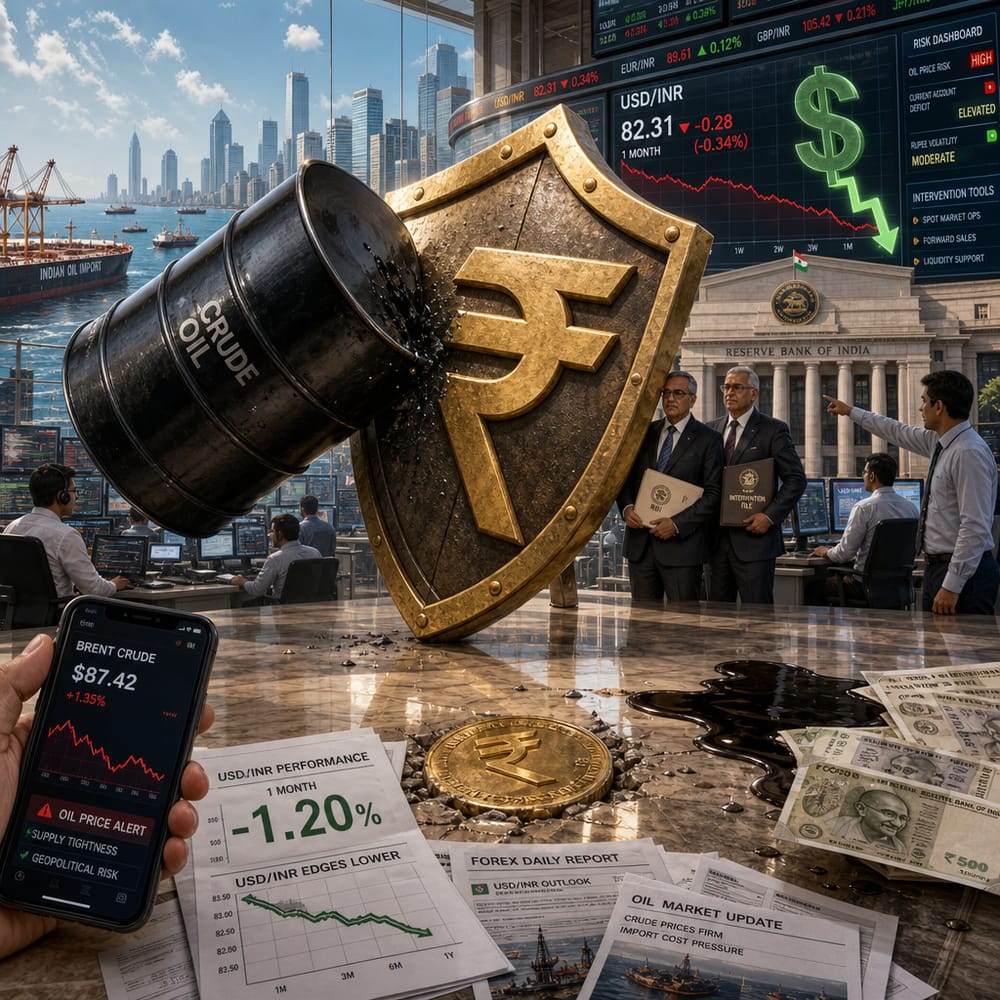
THE DANCE OF OIL AND RUPEES: HOW BLACK GOLD IS SWAYING THE USD/INR TANGO
Picture this: oil prices are doing the cha-cha, while the Indian Rupee (INR) finds itself in a waltz it didn't sign up for. Over the past month, the USD/INR pair has taken a 1.20% dip, and the culprit? A heady mix of oil price pressures and some fancy footwork by the Reserve Bank of India (RBI). Let’s dive into this economic dance-off and see what it means for emerging markets.
First, let's talk about oil. It's not just for frying your Friday night samosas. Oil is the lifeblood of economies, particularly for India, which imports around 80% of its crude requirements. When oil prices rise, it’s like that awkward moment when you've got a surprise bill at dinner — you’ve got to find a way to pay up. Higher oil prices mean India needs more dollars to foot the import bill. This demand for dollars can cause the rupee to weaken; hence, the USD/INR dynamic starts to resemble a seesaw, with rupee on the losing end whenever oil prices get bullish.
But wait, it's not just about oil prices. Enter the RBI, strutting in with all the poise of a seasoned dancer ready to stabilize the INR. Think of the RBI as the rupee's best friend, the one who makes sure it doesn’t trip over its own feet on the dance floor. So what’s the RBI doing? Well, it’s playing the forex market like a fiddle, intervening to buy rupees and sell dollars to mop up excess volatility and keep the rupee from doing the limbo.
Why does the RBI care so much? Well, a stable currency is crucial for maintaining economic growth and keeping inflation in check. Nobody wants to watch their purchasing power pirouette away because the currency's in a freefall. So when the rupee starts to falter, the RBI steps in, like a DJ spinning a track to keep everyone on beat.
Now, zooming out to the broader implications — picture a ripple effect across emerging markets. With the USD/INR pair acting all unpredictable, other emerging markets are watching closely, like a crowd gathered around a street performer. Why? Because if India's economic engine starts coughing and sputtering, the tremors might be felt in markets across Asia, Africa, and Latin America.
Emerging markets often face similar challenges: reliance on foreign investments, sensitivity to commodity prices, and the constant dance with developed economies' whims. So when one of the world's largest emerging economies, like India, starts grappling with currency volatility, it sets off a chain reaction. Investors might pull back in other emerging markets, worried about similar risks manifesting elsewhere.
On the flip side, the savvy investor might see opportunity in chaos. If you're nimble enough to understand the dance, there's potential upside. Imagine spotting a faltering dancer and betting on their comeback — that's the essence of strategic investing. Knowing how central banks like the RBI operate, and understanding the impact of commodities like oil, can help you predict the next move in this intricate ballet of currencies and economies.
In summary, the interplay of oil prices and central bank actions is a thrilling, if nerve-wracking, performance for the Indian Rupee. Each rise in oil prices or RBI intervention can send ripples across emerging markets, offering both risks and opportunities.
So next time you see a headline about oil prices skyrocketing or the RBI making a move, you’ll know there’s more than meets the eye. The USD/INR pair isn't just another currency conversion rate; it's a front-row seat to the rhythmic dance of global economics. And remember, in this world of fast-paced financial salsa, it pays to keep your eyes open and your feet ready to move.
This article is for informational purposes only and is not investment advice. Always do your own research or consult a licensed financial professional before making investment decisions.
© Copyright 2024. All Rights Reserved.
© Copyright 2024. All Rights Reserved.