

USD/INR Diverges: Rupee Weakens While Dollar Falls Broadly
Monday, August 17, 2026
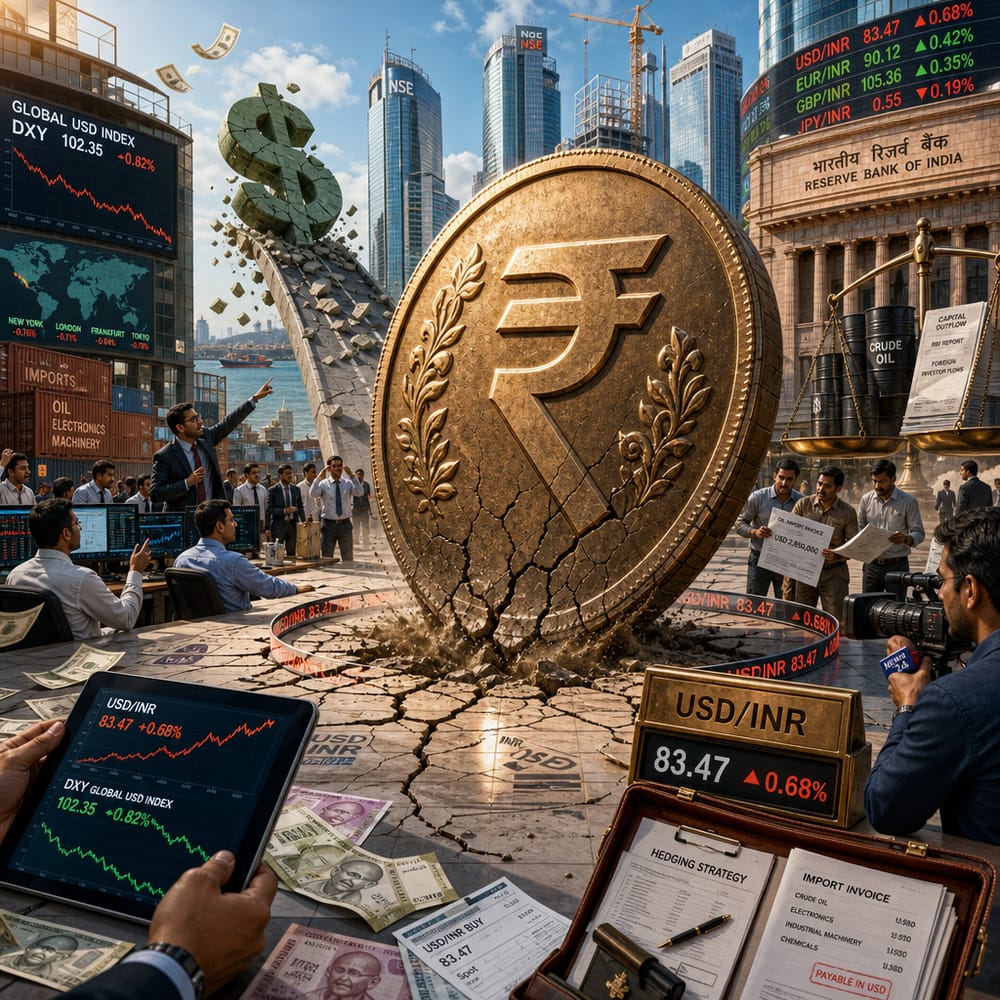
In the world of currency drama, the plot often centers around the dollar — the globe-trotter of wallets and vaults. But this time, our star is the underdog, the Indian rupee, and its perplexing tango with the dollar. While the mighty greenback stumbles globally, it somehow still manages to gain an edge over the rupee. So why is the USD/INR shaking up its script?
USD JOINS THE WEAKNESS CLUB
First, let's set the stage. Worldwide, the dollar isn't exactly throwing a party. With the Federal Reserve playing the interest rate game cautiously and economic indicators sending mixed signals, the dollar is doing the currency equivalent of a light jog when it should be sprinting. So, why does it feel like the rupee is turning the other way and panting behind?
THE RUPEE'S PERFORMANCE TROUBLES
The rupee’s recent struggle isn't due to its fitness but because it’s weighed down by issues at home. India’s import bill has been on a rollercoaster, surged by oil prices that are as unpredictable as the stock market on any given Monday. As India imports around 80% of its oil, every tick up in global prices means more rupees going out the door and a weaker currency at the end of the day.
Then there's the notorious current account deficit. Think of it as the country’s financial report card, showing more money leaving than entering — not a great look if you're trying to persuade currency traders that your rupee's worth their while.
THE POLICY PLAYBOOK
Enter stage right: India's economic policies. The Reserve Bank of India (RBI) has been a bit of a tightrope walker, trying to balance inflation without crashing growth. While they’ve avoided dramatic rate hikes, unlike some of their global peers, this means they’re not exactly pumping up the rupee with interest rate steroids either. This go-slow approach can make the rupee less appealing to investors hunting for quick returns.
Moreover, any dreams of quick rupee recovery are also shadowed by political and policy unpredictability. The Indian government has a full agenda, which includes ambitious spending plans that might require more borrowing. And borrowing more can put excess pressure on the currency.
GLOBAL AND LOCAL SCENES COLLIDE
What makes this currency divergence particularly spicy is how it's being brewed in a pot of broader geopolitical and economic factors. The Middle East tensions, oil politics, and the occasional trade squabbles — India finds itself quite often in the splash zone of these global water fights. Just look at recent U.S.-Iran tensions or the OPEC’s latest moves. All these global cues trickle down into India’s economic landscape.
WHERE DOES THIS LEAVE US?
Understanding this dance between the USD and INR isn't just for the currency geeks. It’s about seeing the global tapestry and what it spells for economies that aren't always in the spotlight. For U.S. investors with a keen eye on emerging markets, or those with interests tied to Indian growth, this divergence hints at caution but also opportunity.
If you've got rupees in your investment portfolio or business dealings, keep a close eye on the RBI’s next steps or any oil price swerves. India’s future currency movements will likely continue to be shaped by a mix of domestic policy moves and the ever-dramatic global stage.
As the USD/INR chart wavers, consider it a reminder that in the currency world, sometimes the local story is just as crucial as the global headline. And as always, in finance as in life, it’s best to keep one eye on the horizon and the other on the road right in front of you.
This article is for informational purposes only and is not investment advice. Always do your own research or consult a licensed financial professional before making investment decisions.
© Copyright 2024. All Rights Reserved.
© Copyright 2024. All Rights Reserved.