

USD Index (DXY) Weakens as U.S. Treasury Eases Bond Market Strain
Saturday, August 29, 2026
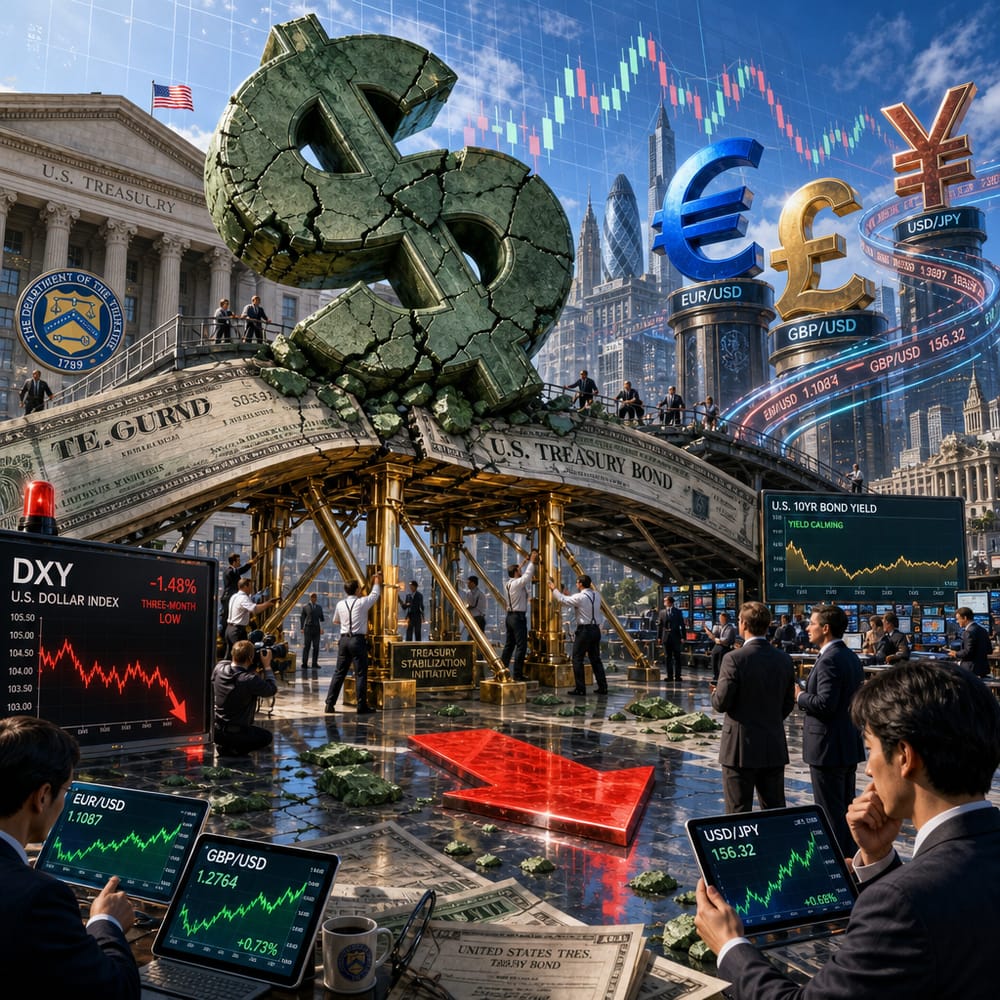
THE DOLLAR DANCE: WHAT A WEAKENING USD MEANS FOR YOUR WALLET
Picture this: the U.S. dollar is on a diet, shedding pounds faster than a celebrity on a juice cleanse. The U.S. Dollar Index, or DXY for those in the know, has plummeted to a three-month low. The culprit? A crafty maneuver by the U.S. Treasury to soothe a bond-market tantrum. Now, before your eyes glaze over, let's break it down and see what this means for the bucks in your pocket.
First, a little scene-setting. The bond market's recent jitters had investors running around like caffeine-charged squirrels. In response, the U.S. Treasury decided to step in with measures to calm this frenzy, ultimately causing the dollar to lose some of its muscle against other global currencies. So why should you care? Because a weaker dollar doesn’t just hang out in finance nerd circles; it trickles down to the world of global trade and your everyday spending.
GLOBAL TRADE: A NEW TWIST
A weaker dollar makes U.S. exports cheaper and more attractive abroad. Imagine the little tags on American goods abroad suddenly reading "on sale." While this is music to the ears of U.S. manufacturers and exporters, countries selling their goods to Uncle Sam might feel the pinch.
But here's the kicker: foreign companies earning in dollars will find their profits shrinking when converted back to their own currencies. It's like getting paid in Monopoly money. This dynamic can ripple through global trade networks, potentially leading to price adjustments and strategy shifts in boardrooms worldwide.
CURRENCY PAIR DRAMA
In the forex arena, where currencies strut their stuff like models on a catwalk, the dollar's slip has turned heads. The EUR/USD (euro to U.S. dollar) is waltzing with a newfound confidence, while the GBP/USD (British pound to U.S. dollar) is strutting like it just won a jackpot. The USD/JPY (U.S. dollar to Japanese yen) is a wild card, given the yen's own rollercoaster ride lately.
If you're a trader or just someone who enjoys a little currency gamble, these shifts can open up opportunities or risks, depending on your perspective. But remember, forex is a fast-paced game, and much like a soap opera, the plot twists are constant.
COMMODITY CURRENCIES IN THE SPOTLIGHT
Let's talk commodities, those raw materials that keep the world spinning. Commodity-linked currencies, like the Canadian dollar or the Australian dollar, are like the canaries in the coal mine. They tend to soar when commodity prices rise. A weaker U.S. dollar usually means higher commodity prices, since these goods are priced in dollars. It's like a never-ending dance where everyone’s trying to lead.
For countries reliant on exporting natural resources, this can be good news. But it’s a double-edged sword: higher prices can dampen demand. It’s a balancing act, and much like your morning coffee, it all depends on how you take it.
INVESTOR TAKEAWAY
So, what's an everyday investor to do? First off, don't panic. Currency fluctuations are a normal part of the economic cycle. If you're holding U.S. stocks or bonds, the immediate effect might be minimal. However, international diversification could become your best friend, offering a hedge against currency swings.
For those with a penchant for travel, a weaker dollar could mean fewer extra lattes in Paris or less spending money in Tokyo. But on the flip side, it might just make that stateside staycation seem a bit more attractive.
Ultimately, whether you're navigating the forex market or just planning your next holiday, awareness is key. The dollar may be flexing less muscle these days, but staying informed will ensure your financial moves remain strong. So, keep an eye on those currency charts and market updates—they might just hold the key to your next savvy investment decision or travel splurge.
This article is for informational purposes only and is not investment advice. Always do your own research or consult a licensed financial professional before making investment decisions.
© Copyright 2024. All Rights Reserved.
© Copyright 2024. All Rights Reserved.