

USD Holds Steady Post-Fed Meeting
Tuesday, August 11, 2026
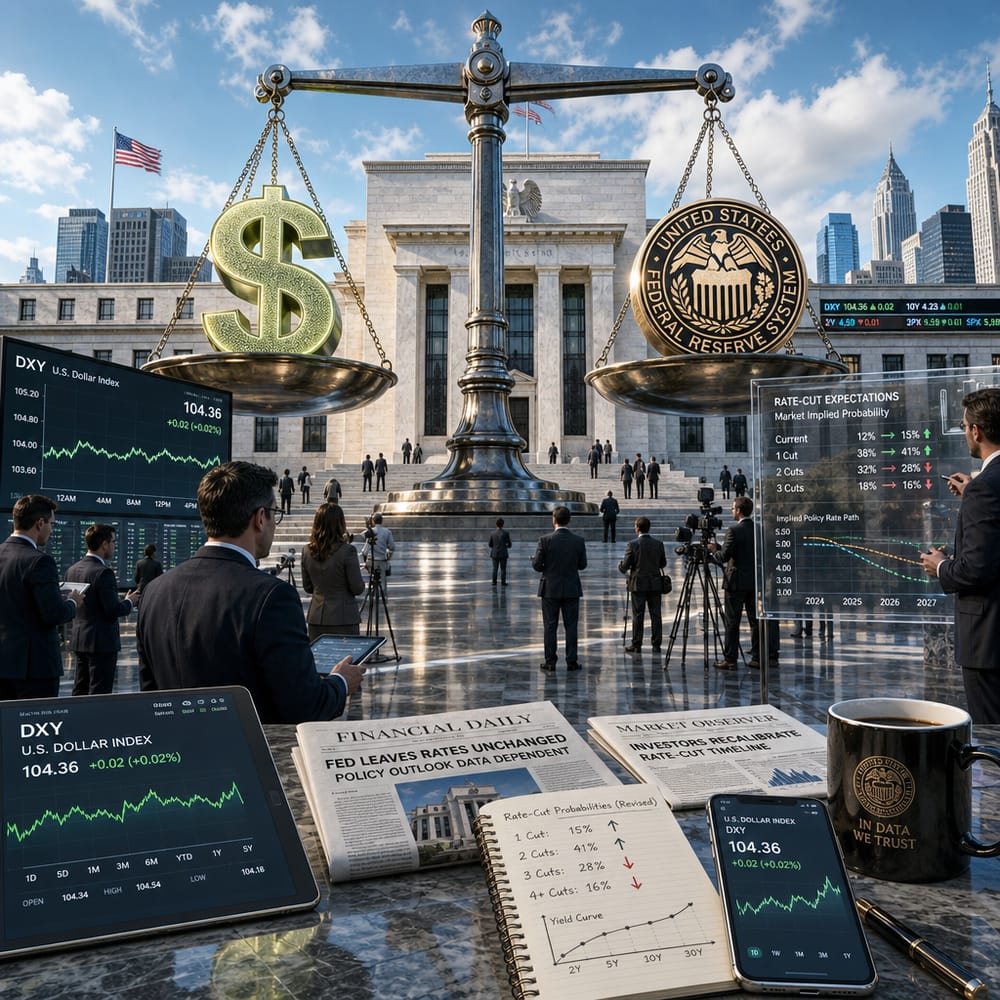
THE DOLLAR DRAMA: FED EDITION
Picture this: The U.S. dollar, that greenback powerhouse, doing its best impression of a stoic poker player. Not twitching a muscle, not even when the Federal Reserve shuffled the interest rate deck. Post-Fed meeting, the U.S. Dollar Index (DXY) is as stable as your uncle's old recliner—unfazed and just sitting there. But why is the dollar playing it so cool?
Investors, like a bunch of overcaffeinated chess players, are currently recalibrating their strategies, eying the Fed’s every move. They’re like kids at a magic show, trying to guess if the Federal Reserve will pull a rate cut rabbit out of the hat. And with the dollar being the unofficial king of global trade and investment, its stability—or lack thereof—could very well dictate market moods from Tokyo to Timbuktu.
FED FOOTPRINTS AND MARKET EXPECTATIONS
The buzz around the Fed’s latest meeting was akin to a season finale cliffhanger. Everyone was waiting to see if the Fed would drop the rate cut bomb. But instead of a dramatic plot twist, we got a “wait and see” approach. Think of it as a cliffhanger that leaves you scratching your head and wondering what’s next.
Investors now find themselves a bit like Sherlock Holmes, trying to deduce the Fed's next move. Some are betting on future rate cuts, while others are taking a more cautious stance, wondering if the Fed will hold its current course. The stakes? Well, they’re as high as a hot air balloon at a festival.
COULD A FED POLICY SHIFT RATTLE THE USD?
Now, what if the Fed does decide to change its tune? Imagine the U.S. dollar as a seesaw. If the Fed leans towards rate cuts, the dollar could tip downward. Why? Lower rates often lead to a weaker dollar because investors could seek higher returns elsewhere. On the flip side, if the Fed stays hawkish (fancy talk for favoring higher rates), the dollar could remain robust, attracting global capital like bees to honey.
But let’s not pretend it’s all that simple. A shift in Fed policy could ripple through markets, sending investors into a scramble for safety nets—the good old safe havens like gold and government bonds. And let’s be real, nobody wants to see gold climb any closer to its current peak. It’s already shining brighter than a lighthouse in a coastal storm.
MARKET REACTIONS AND RIPPLE EFFECTS
So, what’s the bigger picture here? Globally, the stability of the U.S. dollar plays a starring role in trade and investment flows. It’s the international currency of choice for transactions from oil to microchips (and everything in between). Its stability is the world’s financial comfort blanket, reassuring everyone that the toddler in the room won’t suddenly throw a tantrum and flip their plate of chicken nuggets.
But should the dollar start playing peekaboo, you best believe markets around the globe will react in kind. Emerging markets could feel the sting the most, as a weaker dollar can lead to tighter financial conditions, making it pricier for them to service dollar-denominated debt. It’s like the financial version of getting hit by an unexpected wave while you’re just trying to enjoy your beach day.
THE FINAL WORD
So, dear retail investor scrolling through your phone at the coffee shop, what’s the takeaway? Keep your ears to the ground, or better yet, to the Fed’s next meeting notes. Whether you’re investing in foreign markets, eyeing tech stocks, or simply planning your next international vacation, the dollar’s value is the hidden puppeteer pulling those strings.
In the meantime, keep a watchful eye, stay nimble, and don’t be fooled by the dollar’s poker face. After all, the financial world is nothing if not one big, unpredictable game where the rules can change with a single Fed whisper.
This article is for informational purposes only and is not investment advice. Always do your own research or consult a licensed financial professional before making investment decisions.
© Copyright 2024. All Rights Reserved.
© Copyright 2024. All Rights Reserved.