

USD/CAD Tumbles to 1.3770 as Rate Spreads Drive FX Moves
Saturday, August 22, 2026
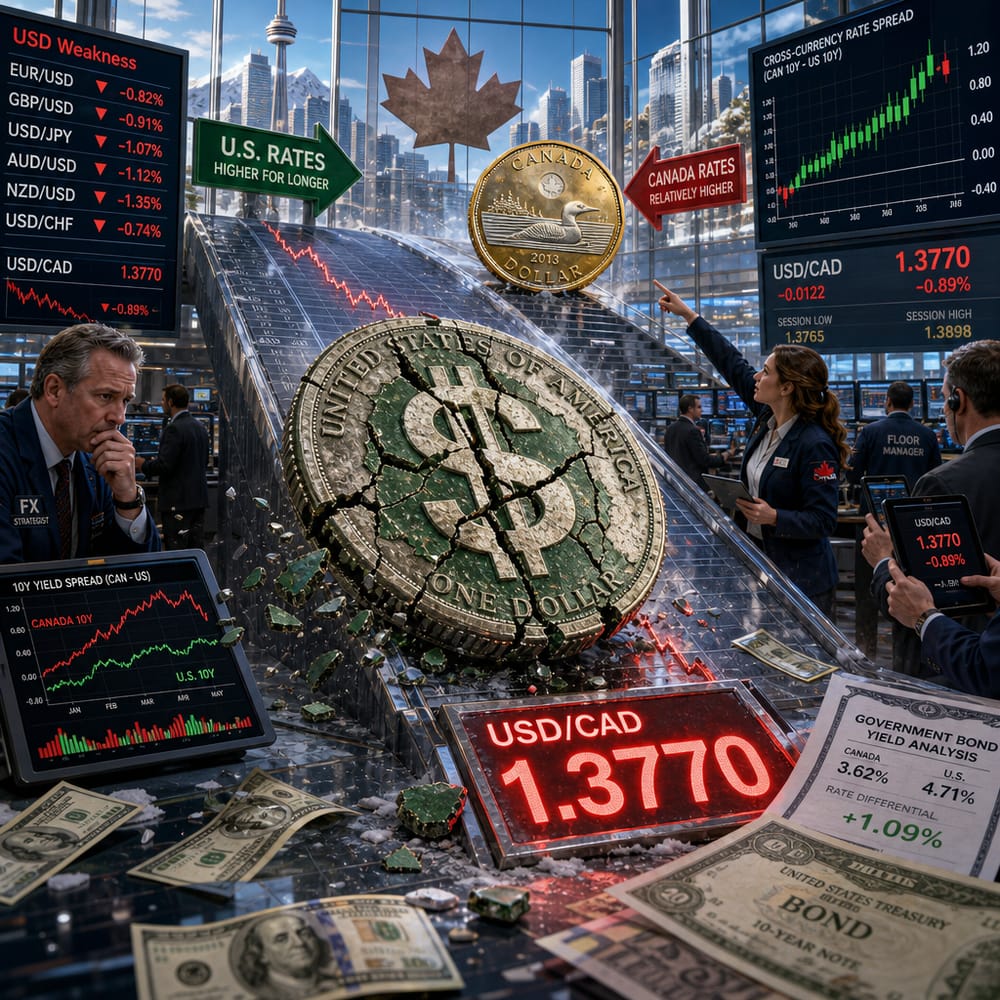
USD/CAD Tumbles: When Rate Spreads Do the Talking
Blink, and you might have missed it — the USD/CAD exchange rate just nosedived to 1.3770. And no, the Canadian loonie didn't suddenly hit the gym. This slide wasn’t courtesy of a sudden surge in maple syrup demand either. This time, the culprit is the broader softness in the U.S. dollar and a whispering force in financial corridors — cross-currency rate spreads.
Before you roll your eyes at yet another finance term tossed around like confetti, let's break it down. In the glamorous world of forex (foreign exchange), rate spreads are like the cool kids at the party, dictating who's in and who's out. Essentially, it’s the interest rate difference between two countries. When these rates shift, they can make one currency more attractive than another. Think of it as the financial version of keeping up with the Kardashians, but with way more spreadsheets.
Now, why does this matter to you, the sharp-eyed retail investor? Well, when the U.S. dollar takes a breather, as it did recently, rate spreads start flexing their muscles in the forex market. This movement isn't just a numbers game for traders hunched over screens in dark rooms. Rate differentials are increasingly calling the shots, influencing how currencies like the USD/CAD pair dance around each other.
So, what role are these rate spreads playing in today’s USD/CAD twist? Picture this: while the Federal Reserve and the Bank of Canada both hover over their interest rate buttons, the subtle differences in their policies and economic outlooks are causing ripples. The U.S. rate hikes seem to be running out of steam, while Canadian decision-makers are still in a see-saw over their rate narrative. This rate indecisiveness has led investors to snooze on the greenback, causing the Canadian dollar to take the lead, at least temporarily.
But don’t go cashing your savings into loonies just yet. The forex market is as fickle as your cat’s favorite spot to nap. Rate differentials, while influential, aren't the only players on the field. Geopolitical tensions, trade negotiations, and even global debt levels are lurking in the shadows, ready to steal the spotlight.
Looking ahead, how could changes in rate differentials impact future forex trends? Let’s just say, the central banks have a lot on their plates. The global economic stage is currently a hotbed of high-stakes drama — the kind where you don’t know if the happy ending will come or if the villain will take over. Rate spreads will continue their waltz, nudging currencies up or down, but the dance will also include partners like trade policies and international economic agreements.
Canadian Prime Minister Mark Carney’s recent tariff tango with the U.S. also throws a little extra spice into the mix. With retaliatory tariffs looming, economic relations could shift, and along with them, exchange rates. If the Canadian economy manages to navigate through this with minimal turbulence, the CAD could gain more appeal, adding another layer of complexity to the rate spread conundrum.
In a world where debt headlines compete with AI breakthroughs for prime news real estate, keeping an eye on the rate spread radar is crucial. For those pondering their next moves, remember that while rate spreads can guide you, they’re not the complete map. They’re a significant piece of the puzzle — but not the entire picture.
In short, whether you’re watching the forex market like a hawk or just peeking in between scrolling your social media feed, keep this in mind: while rate spreads might not make for riveting dinner conversation, they hold the power to influence economic tides. And as the USD/CAD pair continues its jitterbug, remember: in forex, as in life, it’s often the subtle shifts that tell the real story. Keep your ear to the ground, your eyes on the rates, and maybe — just maybe — you’ll catch the next big move before it happens.
This article is for informational purposes only and is not investment advice. Always do your own research or consult a licensed financial professional before making investment decisions.
© Copyright 2024. All Rights Reserved.
© Copyright 2024. All Rights Reserved.