

U.S. Companies Race to Lock Down Rare-Earth Magnets
Monday, July 21, 2025
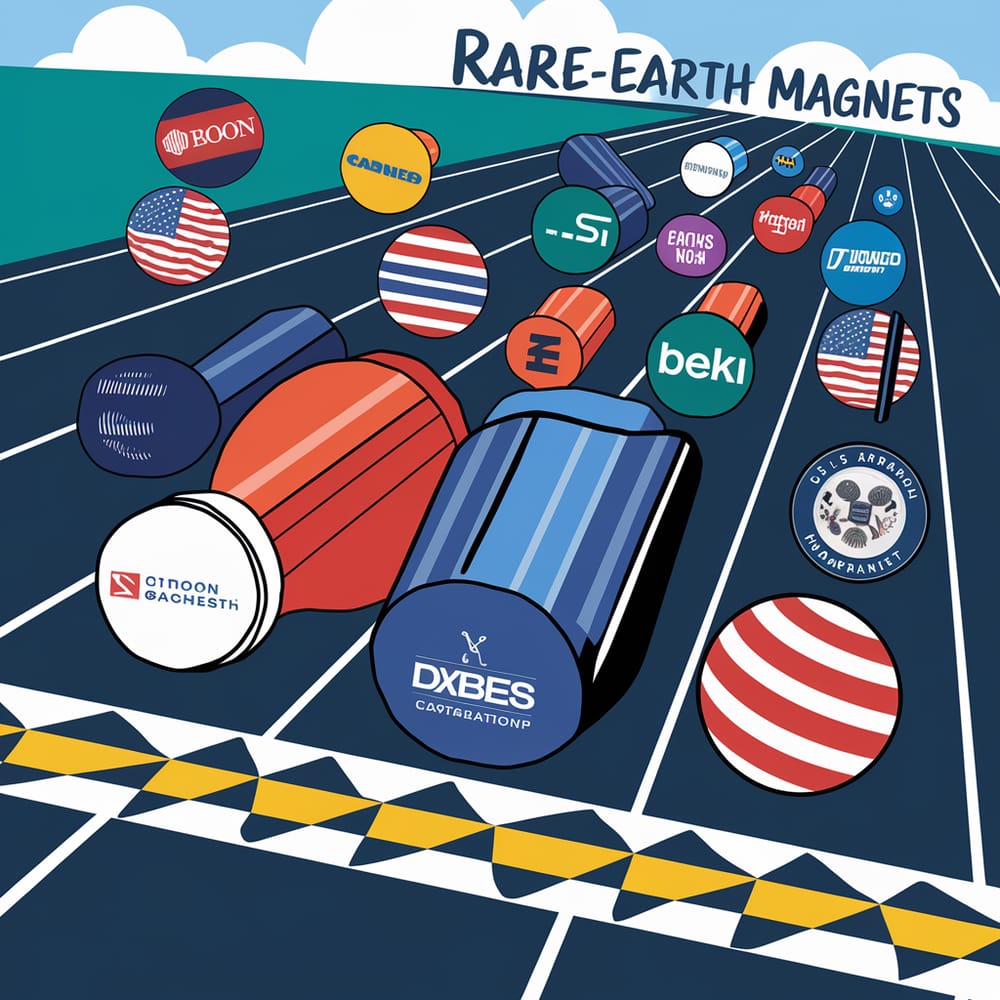
Rare-earth magnets might be small, but they’re causing a big stir—and U.S. companies are scrambling to get their hands on them before it’s too late.
These tiny components are essential for everything from electric vehicles and wind turbines to fighter jets and smartphones. The catch? China dominates the global supply, and rising tensions have companies across the U.S. scrambling to diversify before supply chains get squeezed tighter than ever.
Strategic Metals, Strategic Headaches
While the U.S. has rare-earth deposits, it lacks the processing power. That means American companies are still hooked on Chinese suppliers, especially for neodymium-iron-boron magnets, which power the modern economy's most critical tech.
With Washington pushing for domestic production and Beijing hinting at tighter export controls, the pressure is on to build a resilient, homegrown supply chain.
Who’s Making Moves
Companies like GM, Lockheed Martin, and Apple are hunting for alternatives, investing in local suppliers and even partnering with Australian and Canadian firms to bypass China. Startups and mining outfits are trying to fill the gap, but scaling up won’t be quick—or cheap.
Meanwhile, trade officials are working to secure deals with allies, especially in Europe and Asia, to ensure steady access without handing China all the leverage.
Why It Matters Now
The rare-earth race isn’t just about avoiding a supply crunch—it’s about national security, economic independence, and future-proofing American tech. With green energy targets and defense upgrades accelerating, the magnet supply crunch could soon become a full-blown bottleneck.
Bottom line: The race for rare-earth magnets is on—and for U.S. firms, it’s not just a sourcing issue, it’s a survival strategy. In this high-stakes scramble, those who lock in supply chains early will have a serious edge.
© Copyright 2024. All Rights Reserved.
© Copyright 2024. All Rights Reserved.