

US Treasury Yields Spike as Fed Officials Signal No Rate Cuts Ahead
Saturday, August 08, 2026
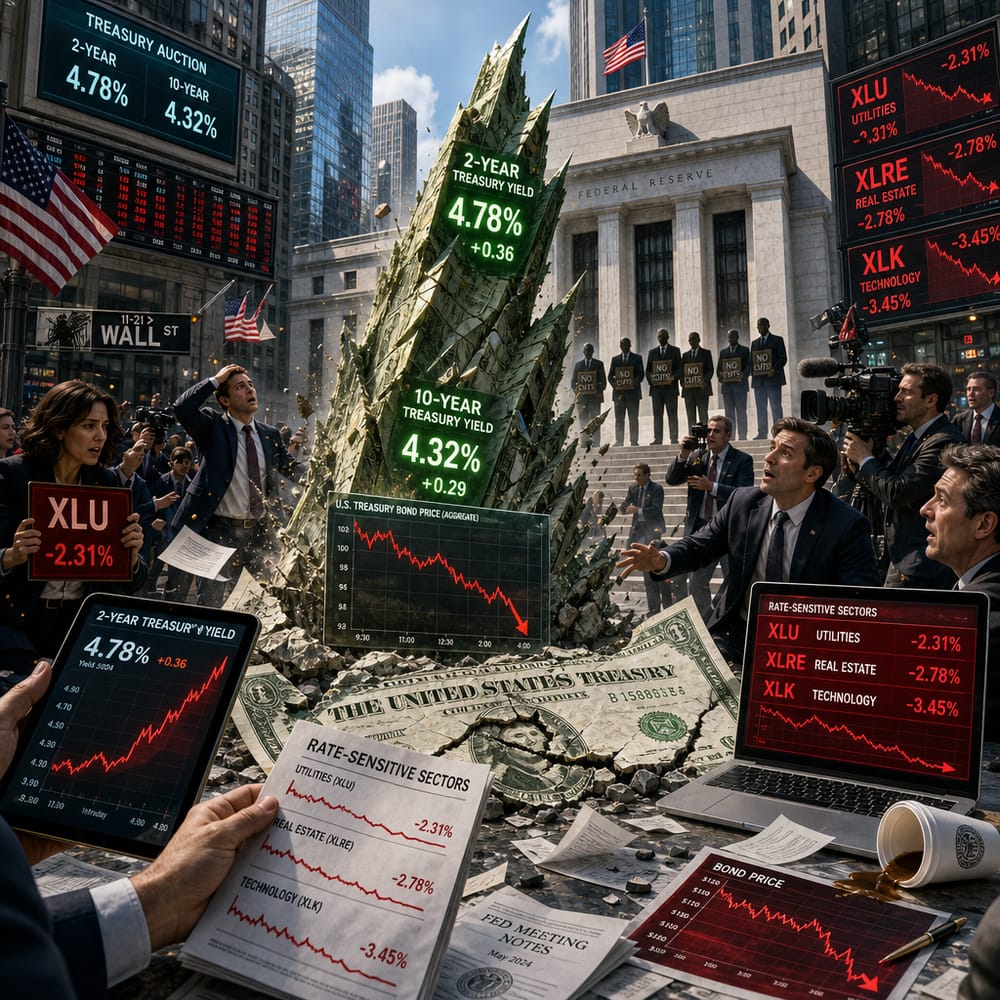
US TREASURY YIELDS DEFY GRAVITY AS FED DOUBLES DOWN ON NO RATE CUTS
Blink and you might have missed it. Treasury yields are sprinting upward faster than a caffeinated cheetah, and for anyone keeping an eye on the Fed’s verbal breadcrumbs, the message is clear: Rate cuts are out of the picture, at least for now. In the financial world, this is the equivalent of someone yanking the emergency brake on your leisurely train ride to a rate cut wonderland. Brace yourself, retail investors, because the markets are feeling the tremors.
Fed officials have been making the rounds, dropping hints like cryptic fortune cookies. The latest from the monetary Mount Olympus? Rate stability is the mantra, and pulling back on the rate hikes is a bedtime story for another day. Cue the shaking bond and equity markets, each reacting like a cat on a hot tin roof.
The two-year Treasury yield has jumped more than a few basis points (the tiny increments that bond geeks use to measure yield changes), signaling a seismic shift in expectations. The 10-year yield decided to join the party as well, climbing like a determined mountain goat. The numbers tell the tale—both yields have risen significantly in recent days, sending a message as clear as a neon sign: Investors need to recalibrate their Fed policy expectations.
So, who are the maestros orchestrating this symphony of hawkish harmony? Enter Fed officials like John Williams and Michelle Bowman, who have been mumbling sweet nothings about rate stability and inflation control. Their recent speeches suggest that the Fed is not eager to hit the brakes just yet. If you were waiting for that rate cut lifeline, you might want to take a seat and get comfortable.
But what does this mean for the markets in real-time? Stocks in sectors sensitive to interest rates—think utilities, real estate, and tech—are feeling the pressure. Imagine trying to carry a boulder uphill; that’s what these sectors are facing as higher yields make borrowing more expensive and future earnings less valuable. Meanwhile, financials might just be on the verge of a happy dance, benefiting from the rising rates environment.
Investor positioning is also doing a quick two-step. With a more hawkish Fed narrative, futures markets are recalibrating, pricing in fewer rate cuts. This shift could spark a rotation away from defensive sectors (those traditionally seen as safer in a downturn) and toward sectors that thrive on higher rates, like banks.
Recession concerns are bubbling up like a pot of overcooked pasta. The bond market, often seen as the economy’s worried grandmother, is flashing warning signs that a downturn could be on the horizon. An inverted yield curve—where short-term yields are higher than long-term ones—has historically been a red flag for recessions.
So, where does this leave the everyday investor? First, take a deep breath. The markets are playing musical chairs, and it might be a good moment to reassess portfolios. If you’re heavily invested in rate-sensitive sectors, consider a mix that balances the potential for volatility with opportunities in sectors positioned to benefit from a higher rate environment.
In conclusion, the landscape is shifting. With Treasury yields on the rise and the Fed signaling no rate cuts in sight, investors should keep their eyes peeled and strategies nimble. Embrace the change because, in the financial world, adaptation is key. And remember, it’s not about timing the market perfectly; it’s about having the discipline to navigate its twists and turns.
This article is for informational purposes only and is not investment advice. Always do your own research or consult a licensed financial professional before making investment decisions.
© Copyright 2024. All Rights Reserved.
© Copyright 2024. All Rights Reserved.