

US Treasury's Ban on MEXC Global: A New Era of Crypto Regulation
Saturday, November 07, 2026
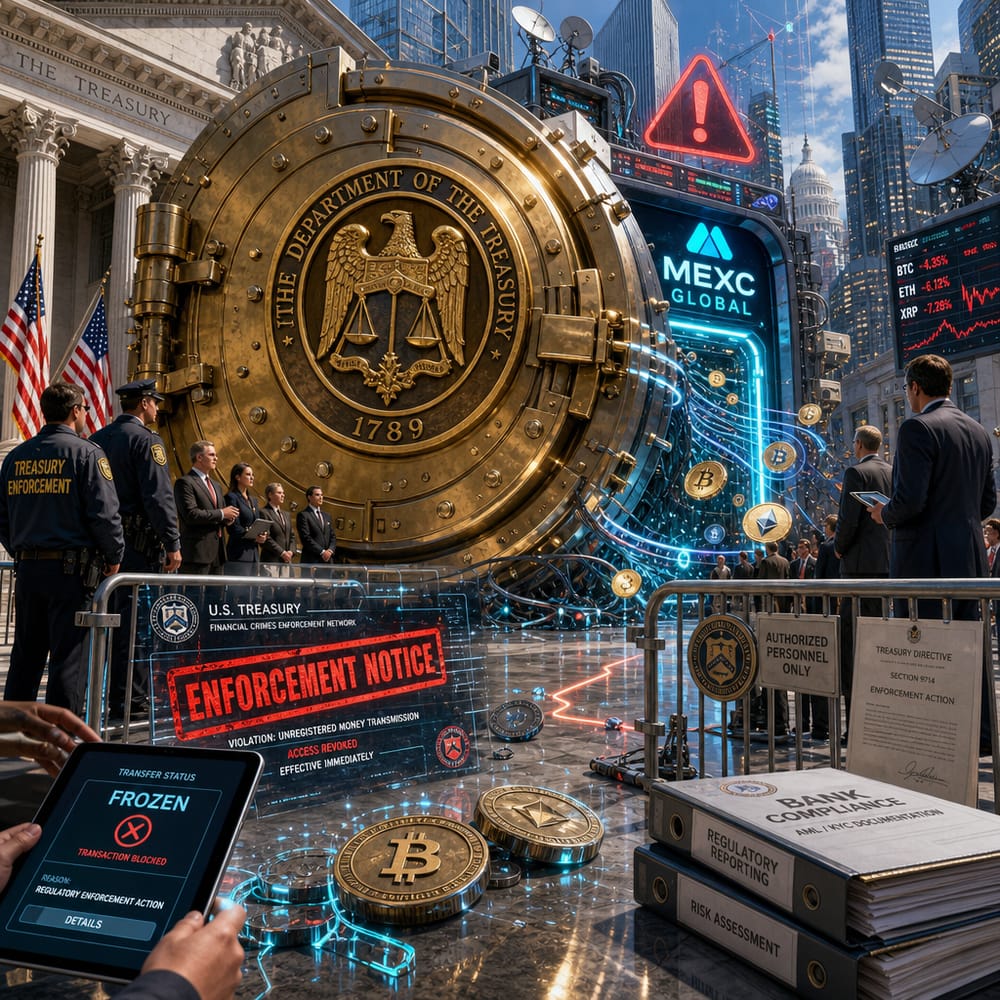
US TREASURY'S BAN ON MEXC GLOBAL: A NEW ERA OF CRYPTO REGULATION
The U.S. Treasury just dropped a regulatory bombshell that’s shaking up the crypto world like a high-stakes game of Jenga. MEXC Global, a crypto exchange that until now was flying under many radars, has found itself in the Treasury’s crosshairs. The reason? Alleged illicit activities that prompted the U.S. government to tell financial institutions to give MEXC Global the cold shoulder. Yes, folks, you heard it right. U.S. banks and financial firms are now barred from processing any transactions for MEXC Global.
So, what does this crackdown mean for the crypto landscape that's already as wild as a reality TV show? And how does this affect the everyday crypto enthusiast or investor just trying to keep their digital ducks in a row?
WHAT'S THE BIG DEAL ABOUT MEXC GLOBAL?
You might be wondering, “Why should I care about MEXC Global?” Well, dear reader, it’s all part of the bigger picture of the U.S. flexing its regulatory muscles in the crypto arena. The Treasury's decisive action against MEXC Global signals a significant escalation in the crypto crackdown. While specifics of the alleged illicit activities haven't been laid bare, the move is enough to send shivers down the spine of other crypto exchanges.
IMPACT ON MEXC GLOBAL
For MEXC Global, this isn't just a slap on the wrist—it's more like being put in a financial chokehold. By losing access to the U.S. financial system, MEXC Global faces an uphill battle to maintain its operations and credibility. It might still work in some jurisdictions, but like a car with three wheels, it’s going to be a rough ride. Expect the exchange to scramble to reassure its users and business partners while seeking legal avenues to clear its name.
THE RIPPLE EFFECT ON OTHER CRYPTO EXCHANGES
But let’s not just focus on MEXC. The real intrigue lies in what this move means for the rest of the crypto exchanges. The message from the U.S. government is crystal clear: fall in line with compliance, or face the music. Other exchanges will likely be shaking in their digital boots, taking this as a cue to tighten their compliance measures and bolster their anti-money laundering (AML) strategies. Nobody wants to be next in the Treasury’s line of fire, and other exchanges will be reviewing their playbooks to avoid turning into the next cautionary tale.
WHAT DOES THIS MEAN FOR U.S. CRYPTO INVESTORS?
For U.S. crypto investors, this is both a wake-up call and a potential turning point. If you’re dabbling in the crypto waters, it’s time to be vigilant about where you trade and the compliance standards of your chosen platforms. The regulatory environment is becoming stricter, and exchanges that fail to meet compliance could suddenly find themselves out of commission—or worse, under investigation. Smart investors will keep an ear to the ground for any updates on other exchanges facing similar scrutiny and adjust their strategies accordingly.
THE BROADER CRYPTO REGULATORY LANDSCAPE
This move by the Treasury underscores a larger trend of increased scrutiny over the crypto market. For a while, the crypto space was like the Wild West—anything goes. But now, with substantial sums of money and global implications at play, regulators are stepping up. The days of turning a blind eye to shady dealings in the crypto world are dwindling. Expect more aggressive moves from regulators worldwide as they seek to bring order to the chaos.
In conclusion, the saga of MEXC Global serves as a potent reminder to crypto exchanges and investors alike: comply with regulations, or prepare to face the fallout. As the U.S. Treasury flexes its regulatory muscle, the crypto market may well be on the brink of a new era—one where compliance and transparency are not just buzzwords but the keys to survival and success. So, investors, keep your eyes peeled and wallets ready, because the world of crypto just got a whole lot more interesting.
This article is for informational purposes only and is not investment advice. Always do your own research or consult a licensed financial professional before making investment decisions.
© Copyright 2024. All Rights Reserved.
© Copyright 2024. All Rights Reserved.