

US Tech Security Restrictions: New Chip Curbs & Export Controls
Saturday, November 28, 2026
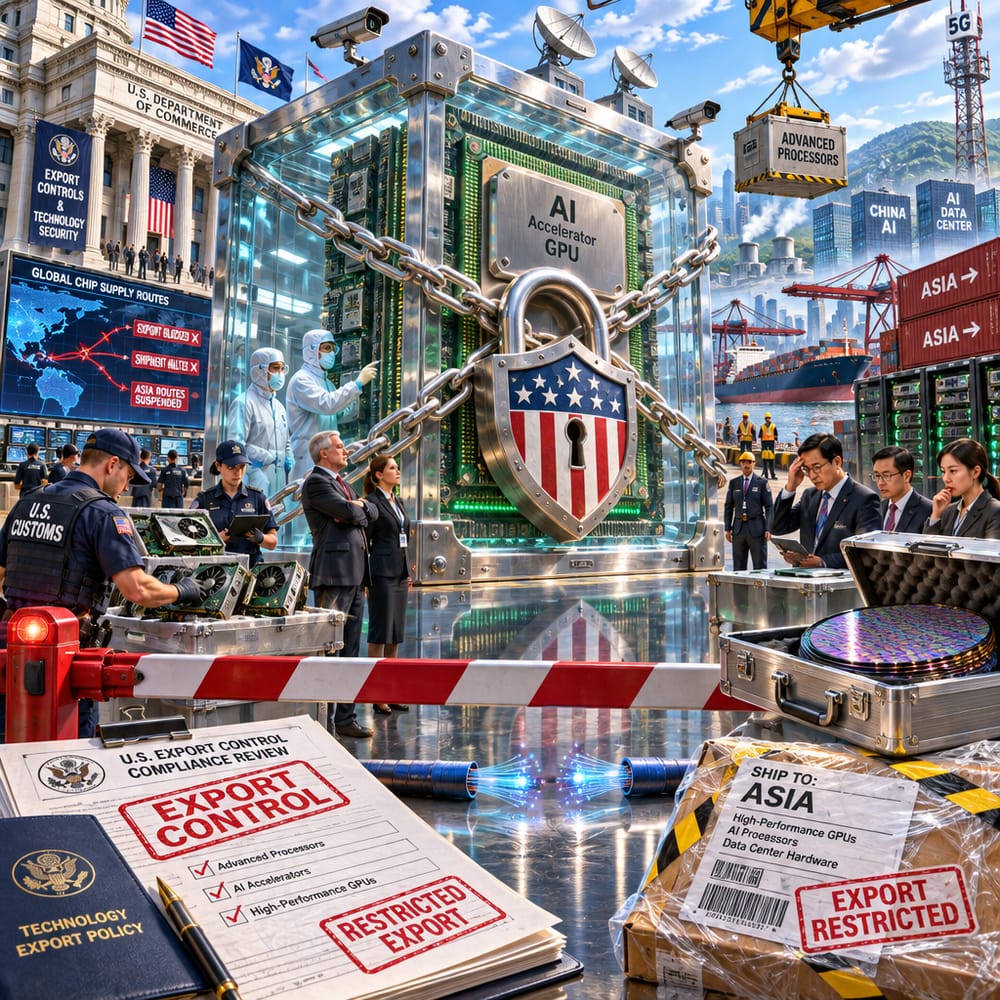
CHIP WARS: HOW U.S. EXPORT CONTROLS ARE RUFFLING GLOBAL TECH FEATHERS
Let's talk about chips. No, not the kind you dunk in guac at a Super Bowl party. We're talking about the silicon kind that power our devices and, increasingly, our future—AI chips. And Uncle Sam just drew a line in the silicon sand, slapping new restrictions on exporting these technological wonders, especially to Asia and China. But before you nod off thinking this is another dry policy update, let's unpack why this move could shake things up more than Aaron Rodgers' latest sideline drama.
THE NEW RULEBOOK
So, what's the deal with these restrictions? The U.S. has rolled out new rules that essentially put a leash on exporting AI chips to China and other parts of Asia. The Land of the Free is tightening the noose, aiming to curb China's rapid AI advancements that some fear could challenge U.S. tech supremacy. We're talking about chips made by industry titans like Nvidia, which, for those keeping score, is a big deal in the semiconductor world. It's like telling Coca-Cola they can’t sell to half the thirsty folks on the planet.
THE GLOBAL RIPPLE EFFECT
Now, you might be thinking, "Why should I care? I just want my phone to work." Well, here's the thing: This isn't just an American problem or a Chinese problem; it's a global supply chain headache in the making. Chips are the lifeblood of modern technology—they're in everything from your coffee maker to your smart fridge. By restricting where these chips can go, the U.S. is essentially giving a surprise pop quiz to the global tech ecosystem. And spoiler: most weren't ready for this test.
First up, compliance costs. Companies that deal with these chips now have to navigate a labyrinth of regulations, which is like adding a weekly spin class to their already packed schedules. For manufacturers, this means extra paperwork, potential delays, and hefty fines if they slip up. And let's not forget the domino effect on prices—these compliance costs could sneak into the final price tag of the gadgets we love.
Next, the supply chain disruption. We're talking about a potential slowdown in the tech conveyor belt that spans continents. With the U.S. turning off the chip faucet, Asian data centers—especially those in China—could start feeling the pinch. And these aren't just any data centers; they're the powerhouses behind the AI innovations that shape our digital world. The result? Delays in development, potential innovation roadblocks, and a lot of head-scratching over how to fill the chip-shaped gap in their operations.
THE STAKEHOLDERS: NVDA AND CO.
Here's where it gets juicy for investors. Nvidia, the big kahuna of the chip world, finds itself in the crosshairs. With these new restrictions, the company could see a significant chunk of its revenue stream dried up, as Asia represents a massive market for their AI chips. Imagine running a marathon and finding out midway that the water stations are gone. Not ideal.
This could spell turbulence for Nvidia's stock, which has already had its share of drama with the reinstatement of Jensen Huang as CEO following a corporate scandal. The company's board and investors might need to buckle up for a rollercoaster ride as they navigate this new landscape.
However, it's not all doom and gloom. Restrictive measures can also spark domestic innovation. U.S. companies, shielded from the high-octane competition from certain international players, might get a breather to ramp up their own AI developments. It's like having a home game advantage—minus the cheering crowds.
FINAL THOUGHTS
As these chip export controls roll out, the ripple effects are set to touch every corner of the tech world. From supply chains to stock markets, the impacts could be deep and far-reaching. For everyday investors, this means staying alert and nimble. Keep an eye on companies like Nvidia for market shifts and remain savvy about how these geopolitical moves can influence your portfolio.
So, while the chip war may not be as buzzy as the latest celebrity breakup, it's a drama worth following. After all, in the fast-paced world of technology and finance, today's policy changes might just set the stage for tomorrow's innovations—or headaches.
This article is for informational purposes only and is not investment advice. Always do your own research or consult a licensed financial professional before making investment decisions.
© Copyright 2024. All Rights Reserved.
© Copyright 2024. All Rights Reserved.