

US National Debt Hits $40 Trillion, Stoking Fiscal Sustainability Concerns
Sunday, August 23, 2026
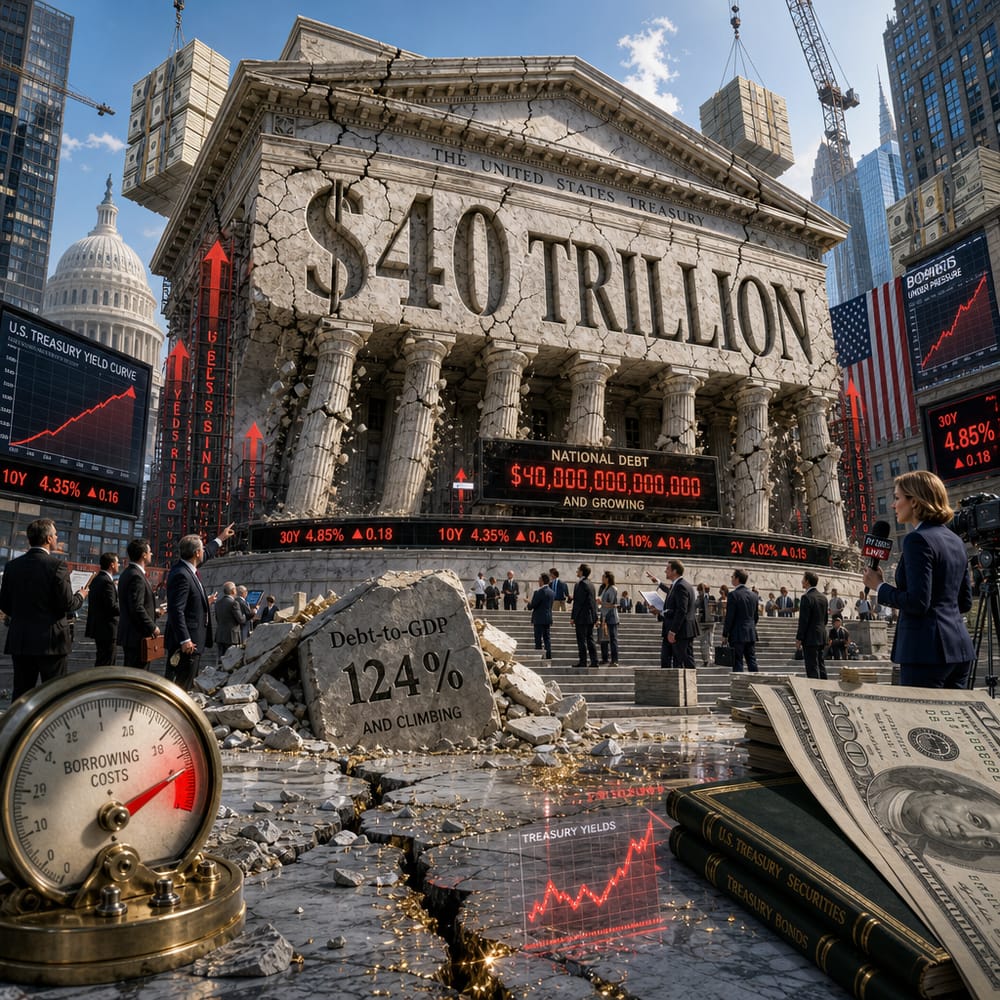
US NATIONAL DEBT HITS $40 TRILLION, STOKING FISCAL SUSTAINABILITY CONCERNS
Congratulations, America! We’ve hit a tricky new milestone, and it’s not exactly the kind of thing you want to throw a party for. The U.S. national debt has soared past the $40 trillion mark, a number so astronomically high that it probably belongs in a sci-fi novel about space exploration rather than on a fiscal reality check. But here we are, hurtling through economic space with a debt load that’s as heavy as it sounds.
The sheer magnitude of the national debt is like the ghost at the banquet of fiscal responsibility, looming over policymakers and investors alike. And with Treasury yields climbing, the ghosts aren’t just looming; they're rattling their chains and keeping the bond markets on edge. But why does this matter to you, the curious smartphone scroller? Well, let’s jump in and break it down.
THE INTERESTING INTEREST CONUNDRUM
Interest rates! They’re as mysterious as your grandma’s secret cookie recipe but crucial for understanding the debt drama. When the national debt balloons, the government has to issue more Treasury bonds to cover its spending needs. More supply means bond prices can fall, and yields—the return you get from holding the bond—go up.
Higher yields sound fantastic if you're a bondholder, but they’re a double-edged sword. They can lead to higher borrowing costs across the board. Mortgages, car loans, student debt—all get pricier. And don’t even get me started on credit cards. Rising interest rates are like snowballs rolling downhill; they gather more debt as they go, increasing the cost of borrowing and throwing cold water on the flames of economic growth.
LONG-TERM GROWTH: SLOW AND STEADY OR FLAT AND MUDDY?
Let’s face it: long-term high national debt isn’t just a crick in Uncle Sam’s neck; it’s a potential wrench in the economic machinery. High levels of debt can crowd out private investment. When Uncle Sam is hogging all the cash, it leaves less room for businesses to get the funds they need to grow. And less business growth means slower economic progress. Think of it as trying to run a marathon with a backpack full of bricks—that’s the U.S. economy with a $40 trillion weight.
Skeptics argue that we’re on a slippery slope to a fiscal cliff. High debt can lead to inflationary pressures, and not the good kind. No one wants to relive the ‘70s, when disco was in and inflation was too. Even now, as we prance through relatively good economic times, the debt’s shadow is long. It’s a lurking specter that might haunt future generations, who could face either higher taxes or slashed public services—or both.
FISCAL POLICY: THE GREAT DEBATE
In the grand circus of fiscal policy, the $40 trillion debt is the elephant in the room, and everyone’s got an opinion on how to tackle it. Political debates will likely intensify, with one side touting the virtues of austerity (cue the tightening belts) and the other advocating for growth-stimulating spending (pass the stimulus, please).
But anyone who thinks there’s a quick fix—like a magic fiscal wand or budgetary pixie dust—needs a reality check. It’s a complicated mess that requires careful balancing, much like a tightrope walker juggling flaming torches.
WHAT DOES THIS MEAN FOR YOU?
So where does this leave you, our intrepid reader? Well, with a keen eye on Treasury yields and a healthy skepticism about any politician promising easy solutions. As interest rates rise, consider revisiting those personal finance books gathering dust on your shelf. Think about your investments and how they might fare if borrowing costs rise.
And keep an eye on fiscal policy news. As debates heat up, decisions made in Washington will inevitably ripple through the economy and knock on your door, whether it’s in the form of taxes or how much you pay for goods and services.
In the end, while we might not be able to put that debt genie back in the bottle anytime soon, we can certainly be informed and prepared. Stay savvy, keep your eyes peeled, and remember: in the topsy-turvy world of finance, knowledge is your best hedge against uncertainty.
This article is for informational purposes only and is not investment advice. Always do your own research or consult a licensed financial professional before making investment decisions.
© Copyright 2024. All Rights Reserved.
© Copyright 2024. All Rights Reserved.