

US Jobless Claims Tick Up—but Still Point to a Healthy Labor Market
Tuesday, August 18, 2026
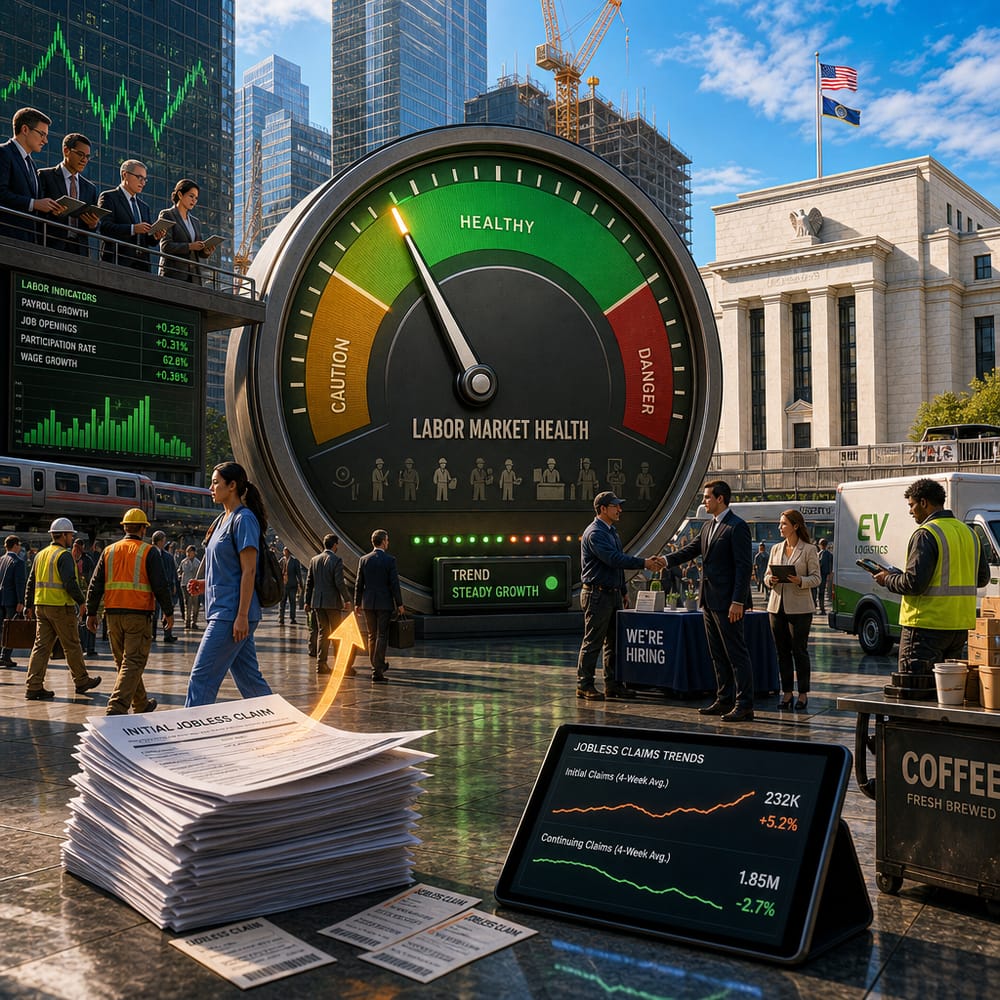
JOBLESS CLAIMS UP, BUT NO NEED TO PANIC—YET
In the world of economic indicators, jobless claims are like the canary in the coal mine, signaling the health of the labor market. This week, those claims unfurled slightly upward—much like that one unruly hair on your head that refuses to cooperate—prompting a flurry of debate over whether the labor market bull has started limping or just momentarily tripped.
A 10,000-foot view of the numbers reveals initial jobless claims ticking up modestly, just like the interest in buying vintage fanny packs—there’s a rise, but nothing dramatic. Meanwhile, continued claims, which track folks who remain unemployed after their first week, have actually dipped. Picture a see-saw where the initial claims went up a notch, but the continued claims dropped just enough to keep the overall playground level.
WHAT’S BEHIND THE BUMP?
So, what’s causing this slight rise? It could be attributed to a mix of factors. Seasonal shifts, like school starting and affecting temporary employment in education sectors, are part of the landscape. Another player in this game is the ongoing recalibration in tech and other sectors adjusting from their rapid pandemic-era expansion—yes, tech layoffs are still a thing, as companies continue to figure out the ideal post-pandemic workforce size.
But let’s not miss the forest for the trees. Despite this weekly fluctuation, the figures are still hovering in relatively low territory historically, implying that most people seem to be holding onto their jobs like they hold onto their phones—tightly and constantly. So, while a slight rise in jobless claims might feel like an ill-timed pinch, it's far from a slap in the face.
THE BROADER PICTURE
Let's zoom out a bit: How does this data align with other indicators we've been seeing? The broader labor market has consistently shown impressive resilience with robust job openings and a low unemployment rate, painting a picture of a workforce that’s more marathon runner than sprinter—it’s in it for the long haul.
That said, labor market dynamics aren’t just static picture frames; they’re evolving like the latest streaming series you can't quite stop binging. The Federal Reserve has been walking a tightrope, juggling its dual mandate of maximum employment and price stability like a seasoned circus performer with too many props. Rising jobless claims, albeit slight, might make the Fed tap the brakes ever so gently on any aggressive rate hikes, aiming to keep inflation in check without throwing the job market into a tailspin.
FEDERAL RESERVE’S MERRY-GO-ROUND
Amid this backdrop, the Federal Reserve has been performing its own balancing act, akin to a tightrope walker juggling flaming torches. With inflationary pressures still simmering, the Fed might eye this slight uptick in jobless claims as a reason to be more judicious with its interest rate decisions. Think of it as a cautious dance where neither the tango nor the two-step is fully committed to, but rather a careful waltz as they seek to cool inflation without chilling job growth.
LOOKING AHEAD
So, is this minor blip simply a blip, or does it foreshadow a trend? Most experts suggest it's too early to hit the panic button. The economy, much like your favorite comfort food, is complex and savory, with various ingredients coming together to create an overall taste.
For retail investors and the average American, the takeaway is this: keep your eye on the broader trends. A single week's data won't dictate the future, much like one rainy day doesn't define a season. Federal Reserve policy decisions, ongoing corporate restructuring, and global economic tremors all play a part in this intricate dance.
While jobless claims might have wavered slightly, the labor market’s firm footing suggests it's still more bull than bruise—and that’s a reassuring note in an otherwise unpredictable economic symphony. So, sit back and enjoy the rollercoaster, because the labor market still seems ready for the ride.
This article is for informational purposes only and is not investment advice. Always do your own research or consult a licensed financial professional before making investment decisions.
© Copyright 2024. All Rights Reserved.
© Copyright 2024. All Rights Reserved.