

US Dollar Weakens Amid Sluggish Job Growth
Sunday, October 04, 2026
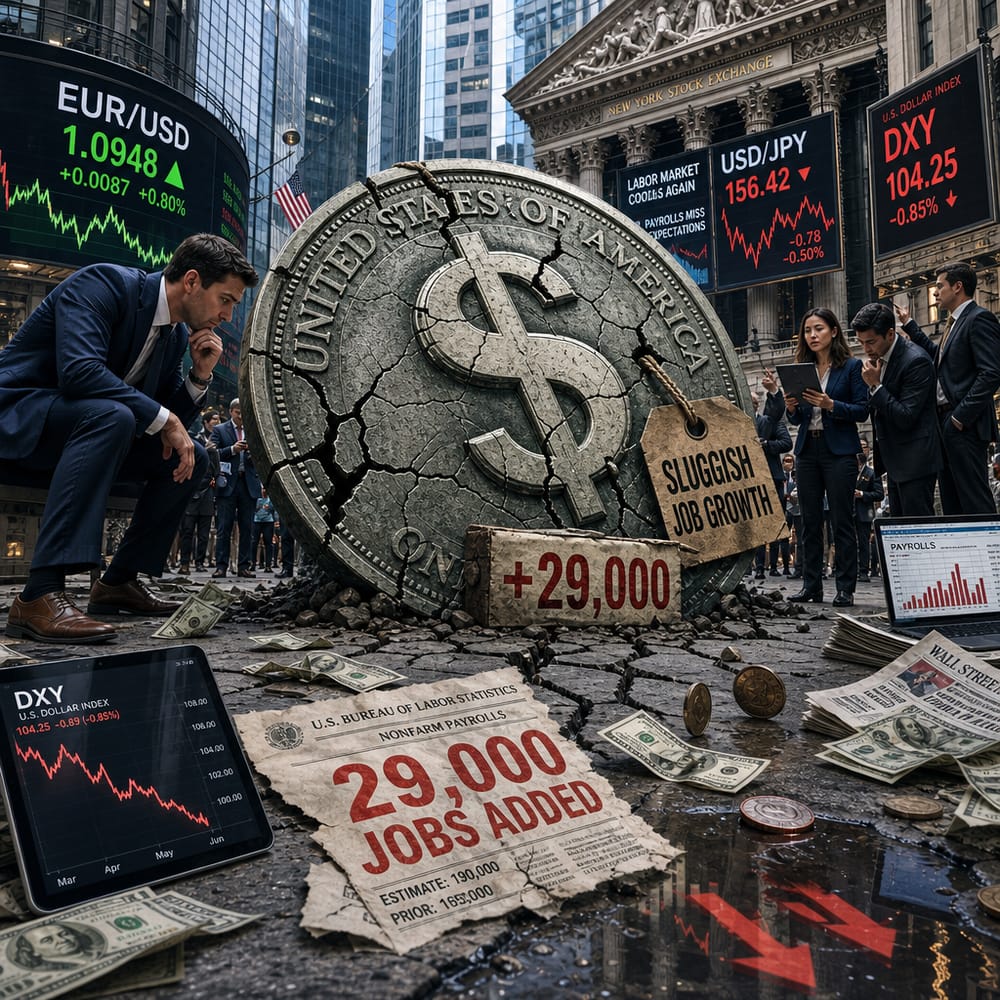
Dollars, Jobs, and the Art of the Plot Twist
Nothing spices up a Friday morning quite like a plot twist from the U.S. Bureau of Labor Statistics. Just when the economy seemed to be chugging along, the latest jobs report threw a wrench into our expectations with the announcement of a mere 29,000 new jobs last month. Throw in an uptick in unemployment to 4.2%, and you’ve got the perfect recipe for a weakening dollar. But why should you, the casual observer of economic turmoil, care about the dollar's meltdown and what does it have to do with your wallet and the global stage?
Cue the Federal Reserve, the seasoned director of our monetary policy drama. The Fed's not exactly knee-deep in popcorn, but it's certainly watching closely, because slow job growth usually means it's time for a change of plans. Without strong employment numbers, the Fed could reconsider hiking interest rates, which it uses to control inflation and keep the economy in check. Lower interest rates tend to make borrowing cheaper, which can spur spending and investment. But here's the plot twist: without those hikes, inflation could keep steaming ahead.
WHAT'S AT STAKE?
A softer dollar is like a double-edged sword. On one hand, it makes American exports cheaper abroad—a win for American companies looking to sell their goods overseas. On the flip side, it means that imports become more expensive. In plain terms, if you've been eyeing that new gadget made in Europe or Japan, brace yourself—it might start burning a bigger hole in your pocket. The USD's performance against the EUR and JPY, two key currency pairs, is a trending topic these days.
And it's not just about gadgets. Everyday items, from the bananas in your breakfast smoothie to the gas in your car, could start costing more. As the dollar loses strength, the cost of importing goods rises—and so does the price tag you face at the counter.
FEDERAL RESERVE'S NEXT MOVE
The stage is set for the Fed to be caught between a rock and a hard place. With job growth dragging its feet and inflation refusing to take a bow, the Fed's rate decision becomes a nail-biting tug-of-war. On one hand, if the Fed keeps interest rates too low for too long, it risks inflation running wild. On the other, move too quickly to hike rates, and it could slow down economic growth even further or spook the markets.
But let’s not forget the Fed's ultimate goal: full employment and stable prices. Right now, with sluggish job growth and rising prices, they’ve got a riddle to solve. Jerome Powell, the Fed Chair, and his crew will have to decide whether to tighten the purse strings or let loose a little, in hopes of stimulating more job creation.
THE INTERNATIONAL SPIN
And then there’s the global stage. As the USD takes a hit, currencies like the Euro (EUR) and the Japanese Yen (JPY) start dancing around the exchange rate floor. A weaker dollar often means more attractive currencies elsewhere, leading to shifts in global investment flows. For investors, this can signal a time to rethink portfolios—perhaps looking towards assets that will benefit from a weaker dollar or those less affected by Fed policy swings.
WHAT'S IN IT FOR YOU
So, what's the bottom line for you, the savvy retail investor? Keep an eye on the Fed's next moves; they're the key players in this unfolding drama. A rate hike could boost the dollar but slow economic growth, impacting both your investments and your day-to-day costs. Conversely, a lack of rate hikes could keep the dollar low, making imports pricier, but potentially boosting exports and domestic businesses.
It's a classic cliffhanger situation. Will the Fed swoop in with a rate hike to steady the dollar ship? Or will it let the dollar drift, betting on a rebound in job growth down the line? Keep your eyes peeled—this plot is far from over, and it's one you won't want to miss. Whether you're cheering for the dollar or betting on its fall, the next chapters are bound to be a wild ride.
This article is for informational purposes only and is not investment advice. Always do your own research or consult a licensed financial professional before making investment decisions.
© Copyright 2024. All Rights Reserved.
© Copyright 2024. All Rights Reserved.