

US Dollar Retreats as Bond Yields Ease and Risk Sentiment Improves
Sunday, October 11, 2026
US DOLLAR RETREATS AS BOND YIELDS EASE AND RISK SENTIMENT IMPROVES
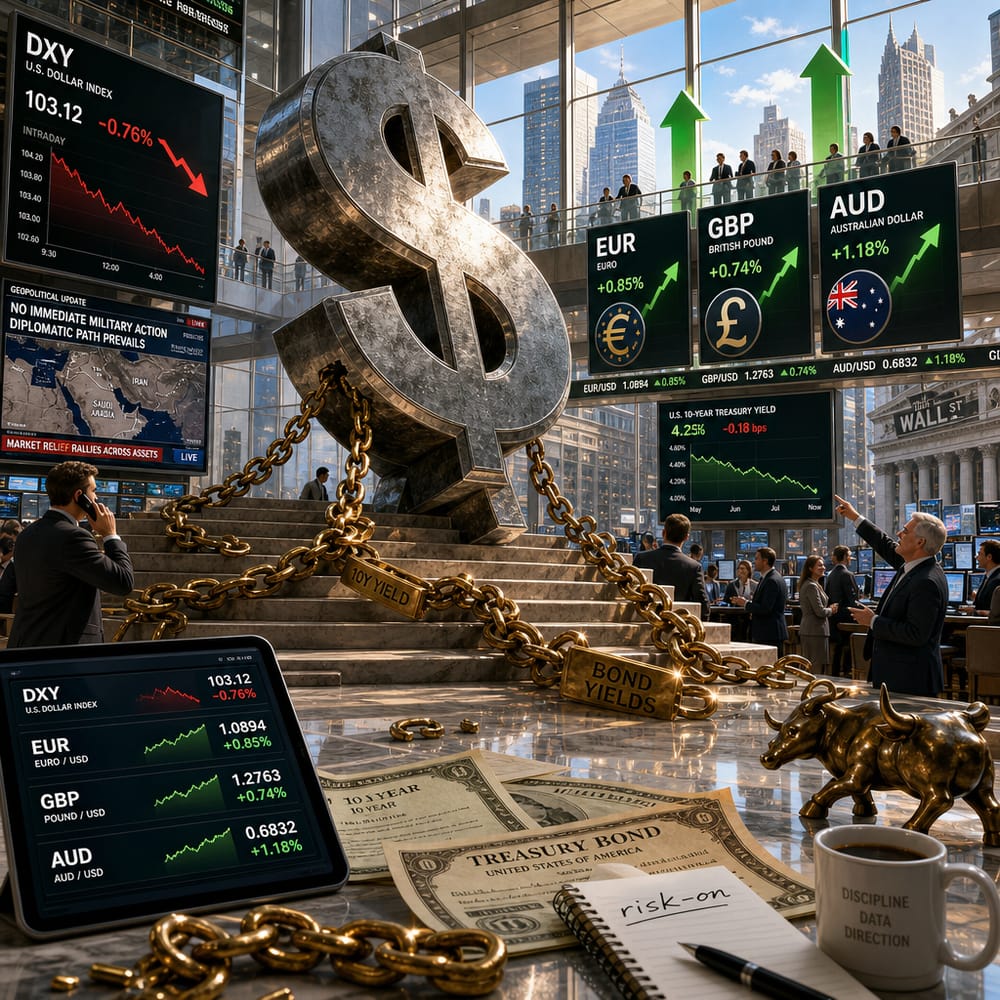
In the high-stakes world of global finance, what goes up must eventually come down, and that's precisely what's happening with the US dollar this week. The mighty greenback, that emblem of American economic muscle, has taken a modest hit, slipping against major currencies like the euro, pound, and Aussie dollar. But what's behind this monetary maneuver? The answer lies in a cocktail of easing bond yields and a geopolitical chess match, with President Trump's latest assurance of no military action against Iran serving as an appetizer.
Yes, you read that right. The US dollar is doing a little tango thanks to geopolitics and bond yields. For those not fluent in Wall Street-speak, think of bond yields as the annual return you earn by holding a bond. When yields rise, the dollar usually gets a bit of a glow-up; when they drop, the dollar tends to lose some of its sheen. This week, bond yields have eased, giving the dollar a reason to cool off.
But why do bond yields even matter for currency valuations? It's like this: higher bond yields offer better returns for investors holding US assets in dollars, pushing up demand for the currency. When those yields ease, the allure dims, and the dollar takes a backseat. Yet, there's more than just numbers at play here.
Enter stage left, President Trump and the geopolitical theater we've come to expect. Recently, Trump reassured global markets that there's no immediate plan for military action against Iran. This bit of diplomacy has soothed some international jitters, and in the finance world, calm waters can often lead to a willingness to take on a bit more risk. Investors have started looking beyond the safety of the US dollar, paving the way for a resurgence in riskier, higher-yielding currencies.
So, how does this intricate dance between geopolitics and currency markets work? Simply put, when geopolitical tensions are high, the world turns to safe-haven assets like the US dollar. Yet, with the deflating rhetoric around military threats, investors are willing to explore other territories, causing the dollar to step back.
This shift also highlights the undeniable power of geopolitical developments on the currency stage. Future moves—be they political chess games in Washington or Middle Eastern power plays—could either prop up or further erode the dollar's value. Investors with an eye on global trade and investment flows are watching closely, knowing that today’s political promise might be tomorrow’s market pivot.
But let's not forget the wildcard: how these dynamics affect everyday folks scrolling through their newsfeeds. A weaker dollar might make foreign travel a bit pricier and affect the price of imported goods, adding a few extra cents here and there. Yet, for US exporters, a softer dollar could mean a more competitive edge in global markets.
With the dollar momentarily pulling back, what lies ahead? Even with the current calm, financial forecasters are a bit like weather enthusiasts—always peering over the horizon. Should there be any flare-ups in geopolitical tensions or surprising twists in the bond yield story, the dollar could either jump back into the limelight or continue its quiet retreat.
In the end, whether it’s a seasoned trader or a curious onlooker getting their daily market fix, understanding these abrupt movements can feel like trying to decipher a plot twist in a complex drama. But, like any captivating story, the journey is as intriguing as the destination. Markets thrive on anticipation, and the US dollar’s dance with global events is a reminder that in finance, as in life, timing and context are everything.
So, as you sip your morning coffee and swipe through the latest headlines, remember: a weaker dollar today reflects a world both interconnected and unpredictably thrilling. Keep your eyes peeled, because the financial stage always has another act ready to unfold.
This article is for informational purposes only and is not investment advice. Always do your own research or consult a licensed financial professional before making investment decisions.
© Copyright 2024. All Rights Reserved.
© Copyright 2024. All Rights Reserved.