

US Dollar Near 18-Month High Amid Fed's Hawkish Stance
Saturday, October 10, 2026
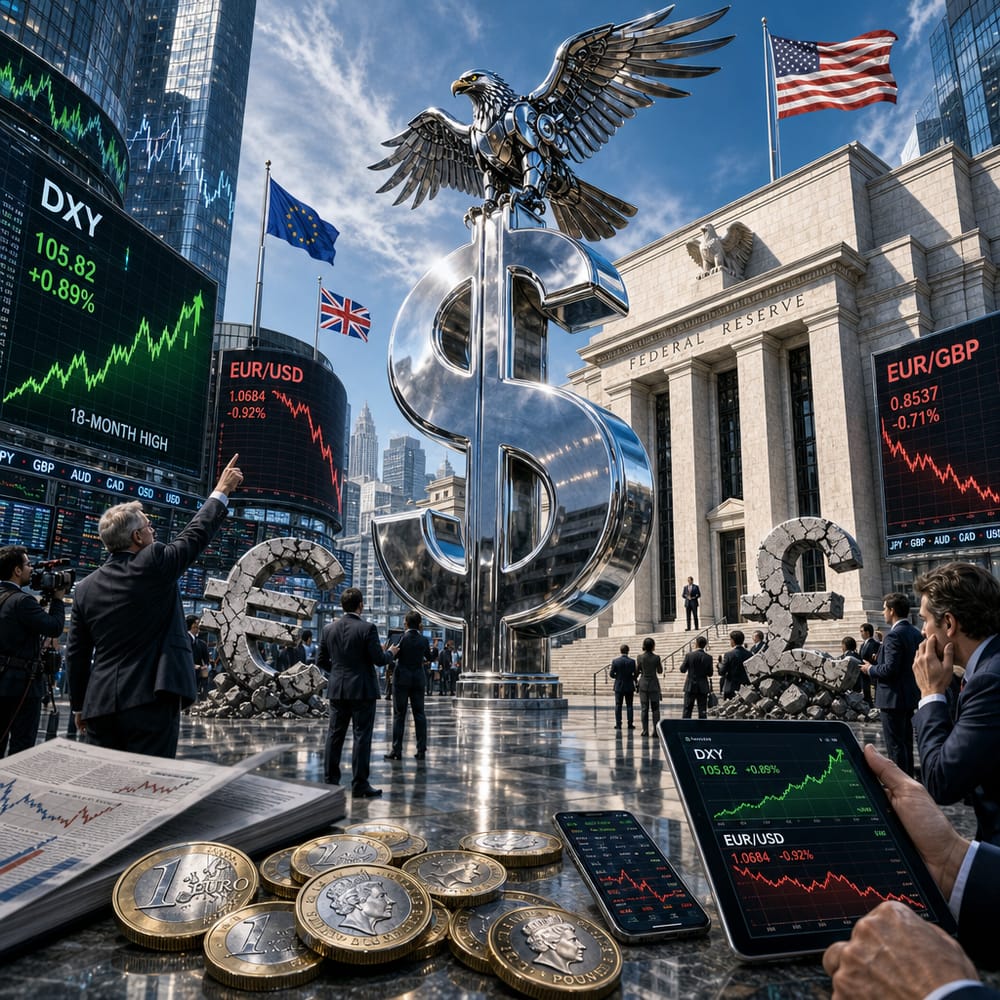
THE DOLLAR MUSCLE: CAN IT KEEP FLEXING?
Hold onto your hats, folks—because the good ol' greenback is flexing its muscles and looking better than ever. The US dollar is strutting around at an 18-month high against a basket of its global peers, and it's not just because of its pretty face. What's driving this muscular performance? It's the Federal Reserve's hawkish tone, which is as sharp as a hawk's talons right now, combined with a little help from overseas friends—notably the wobbly European currencies.
THE FED'S HAWKISH SWAGGER
Let's start with the Fed. Under the leadership of Jerome "the Hawk" Powell, the Fed has been signaling that it's not ready to let up on those interest rate increases. Why? Inflation's been as stubborn as a mule, and keeping it in check takes some serious interest rate hikes. Higher rates mean better returns for holding dollars, which makes them more attractive to investors worldwide. So, they're flocking to the dollar like seagulls to a McDonald's parking lot.
A BOOST FROM WEAK EUROPEAN CURRENCIES
Our European cousins, on the other hand, haven't been handling the fiscal pressures with quite the same aplomb. The euro and the British pound have been wading through some murky waters with fiscal issues that would give anyone a headache. Political turbulence, energy woes, and sticky inflation have left the euro gasping for air. With the European economies stumbling, the euro's weakness has only amplified the dollar's glow. It's like watching a heavyweight champ square up against a boxer who's been skipping leg day.
THE RIPPLE EFFECT: EXPORTERS IN A TOUGH SPOT
But not everyone is loving this strong dollar vibe. For US exporters, this Herculean dollar isn't all that dreamy. It makes American goods more expensive for overseas buyers. Imagine having the hottest tech gadgets or the juiciest agricultural products, only to find out your international customers are balking at the sticker price. A strong dollar can squeeze exporters' bottom lines, which might make CEOs reach for the antacid.
EMERGING MARKETS: A DOLLAR SQUEEZE
Emerging markets are another group that might be less than thrilled. Many of these countries have debts denominated in dollars. A stronger dollar means their debt repayments just got pricier—ouch. It's like the treadmill suddenly picking up speed when you're already out of breath. If these economies start to stumble, it could send ripples through global investment strategies.
A EURO ON THE EDGE
As for the euro, fiscal challenges are knocking on the door like an unwelcome relative. With the European Central Bank trying to juggle low growth and high inflation, any further fiscal pressure could spell more trouble for the euro. If the euro's performance continues to falter, it could provide even more lift to the dollar, creating a self-reinforcing cycle of strength for the greenback and weakness for the euro.
THE BIG QUESTION: HOW LONG CAN THE DOLLAR STAY STRONG?
So, what could shake this dollar domination? Look no further than the Federal Reserve. If the Fed starts to sing a different tune—say, one that's less hawkish—this could cool the dollar's jets. A dovish Fed would mean lower interest rates on the horizon, reducing the dollar's shine for global investors. It's a high-stakes balancing act, and everyone from Wall Street to Main Street is watching closely.
In the grand scheme of things, the dollar's bullish run could be a double-edged sword. For US travelers and importers, it's champagne and caviar dreams. For exporters and emerging markets, it might feel more like a nightmare they hope to wake up from soon.
Stay tuned, folks. The dollar's dance card isn't filled just yet, and this currency show isn't over. Whether you're cheering from the sidelines or watching with bated breath, one thing's for sure: The dollar isn't taking its foot off the gas just yet.
This article is for informational purposes only and is not investment advice. Always do your own research or consult a licensed financial professional before making investment decisions.
© Copyright 2024. All Rights Reserved.
© Copyright 2024. All Rights Reserved.