

US Dollar Index Slips in August
Thursday, August 27, 2026
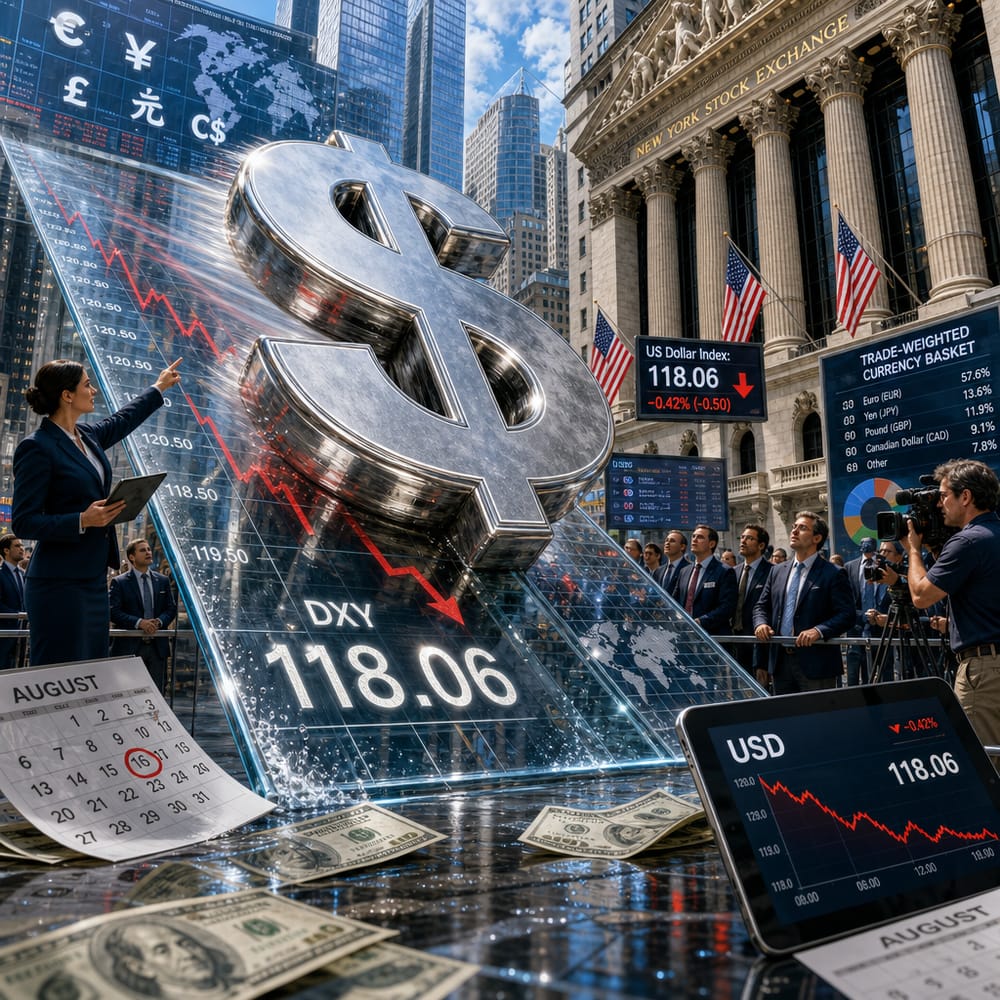
The US dollar isn't exactly throwing a rager right now. In fact, it's more of a wallflower, having slipped to 118.06 on the trade-weighted index this August. While Wall Street and your local currency exchange might not be in full panic mode yet, the move has some significant ripples—like dropping a series of pebbles into the vast pond of international trade and investment strategies.
But first, what’s causing the dollar to take a breather? One word: uncertainty. Geopolitical tensions, like the CIA chief's hush-hush trip to Moscow and the still-smoldering Ukraine-Russia conflict, have the world holding its breath. Add a dash of speculative whispers about Fed policy and sprinkle in some Wall Street intrigue, and you've got a cocktail potent enough to nudge investors away from the greenback.
When the dollar loses its muscle, it changes the game for everyone. For the U.S., a weaker dollar can mean a boost for exporters. If you’re a U.S. company selling goods abroad, your products are suddenly more wallet-friendly for overseas buyers. That’s a win for trade balances, potentially trimming the trade deficit. Imports, however, get pricier, possibly kicking your consumer behavior into high gear—think about swapping out imported cheese for an all-American cheddar.
But the plot thickens globally. For countries neck-deep in dollar-denominated debt, a weaker dollar is like a holiday bonus. Paying off loans gets cheaper, freeing up cash for other uses. But this isn’t a parade everyone gets to join. For nations with big export sectors, particularly those linked to the dollar, the currency's decline can cut into margins, slicing profitability.
So, where does this twist in the dollar narrative leave the savvy investor? Uncertainty isn’t just chaos; it’s opportunity. First stop: commodities. When the dollar dips, resources like gold and oil often see a warm glow. Gold, the eternal safe haven, just edged higher as investors wait for Fed Chair Kevin Warsh’s next move. The weak dollar makes buying gold cheaper in other currencies, pushing prices up, a juicy potential play for those looking to diversify or hedge against volatility.
Then there's the tech sector, where companies like Nvidia are basking in the glow of stellar earnings reports. Nvidia seems to be riding an AI investment boom, which billionaire types are all over like espresso at a tech summit. A weaker dollar can amplify overseas earnings when converted back into dollars, marking tech giants as a sector to watch.
But before you dive headfirst into market waters, keep an eye on bonds. They’re having a summer that could make a Shakespearean tragedy look cheery. While U.S. Treasurys are feeling the heat, the situation is uglier abroad—think of debt-laden countries like France or Japan trying to juggle their obligations.
Meanwhile, changes in the dollar could potentially lead to shifts in monetary policy, influencing everything from interest rates to inflation. Just as Warsh tries to stop spoon-feeding guidance to the market, the monetary landscape is open-season for new strategies.
In a world where almost 3,800 billionaires are shaping market dynamics with their colossal bets, the shifting dollar might not mean imminent chaos but rather a pivot for the next big opportunity. Whether you're safeguarding your portfolio with gold, banking on tech's AI surge, or eyeing international equities, keep those eyes peeled. The dollar's move may be subtle, but it's a reminder that in finance, nothing stays static for long.
Remember, this isn’t about predicting the future but positioning oneself for whatever comes next. The US dollar will continue to navigate through its maze of influences, and the savvy investor will follow the path it carves, ready to seize the next opportunity.
This article is for informational purposes only and is not investment advice. Always do your own research or consult a licensed financial professional before making investment decisions.
© Copyright 2024. All Rights Reserved.
© Copyright 2024. All Rights Reserved.