

US Dollar Index (DXY) Rises on Hawkish Warsh Speech
Sunday, August 30, 2026
US DOLLAR INDEX (DXY) RISES ON HAWKISH WARSH SPEECH
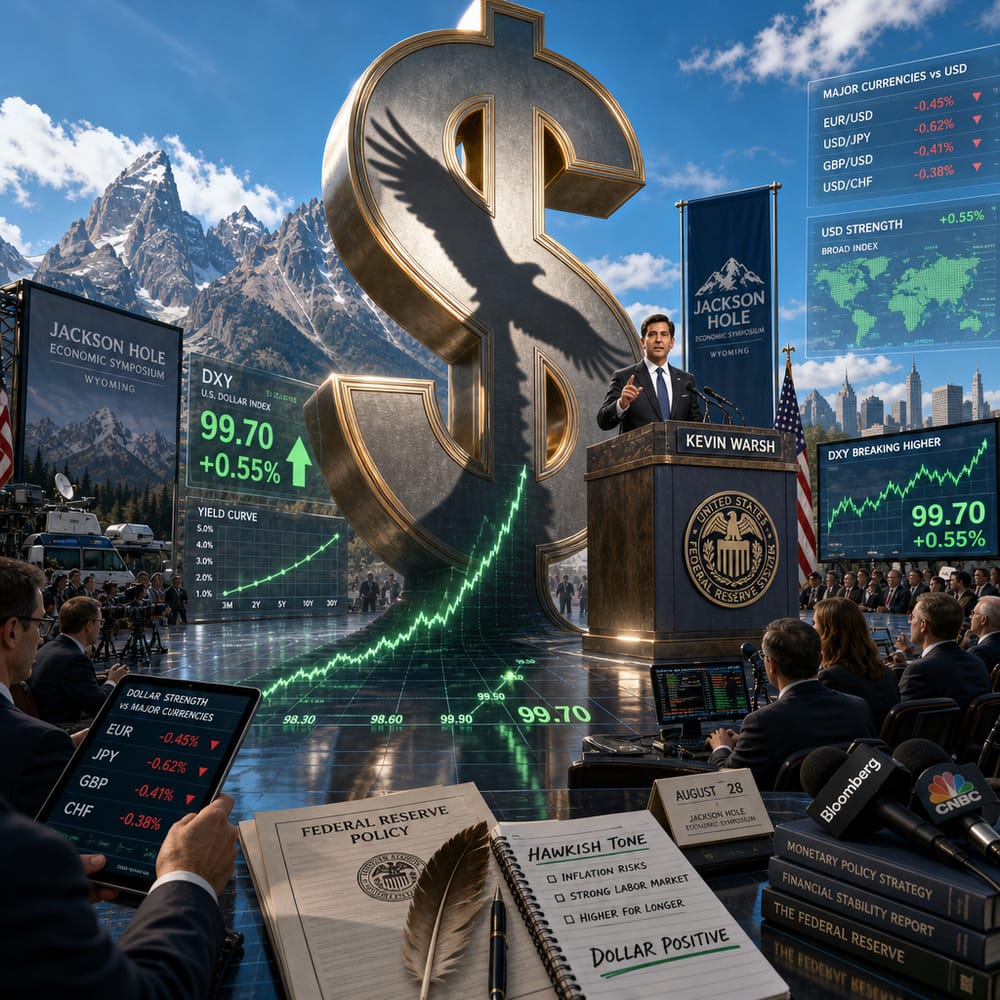
Never underestimate the power of a hawkish speech. Just ask Federal Reserve Chair Kevin Warsh, whose recent remarks in Jackson Hole sent the US Dollar Index (DXY) soaring 0.55% to 99.70 on August 28. When a few choice words can shake up markets, you know you’re in for a ride.
So, what exactly did Warsh say that got everyone’s wallets buzzing? In his keynote speech, Warsh managed to toe the line between cryptic and concerning, dropping hints of worry about inflation without tipping the Fed’s hand on rate hikes. It’s like he handed the market a riddle and traders can’t resist trying to crack it.
With inflation figures causing more than just a minor headache, Warsh’s caution set off alarm bells. Investors, already jittery from the usual financial roller coaster, saw the speech as a green light to push the dollar higher. And just like that, the dollar got a little stronger while the rest of the world braced for impact.
IMPLICATIONS FOR EMERGING MARKETS
Emerging markets are no strangers to currency fluctuations, but a stronger dollar can feel like a heavyweight chancing upon a lightweight boxing match. When the dollar gains strength, emerging markets often face rising costs on their dollar-denominated debts. Think of it as a treadmill suddenly set to high speed without warning — exhausting and potentially destabilizing.
This dollar spike could spook investors out of these markets, as a stronger greenback tends to lure money back into the comfort of US bonds and assets. Emerging economies may find themselves scrambling to stabilize their currencies or risk inflation and economic turbulence. And just like that, growth prospects can nosedive faster than a failed soufflé.
THE RIPPLE EFFECT ON US TRADE BALANCES
While a robust dollar can make Uncle Sam feel pretty proud, it’s not all sunshine and rainbows. A stronger dollar can mean American goods become pricier abroad, potentially shrinking demand for exports. It’s like trying to sell ice cream in a snowstorm — the interest just isn’t there.
Let’s not forget imports, which become cheaper with a strong dollar. While this might sound great for domestic consumers enjoying cheaper foreign goods, it can widen the trade deficit faster than a freeway pile-up. A larger trade deficit, in turn, can drag on economic growth, twisting what seemed like a win into a double-edged sword.
WARSH’S TIGHT-LIPPED TACTIC
By keeping mum on specific rate hike plans, Warsh is shaking things up at the Fed. His style marks a shift from previous chairs who used the Jackson Hole stage to drop explicit breadcrumb trails on interest rate directions. This time, traders are left to fill in the blanks, and that’s where the intrigue lies.
It's like a financial soap opera where everyone tunes in for the plot twist — is inflation the villain? Will rate hikes save the day or add to the chaos? Warsh’s remarks, or lack thereof, leave everyone darting to their economic crystal balls, trying to make sense of the Fed’s new cryptic strategy.
WHAT’S NEXT FOR THE DOLLAR?
As traders play the guessing game with Warsh’s enigmatic messaging, the dollar’s trajectory is anything but clear. While the immediate rise in the dollar index suggests confidence in a future of rate hikes, it’s also a bet placed against the unknowns of inflation and economic stability at home and abroad.
Emerging markets will be watching closely, fingers crossed that the dollar’s power lift doesn’t lead to a knock-out punch. Meanwhile, US exporters might be holding their breath, hoping the rise doesn’t edge out their competitive advantage overseas.
Warsh’s speech may have been the spark, but the fire’s just getting started. Investors, economists, and policymakers alike now scramble to interpret the signals from the Fed's top brass. As the dust settles, one thing is for sure — in the world of finance, a little mystery can go a long way. And with Warsh steering the Fed, it seems we're all in for a suspenseful journey ahead.
This article is for informational purposes only and is not investment advice. Always do your own research or consult a licensed financial professional before making investment decisions.
© Copyright 2024. All Rights Reserved.
© Copyright 2024. All Rights Reserved.