

US Dollar Index (DXY) Pulls Back Further—What’s Driving the Momentum?
Friday, August 21, 2026
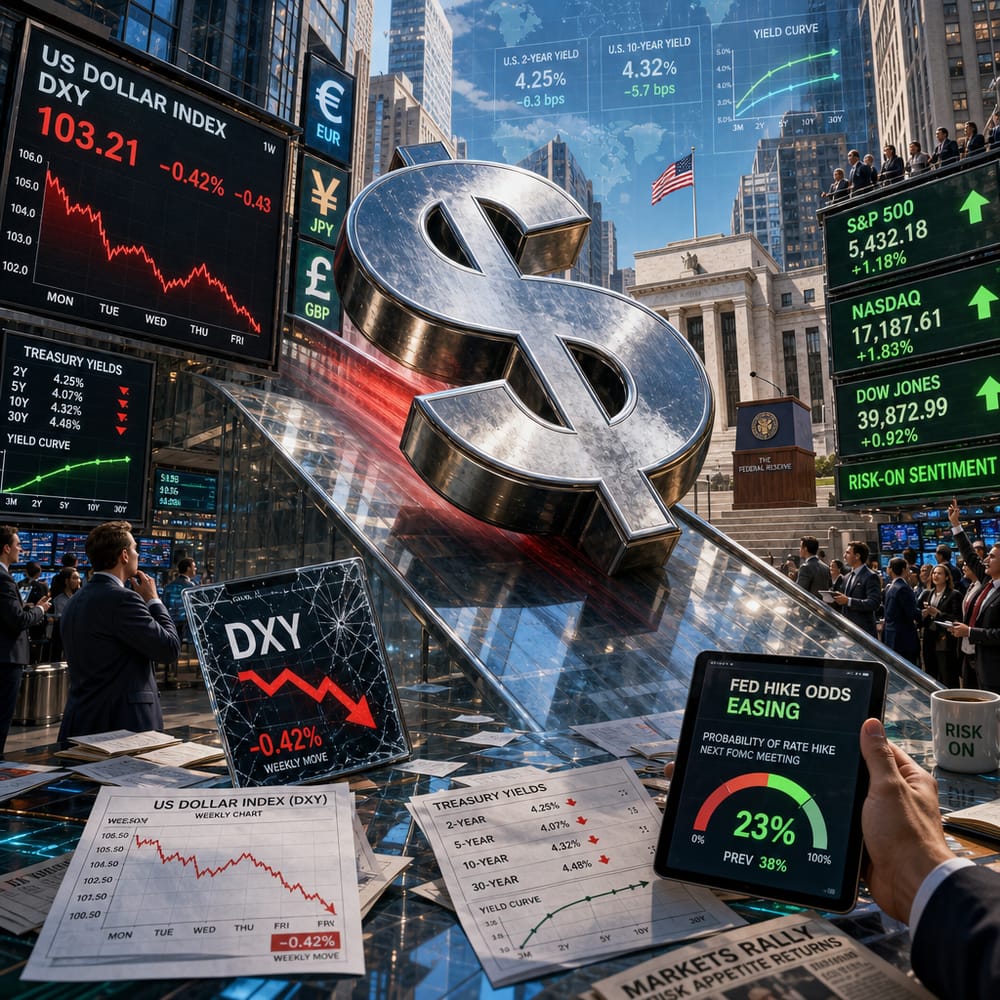
THE DOLLAR’S NOT IN KANSAS ANYMORE: WHAT’S DRAGGING THE DXY?
If the US dollar had a Twitter bio right now, it might read, “Not having my best week, but hanging in there.” The US Dollar Index, or DXY for those in the Forex know, has slipped nearly 0.4% this past week. That might not sound like much, but in the world of currency where movements are measured in ticks and whispers, this is significant. So, what’s nudging the mighty greenback off its pedestal?
First off, let's talk about the Federal Reserve, the grand puppet master of interest rates. For months, the Fed was the stern parent threatening more rate hikes whenever inflation got unruly. But now, they’re easing up on the throttle, which has the dollar losing some of its mojo. You see, higher interest rates tend to attract foreign investment like bees to honey, boosting demand for dollars. But with the Fed seemingly softening its stance, that appeal is dimming faster than a New Year’s resolution.
Next up, let's dive into the murky waters of “risk-on” sentiment. This is finance-speak for when investors feel brave enough to ditch safe havens like the dollar in favor of riskier assets, such as stocks or emerging market currencies. It’s like everyone’s collectively decided to swap their comfy pajamas for a party dress and hit the dance floor. As this sentiment picks up, it shoves the dollar into the slow lane.
But wait, there's more! Technical factors are also doing their dance on the dollar’s prospects. In currency trading, technical analysis is like reading a crystal ball through charts and patterns. Right now, analysts are pointing fingers at resistance levels – imaginary lines in the sand where the dollar struggles to move above. Think of the DXY like a promising runner at a track meet, repeatedly trying to clear a hurdle but clipping it by inches every time. Sometimes, the market just needs a breather.
Meanwhile, over in Europe, the euro is getting its glow-up moment, hitting a three-month high against a wobbling dollar. Eurozone business activity showed a surprising uptick, and investors seem to think Europe can hold its own despite the energy price rollercoaster. This resurgence is putting more pressure on the dollar, like an annoying cousin who suddenly becomes the favorite at the family reunion.
And let’s not overlook the global kaleidoscope of events. Geopolitics anyone? While Romania is busy shooting down drones, and Russia’s antics keep everyone on their toes, the Eurozone isn’t the only player shaking up the currency cocktail. While these events don’t directly cause the dollar to tumble, they add to the uncertainty and drive currency traders to reassess their portfolios.
So, what's an investor to do with all this currency chaos? It’s all about anticipation and adaptation. Understanding these moving parts can offer clues as to where the dollar might head next. If you’re a forex trader, hedge fund manager, or just someone with a knack for currency speculation, staying on top of these factors could help you ride the waves instead of getting swept away.
In the end, the dollar’s dip isn’t the end of the world — just part of its natural ebb and flow. But it serves as a potent reminder that in the world of finance, nothing is ever as stable as it seems. So keep your eyes peeled, your ears open, and your strategies flexible. Because in the forex arena, the only constant is change.
This article is for informational purposes only and is not investment advice. Always do your own research or consult a licensed financial professional before making investment decisions.
© Copyright 2024. All Rights Reserved.
© Copyright 2024. All Rights Reserved.