

US Dollar Index (DXY) Near Year-Highs Amid Hawkish Fed Sentiment
Saturday, November 21, 2026
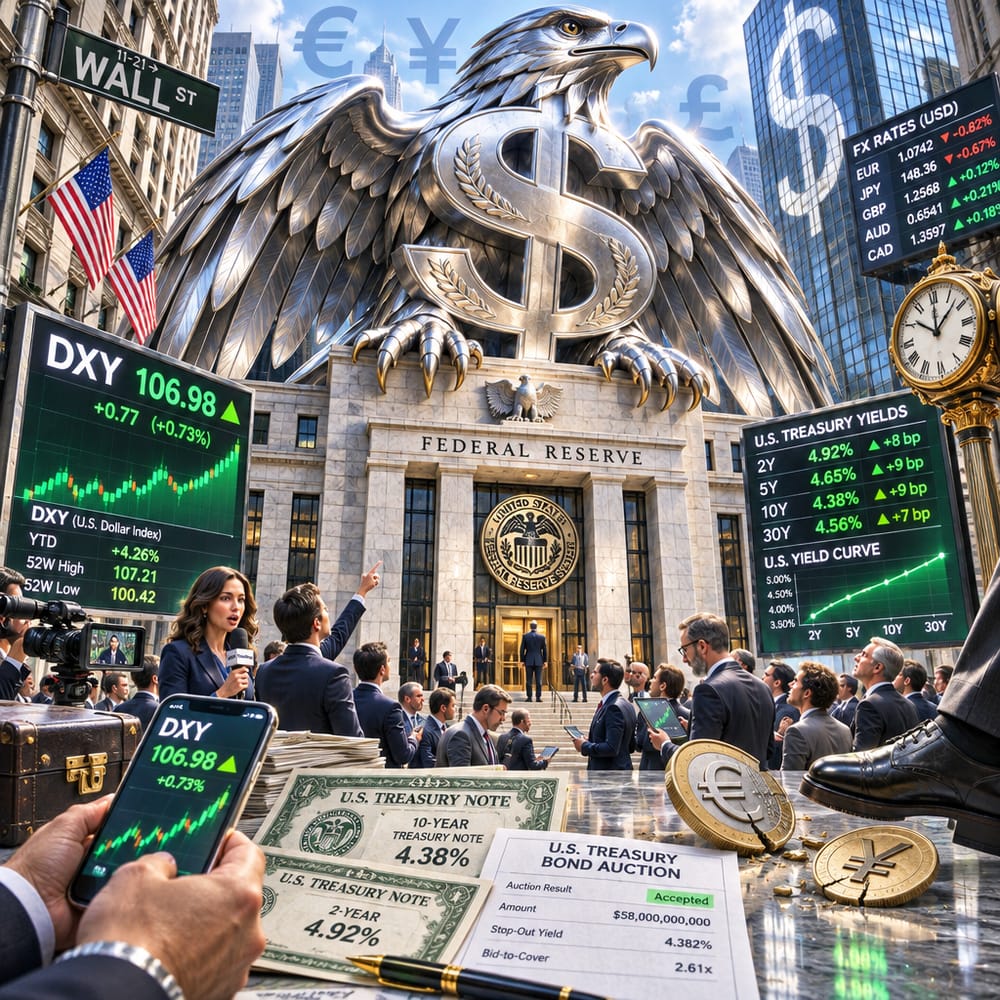
WILL THE US DOLLAR INDEX GO FULL BULL OR IS IT TIME FOR A NAP?
Imagine the US Dollar Index as a heavyweight boxer, standing pumped and poised in the ring, gloves up, eyeing both a glorious knockout and the possibility of collapsing in exhaustion. That's where the DXY finds itself, dancing around year-high levels like it's auditioning for "Dancing with the Stars." But will it break out into a new bullish round, or is it ready to flop down for a breather?
If you feel tempted to take a nap yourself while listening to Fed speeches, fear not. Here's what all this hawkishness talk means in plain English: the Federal Reserve is signaling its willingness to hike interest rates, aiming to squeeze inflation by slowing the economy. The dollar loves this, because higher rates often mean more attractive returns for investors holding dollar-denominated assets. But at what point does the DXY stop cheering and start yawning?
UP, UP AND AWAY? OR DOWN FOR A REST?
The US Dollar Index, this poster child of currency health, has been flexing those muscles thanks to the Fed's tough talk. With the index measuring the buck against a basket of foreign currencies, it's been flirting with heights it hasn't seen since April 2025. This is the market equivalent of flaunting a new haircut on Instagram, and everyone’s keeping tabs.
If the Fed keeps its hawkish stance, the DXY might just keep climbing. Picture a hot air balloon being pumped up with even more helium — get enough of it, and you’re bound to clear the treetops. The more hawkish the Fed, the stronger the dollar's appeal. Investors might continue flocking to it like seagulls to a dropped sandwich.
But there’s an alternate script. Picture the DXY waking up one morning, looking in the mirror, and saying, "I'm tired." This would be the topping pattern, where the index peaks and then drifts down because it's simply exhausted or because everyone who wants to be in, already is. This can happen if the market’s already priced in all the hawkishness and is now just basking in the aftermath. This is what the cool kids call "positioning fatigue."
THE GASLIGHTING FED
The Fed has been making noises akin to "we might, but we might not,” leaving retail investors clutching their crystal balls. Their cryptic messages have kept markets jittery, like cats in a room full of rocking chairs. Investors are scrutinizing every Fed signal with the intensity of a detective in a film noir.
Should the economic data continue to echo through the halls of Wall Street, reinforcing the Fed's standpoint, the DXY might indeed go for more altitude. But here's the kicker: the moment data softens, the Fed might ditch the hawkish armor for something more dovish, and suddenly, our dollar could have a case of the Mondays.
Treasuries, those safe haven assets that also love a good interest rate hike, are equally involved in this plot. If yields rise, the dollar might get another boost. But if they fall, expect a collective sigh from dollar bulls as if their favorite show was just canceled.
THE GLOBAL RIPPLE EFFECT
Let’s not forget the rest of the world in this dollar soap opera. A strong dollar isn't just a US thing. Emerging markets, in particular, can feel the pinch. Their debts, often dollar-denominated, get more expensive. Importers of American goods might start wishing for a return to simpler times — or at least cheaper dollars.
On the flip side, a dollar in decline might give other currencies a breather. It's a global dance, with the greenback often leading.
WHERE DOES THAT LEAVE US?
As we stand at the crossroads, retail investors face a choice. Keep an eye on those data releases like they're the latest binge-worthy series. Will the DXY break into a sprint with more Fed hawkishness, or succumb to a nap induced by positioning fatigue? Either way, stay nimble. The Fed’s next move might just be the cliffhanger we didn't see coming.
This article is for informational purposes only and is not investment advice. Always do your own research or consult a licensed financial professional before making investment decisions.
© Copyright 2024. All Rights Reserved.
© Copyright 2024. All Rights Reserved.